
White fuzzy stuff on indoor plants: causes and fixes
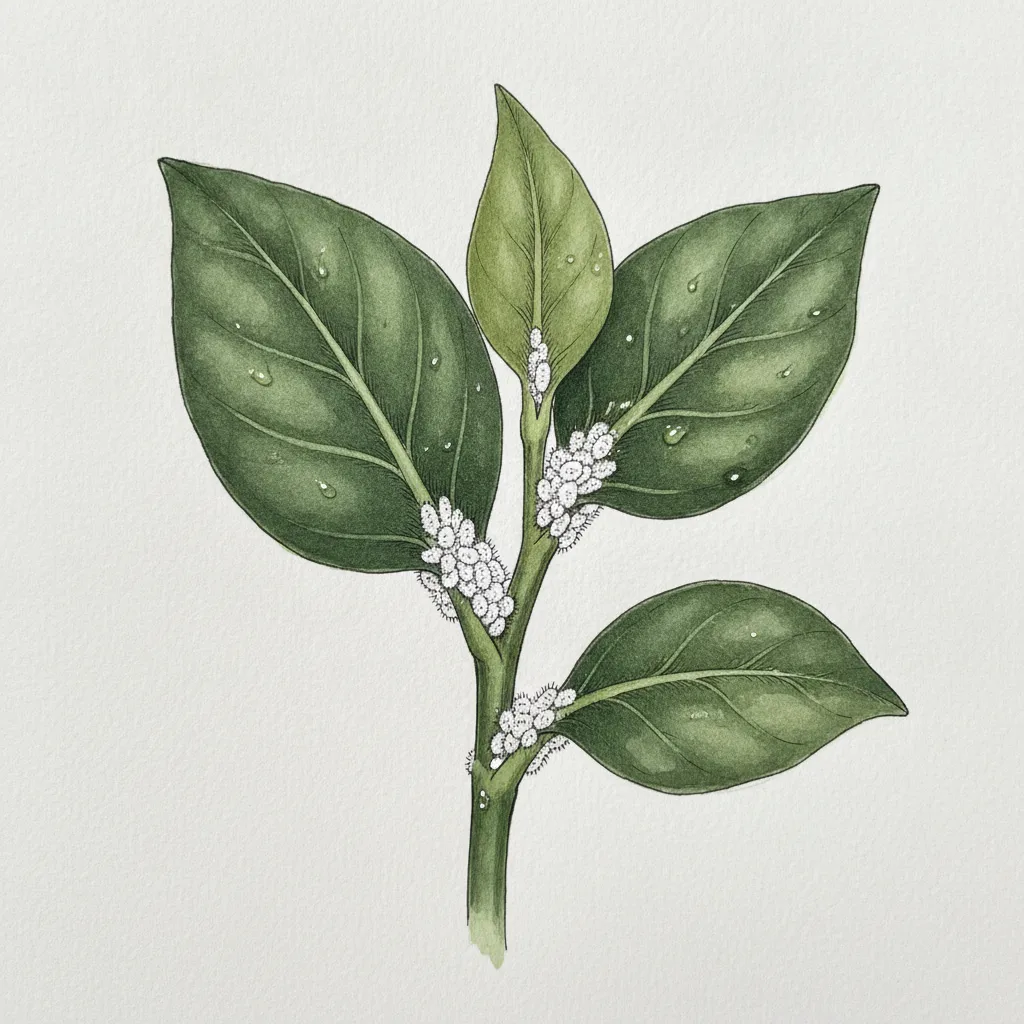
White fuzzy stuff on indoor plant stems or leaf joints is most likely mealybugs, small sap-sucking insects covered in protective white wax, though it could also be powdery mildew or harmless soil mold.
Not sure it's this? Scan your plant — free
What it is
Mealybugs are soft-bodied scale insects in the family Pseudococcidae that secrete a cottony, hydrophobic white wax over their bodies and egg sacs for shelter. They feed by piercing plant tissue with thread-like mouthparts to siphon sap directly from leaves and stems. This draining of fluids weakens the plant, triggers premature leaf drop, and deposits sticky honeydew that invites secondary fungal growth.
Also called: Citrus mealybug, Longtailed mealybug, Pseudococcidae, Scale insects
Plants affected: Pothos, Jade plant, Monstera, African violet, Philodendron, Ficus, Snake plant, Hoya
Symptoms
- Small, white, cotton-like or fuzzy tufts clustered in leaf joints, stem crotches, and leaf undersides
- Sticky, clear droplets (honeydew) coating foliage, stems, or nearby furniture
- Yellowing, wilting, or curled foliage despite normal watering
- Distorted, stunted, or crinkled new leaves and shoots
- Black, sooty film (sooty mold) growing on top of sticky foliage
Causes
- Introducing newly purchased or gift plants carrying unnoticed mealybug nymphs or egg sacs
- Bringing houseplants indoors for autumn after spending the summer outdoors
- Transfer on unsterilized pruning shears, plant stakes, or gardener hands
- Warm, dry indoor conditions that accelerate reproductive cycles
- The absence of natural outdoor predators (such as ladybugs and lacewings) in home environments
How to tell it apart
Look closely at the white fuzz using bright light or a magnifying glass. If the fuzz consists of tiny, segmented oval bodies (1 to 4 mm long) with minute waxy fringes that turn light brown or dissolve when dabbed with a rubbing-alcohol-soaked cotton swab, it is mealybugs. If the white substance forms a flat, dusty film spread broadly across the leaf surface, it is likely powdery mildew. If the fuzz forms a delicate, cobweb-like layer strictly across the top of damp potting soil, it is harmless saprophytic mold.
- Powdery mildew
- Appears as a thin, dry, talcum-powder-like coating distributed flat over leaf surfaces, rather than three-dimensional cottony clumps concentrated in leaf joints and undersides.
- Saprophytic soil mold
- Restricted strictly to the surface of the potting mix as a light, fuzzy film; it does not crawl, produce sticky residue, or attach to the stems and leaves.
- Mineral salts (efflorescence)
- Forms a hard, gritty, chalky white crust along terracotta rims or bottom stems from fertilizer salts and hard tap water; it does not feel soft, waxy, or cottony.
- Cottony cushion scale
- Features distinct, deeply ridged, firm white egg sacs attached to stems, whereas mealybugs are softer, flatter, and create looser, fluffier waxy masses.
Treatment
- Isolate the plant immediately Move the affected houseplant to a separate room away from all other plants right away to halt the spread of crawling nymphs. Keep it quarantined for at least 3 to 4 weeks until you have confirmed it is completely pest-free.
- Spot-treat with isopropyl alcohol Dip a cotton swab in 70% isopropyl alcohol and press it directly onto every visible cottony tuft and insect. The alcohol instantly dissolves the waxy coating and kills the pests on contact. Check hidden leaf axils, undersides, and stem junctions daily for the first week.
- Rinse foliage with lukewarm water Take the plant to a shower or sink and spray stems and leaves with a gentle, lukewarm stream of water to dislodge remaining pests, egg masses, and sticky honeydew. Wrap the top of the pot in plastic film first to prevent soaking the potting mix.
- Spray with insecticidal soap or horticultural oil Coat the entire plant thoroughly, paying special attention to the undersides of leaves and leaf nodes, using a ready-to-use insecticidal soap or diluted horticultural oil spray. Repeat every 7 to 10 days for 3 to 4 full weeks to catch newly emerging crawlers. Always follow the label instructions carefully and keep pesticide products out of reach of children and pets.
- Prune heavily infested stems Use clean pruning shears to cut away badly infested leaves or shoots that are entirely coated in cottony clusters. Seal the clippings in a plastic bag and discard them in an outdoor bin immediately.
Prevention
- Quarantine all newly purchased or gift plants in a separate room for 2 to 3 weeks before integrating them.
- Inspect stem joints, leaf undersides, and crowns weekly with a bright flashlight.
- Rinse or wipe houseplant leaves once a month with a damp cloth to clear dust and inspect for pests.
- Avoid excessive nitrogen fertilization, which forces tender, lush foliage that attracts sap-feeders.
- Inspect plants thoroughly and treat them before bringing them back inside for the winter.
When to worry
Worry if leaves begin turning yellow and falling off in large numbers, new growth is deformed, or cottony white deposits appear around the drainage holes and root ball (a sign of root mealybugs). If the infestation has covered the entire stem network despite 4 weeks of consistent treatment, disposing of the plant is often the safest way to protect your remaining collection.
Safety
Many popular houseplants (such as pothos, philodendrons, and dieffenbachia) contain insoluble calcium oxalates and are toxic to pets and people if chewed; if ingestion occurs, contact a doctor, veterinarian, or poison control line immediately. When using treatment products like insecticidal soap, horticultural oil, or rubbing alcohol, use them in a well-ventilated room, follow the manufacturer's label instructions, and store containers tightly sealed out of reach of children and pets.
Sharing your home with pets or small children? See which plants our sources call safe for cats, dogs and kids.
FAQ
Can the white fuzz on my houseplant spread to my other plants?
Yes. Although adult female mealybugs crawl slowly, their microscopic immature nymphs (crawlers) are quite mobile and easily walk between touching leaves or hitchhike on hands and tools.
Is white fuzzy mold on my houseplant's soil dangerous?
No, fuzzy white mold on soil is harmless saprophytic fungus decomposing organic matter. However, it often warns you that the potting mix is staying too damp or needs better air circulation.
Will rubbing alcohol burn my houseplant's leaves?
Standard 70% isopropyl alcohol is generally safe for targeted dabbing, but delicate foliage may develop brown spots. Test a single leaf first, dab only the bugs when possible, and keep the plant out of direct sun while it dries.
Can mealybugs live inside the soil or pot?
Yes. Ground mealybugs live entirely on root systems, and common foliar mealybugs often hide beneath the inner pot rim, in drainage holes, and in topsoil crevices.