
The world's plants are disappearing
Who keeps count, what the numbers say, and what one person can do about it. Every figure on this page links to the report it comes from.
How many plants are threatened?
Nobody has checked every plant. Scientists assess species one at a time for the IUCN Red List, and model the rest.
-
45%
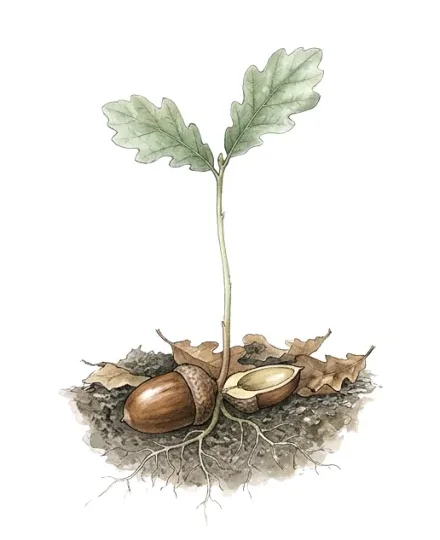
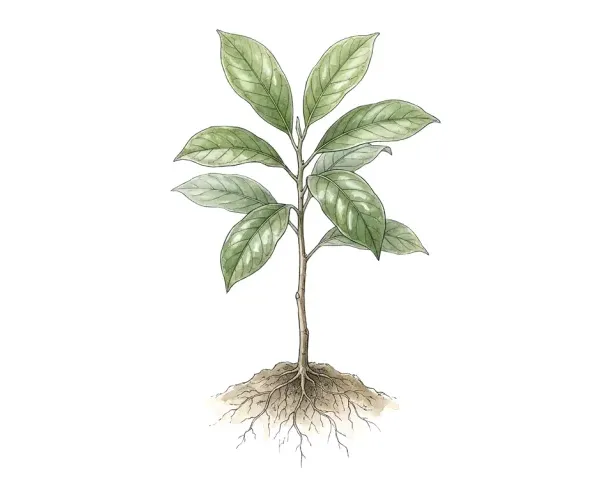
of flowering plant species are likely threatened with extinction. Scientists at the Royal Botanic Gardens, Kew modelled all 328,565 known species; their estimate is 45.1%.
-
18%
of plant species have a global Red List assessment. The other 82% have not been formally assessed, which is why the estimate above comes from a model.
-
38%
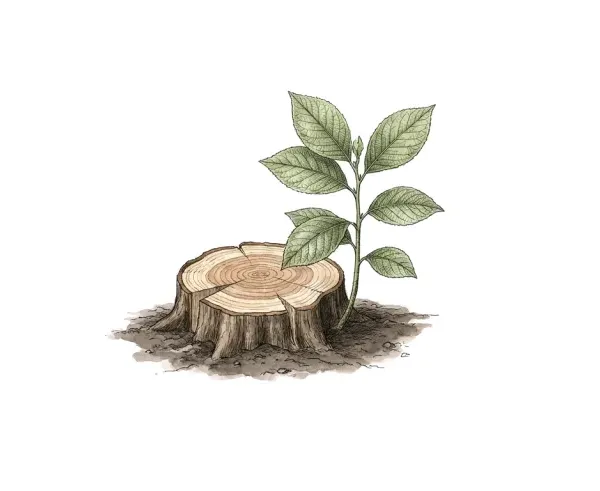
of the world's tree species are at risk of extinction: at least 16,425 of the 47,282 assessed in the first Global Tree Assessment. An earlier count by Botanic Gardens Conservation International put it at 30% of all 58,497 tree species, with at least 142 already extinct.
IUCN, Red List update, 2024; BGCI, State of the World's Trees, 2021
-
31%
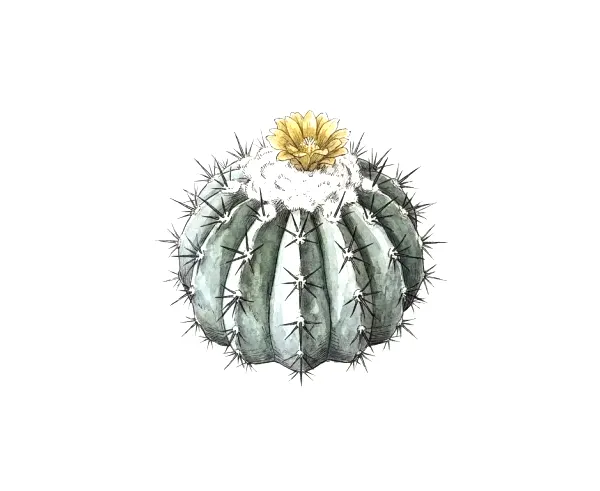
of cactus species are threatened with extinction, according to the first global assessment of the group.
IUCN, Red List update, 2015
Across all life, around 1 million animal and plant species are threatened with extinction, many within decades (IPBES, 2019). The IUCN Red List now covers 175,909 species of every kind, of which 49,505 are threatened (IUCN, 2026). Its summary statistics break those counts down by group, plants included.
Where is forest being lost?
Satellites have mapped tree cover loss every year since 2001. The world has lost 543 million hectares of tree cover since 2000, about 14% of the tree cover it had in 2000 (WRI Global Forest Review, 2026).
2025542.8 million hectares of tree cover lost since 2000: 13.6% of what the world had in 2000.
Share of its 2000 tree cover each country has lost
- Under 2%
- 2–5%
- 5–10%
- 10–15%
- 15–20%
- 20–30%
- 30% or more
- Almost no tree cover in 2000, or no data
Show the numbers
| Year | Million hectares |
|---|---|
| 2001 | 13.4 |
| 2002 | 16.5 |
| 2003 | 14.5 |
| 2004 | 19.9 |
| 2005 | 18.1 |
| 2006 | 17.7 |
| 2007 | 18.4 |
| 2008 | 18.6 |
| 2009 | 17.0 |
| 2010 | 18.6 |
| 2011 | 17.6 |
| 2012 | 23.5 |
| 2013 | 20.6 |
| 2014 | 23.7 |
| 2015 | 19.6 |
| 2016 | 29.7 |
| 2017 | 29.4 |
| 2018 | 24.7 |
| 2019 | 24.2 |
| 2020 | 25.8 |
| 2021 | 25.3 |
| 2022 | 22.8 |
| 2023 | 28.3 |
| 2024 | 29.6 |
| 2025 | 25.5 |
Tree cover loss is not the same as deforestation. It counts trees removed or killed by harvesting, fire, disease or storms. Permanent agriculture, wildfire and logging are its leading causes (WRI, 2026).
The UN Food and Agriculture Organization measures something different: the net change in forest area. Net loss slowed from 7.8 million hectares a year in 1990–2000 to 5.2 million in 2000–2010 and 4.7 million in 2010–2020, because some countries cut deforestation and others gained forest through planting and natural regrowth. Even so, forest area fell by about 178 million hectares between 1990 and 2020 (FAO, 2020).
Why are plants lost?
The global assessment of nature names five direct drivers: changes in land and sea use, direct exploitation, climate change, pollution and invasive species (IPBES, 2019). Here is how four of them reach plants.
Land is cleared
On land and in fresh water, changes in how land is used have done nature the most harm since 1970 (IPBES, 2019). Habitat loss is the greatest threat to tree species (BGCI, 2021).
Wild plants are dug up and sold
Illegal trade for gardens and private collections, with unsustainable harvesting, affects 47% of threatened cactus species (IUCN, 2015). In Chile's Copiapoa cacti, 82% of species are now at risk, up from 55% in 2013, as demand in Europe and Asia and sales on social media feed illegal trade (IUCN, 2024).
Invasive species move in
Where many species live nowhere else, invasive alien species have often hit native life hard (IPBES, 2019). Island trees are at particular risk from clearing for building and farming, and from invasive species, pests and diseases (IUCN, 2024).
The climate is changing
Climate change is increasingly threatening trees, especially in the tropics, through rising seas and stronger, more frequent storms (IUCN, 2024).
What can I do?
- Grow plants native to where you live. Search the Native Plant Database of the Lady Bird Johnson Wildflower Center (North America), or ask your local native plant society.
- Never buy wild-collected cacti, succulents or orchids. Buy from growers who raise their own plants from seed or cuttings, and ask where a rare plant came from before you buy it.
- Check CITES before buying a species traded across borders. The Checklist of CITES species lists the plants covered by the Convention on International Trade in Endangered Species.
- Support seed banks. Kew's Millennium Seed Bank banks seeds of wild plants from around the world.
- Record wild plants you find. Post photos to iNaturalist. Garden and house plants count as cultivated and stay out of the research data, so photograph what grows wild (iNaturalist Help).
- Keep garden plants in the garden. Don't tip cuttings, pond plants or old potting soil into the wild, and learn which plants are invasive where you live: RHS (UK), USDA National Invasive Species Information Center (US).
Who keeps track?
- IUCN Red List
- Assesses the extinction risk of species one by one and publishes counts by group.
- Royal Botanic Gardens, Kew
- Its scientists predicted the extinction risk of every known flowering plant and publish the results in Plants of the World Online.
- BGCI ThreatSearch
- A global database of all known conservation assessments of plants.
- Global Forest Watch
- Maps and yearly statistics of tree cover loss from satellite data, run by the World Resources Institute.
- GBIF
- Gives anyone open access to data about all types of life on Earth, including where plants have been recorded.
- iNaturalist
- A community that identifies wild species from people's photos and shares checked records with data partners.
Sources
Each figure above was checked against its source in October 2026. The claims, quotes and chart data are in claims.json. Spotted an error? Write to hello@simpleplant.app.
- Bachman et al., Extinction risk predictions for the world's flowering plants to support their conservation (Royal Botanic Gardens, Kew; New Phytologist), 2024
- New Phytologist Foundation, Predicting extinction risk of 328,565 species of flowering plants using AI, 2024
- IUCN, More than one in three tree species worldwide faces extinction (press release), 2024
- IUCN, From desert frog to deep-sea molluscs, remarkable species at risk (Red List update), 2026
- BGCI, State of the World's Trees, 2021
- BGCI, State of the World's Trees, 2021
- IPBES, Global Assessment media release, 2019
- IPBES, Global Assessment Report: Summary for Policymakers, 2019
- IUCN, Illegal trade contributes to placing cacti among world's most threatened species (press release), 2015
- IUCN, Bornean elephant Endangered (Red List update press release), 2024
- World Resources Institute, Global Forest Review: Forest loss, 2026
- FAO, Global Forest Resources Assessment 2020, 2020
- BGCI, ThreatSearch, 2026
- GBIF, home page, 2026
- iNaturalist Help, Data Quality Assessment, 2026
- Hansen/UMD/Google/USGS/NASA, Global Forest Change data and license, 2026
- Global Forest Watch, global dashboard download (country statistics), 2026
- Natural Earth, country boundaries at medium scale (public domain): the map's borders