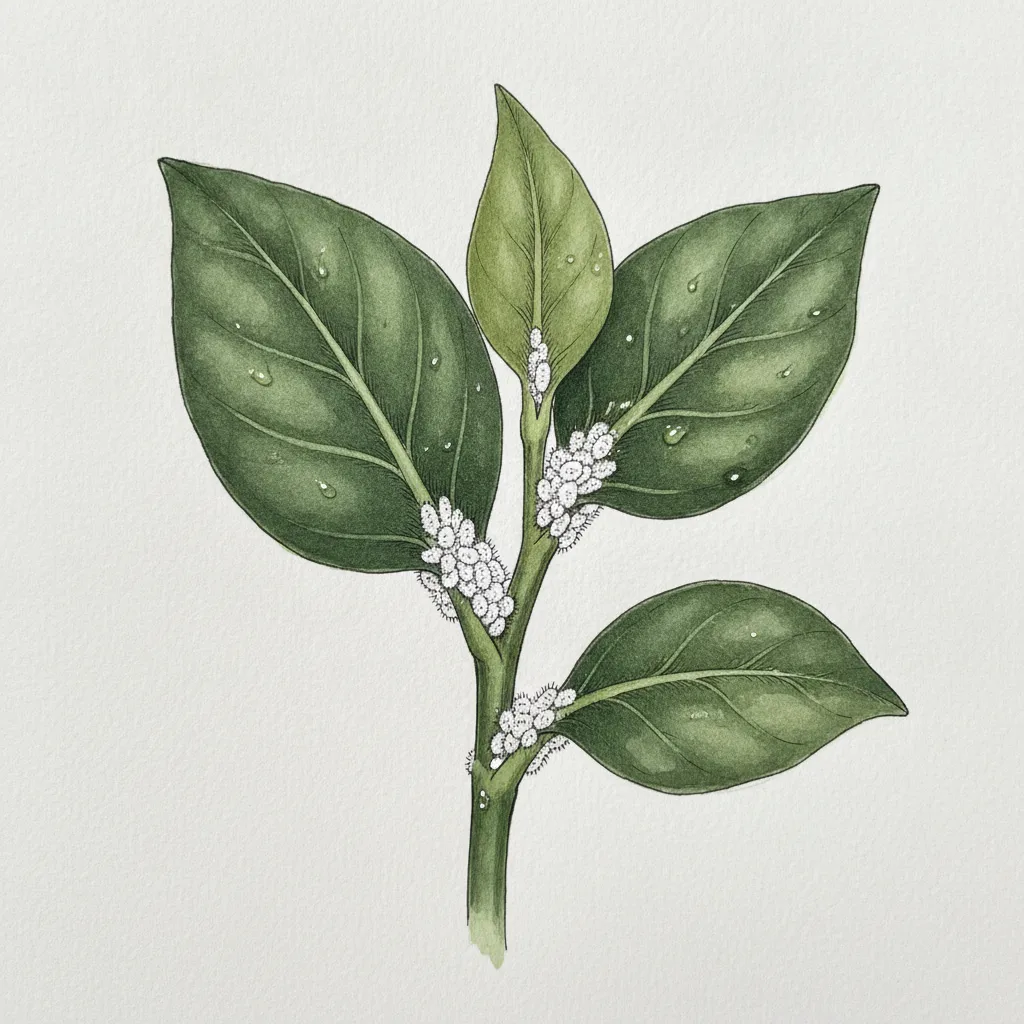
Scale insects on houseplants: signs and treatment
Raised, shell-like bumps on houseplant stems or leaves are likely scale insects; isolate the plant, gently remove visible pests, and check weekly for new ones. ([extension.umn.edu](https://extension.umn.edu/garden-and-home/yard-and-garden/yard-and-garden-insects/insects-on-indoor-plants))
Not sure it's this? Scan your plant — free
What it is
Scale insects are small, sap-feeding pests with waxy bodies or protective covers that can resemble bumps rather than insects. Their feeding weakens plants, potentially causing yellow leaves, leaf drop, and stunted growth; young scales called crawlers move to new feeding sites. ([extension.umn.edu](https://extension.umn.edu/garden-and-home/yard-and-garden/yard-and-garden-insects/insects-on-indoor-plants))
Also called: Scale, Soft scale, Armored scale
Plants affected: Ficus, Indoor citrus, English ivy, Schefflera, Ferns
Symptoms
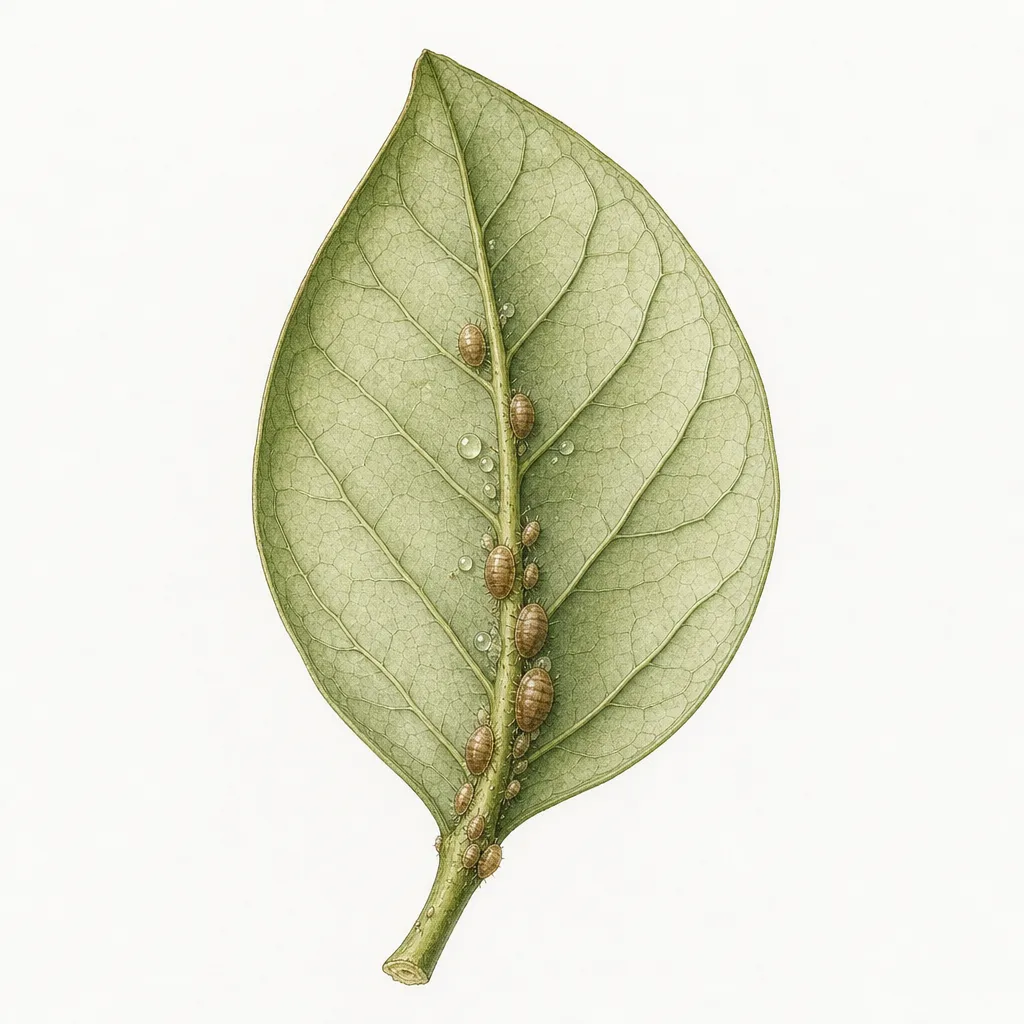
- Brown, gray, or white shell-like bumps on stems and leaf undersides, especially along veins. ([extension.umn.edu](https://extension.umn.edu/garden-and-home/yard-and-garden/yard-and-garden-insects/insects-on-indoor-plants))
- Sticky leaves or surfaces beneath the plant from honeydew produced by soft scales; armored scales do not produce honeydew. ([extension.umn.edu](https://extension.umn.edu/garden-and-home/yard-and-garden/yard-and-garden-insects/insects-on-indoor-plants))
- Black sooty mold growing on honeydew deposits. ([extension.colostate.edu](https://extension.colostate.edu/resource/brown-soft-scale-a-common-insect-pest-of-indoor-plants/))
- Yellowing or dropping leaves, slow growth, and, in heavy infestations, dying branches. ([extension.umn.edu](https://extension.umn.edu/garden-and-home/yard-and-garden/yard-and-garden-insects/insects-on-indoor-plants))
Causes
- Scale often arrives on an infested plant brought into the home. ([extension.colostate.edu](https://extension.colostate.edu/resource/managing-houseplant-pests/))
- Tiny crawlers spread to new feeding sites and can be transferred when infested plants are handled. ([extension.colostate.edu](https://extension.colostate.edu/resource/brown-soft-scale-a-common-insect-pest-of-indoor-plants/))
How to tell it apart
Use a magnifying glass to inspect stems, leaf undersides, and hidden leaf bases. Scale is likely when you find raised, shell-like insects that can be gently picked off. Sticky honeydew supports a soft-scale diagnosis, but its absence does not rule out armored scale. Bumps alone do not show whether treatment failed: dead scales can remain attached. ([extension.umn.edu](https://extension.umn.edu/garden-and-home/yard-and-garden/yard-and-garden-insects/insects-on-indoor-plants))
- Mealybugs
- These related pests usually look white, powdery, or cottony, often with waxy filaments around their bodies, rather than smooth shell-like bumps. ([extension.umn.edu](https://extension.umn.edu/garden-and-home/yard-and-garden/yard-and-garden-insects/insects-on-indoor-plants))
- Whitefly young
- Young whiteflies are flat, oval, and scale-like beneath leaves, but tiny white winged adults are usually present too. ([ipm.ucanr.edu](https://ipm.ucanr.edu/home-and-landscape/houseplant-problems/))
- Fern spore clusters
- Normal spore clusters beneath fern fronds can resemble scale. Check for actual shell-like insects before scraping or treating a fern; ask an extension service if identification is unclear. ([ipm.ucanr.edu](https://ipm.ucanr.edu/home-and-landscape/houseplant-problems/))
Treatment
- 1. Separate the plant and inspect its neighbors Move it away from other houseplants today. Examine nearby plants with a magnifying glass, including stems, leaf undersides, and leaf bases; keep affected plants separate while managing the infestation. ([extension.umn.edu](https://extension.umn.edu/garden-and-home/yard-and-garden/yard-and-garden-insects/insects-on-indoor-plants))
- 2. Remove visible scales and wash the leaves Gently pick or rub off scales without gouging the plant. Wipe leaves with a water-dampened paper towel, changing towels often, or rinse a manageable plant in the sink to remove crawlers. Prune and discard heavily infested individual leaves or stems where practical. ([extension.umn.edu](https://extension.umn.edu/garden-and-home/yard-and-garden/yard-and-garden-insects/insects-on-indoor-plants))
- 3. Use a labeled horticultural oil if pests remain Choose horticultural oil labeled for indoor houseplants, scale insects, and your plant. Apply at the label rate, thoroughly covering insects on stems and both leaf surfaces; one spray usually will not reach every protected stage. Repeat only at the label interval. Do not treat a drought-stressed plant. Follow the label and keep the product and treated area away from pets and children as directed. ([extension.colostate.edu](https://extension.colostate.edu/resource/brown-soft-scale-a-common-insect-pest-of-indoor-plants/))
- 4. Start weekly follow-up checks Set a weekly reminder now to remove newly found scales and look for fresh honeydew or crawlers. Management may take two to four months, so do not stop after one cleanup. Reapply any pesticide only as its label permits, keeping it away from pets and children. Old attached shells alone do not prove live pests remain. ([extension.colostate.edu](https://extension.colostate.edu/resource/managing-houseplant-pests/))
Prevention
- Inspect plants before buying them or bringing them indoors, including leaf undersides and container crevices. ([extension.umn.edu](https://extension.umn.edu/garden-and-home/yard-and-garden/yard-and-garden-insects/insects-on-indoor-plants))
- Quarantine new plants for at least three weeks as a cautious approach: Colorado State recommends three weeks, while Minnesota recommends one to two. ([extension.colostate.edu](https://extension.colostate.edu/resource/managing-houseplant-pests/))
- Check established plants whenever you water, watching for bumps and fresh sticky deposits. ([extension.umn.edu](https://extension.umn.edu/garden-and-home/yard-and-garden/yard-and-garden-insects/insects-on-indoor-plants))
When to worry
Act promptly if leaves are dropping, branches are dying, or scales cover much of the plant. A heavily infested, badly damaged plant may be better discarded to protect the rest of your collection; this is a reasonable option, not a failure. ([extension.umn.edu](https://extension.umn.edu/garden-and-home/yard-and-garden/yard-and-garden-insects/insects-on-indoor-plants))
Safety
Some common hosts, including English ivy and schefflera, can harm people or pets if eaten; ficus sap may irritate skin. Keep plants and pruned material away from children and pets, and contact a doctor, veterinarian, or poison line if ingestion or a harmful reaction is suspected. For horticultural oil or any pesticide, follow the label for handling, protective equipment, ventilation, storage, and disposal. Keep it tightly closed in its original labeled container, inaccessible to children and pets, and keep them away from treated areas for the label-specified period. For suspected product poisoning, seek medical or veterinary help with the label available. ([homegarden.cahnr.uconn.edu](https://homegarden.cahnr.uconn.edu/factsheets/houseplants-safe-and-toxic-varieties/))
Sharing your home with pets or small children? See which plants our sources call safe for cats, dogs and kids.
FAQ
Why are my houseplant's leaves sticky?
Soft scales may be producing honeydew, but aphids and mealybugs can do this too. Look for the insects before choosing treatment. ([extension.colostate.edu](https://extension.colostate.edu/resource/brown-soft-scale-a-common-insect-pest-of-indoor-plants/))
Can I remove scale without pesticides?
Small infestations may be managed by picking off scales, washing leaves, and repeatedly checking for new pests. ([extension.umn.edu](https://extension.umn.edu/garden-and-home/yard-and-garden/yard-and-garden-insects/insects-on-indoor-plants))
Why are there still bumps after treatment?
Dead scales can remain attached. Look for new crawlers and, with soft scale, fresh honeydew rather than judging by old bumps alone. ([extension.colostate.edu](https://extension.colostate.edu/resource/brown-soft-scale-a-common-insect-pest-of-indoor-plants/))
Do I need to repot the plant?
Repotting is not a standard treatment for these scales on leaves and stems; focus on removing and treating pests where they feed. ([ipm.ucanr.edu](https://ipm.ucanr.edu/home-and-landscape/houseplant-problems/))
Sources
- Managing insects on indoor plants — University of Minnesota Extension
- Managing Houseplant Pests — Colorado State University Extension
- Brown Soft Scale: A Common Insect Pest — Colorado State University Extension
- Houseplant Problems — UC Statewide IPM Program
- Read the Label First: Protect Your Pets — US EPA
- Houseplants: Safe and Toxic Varieties — University of Connecticut