
Monstera leaves turning yellow: causes and fixes
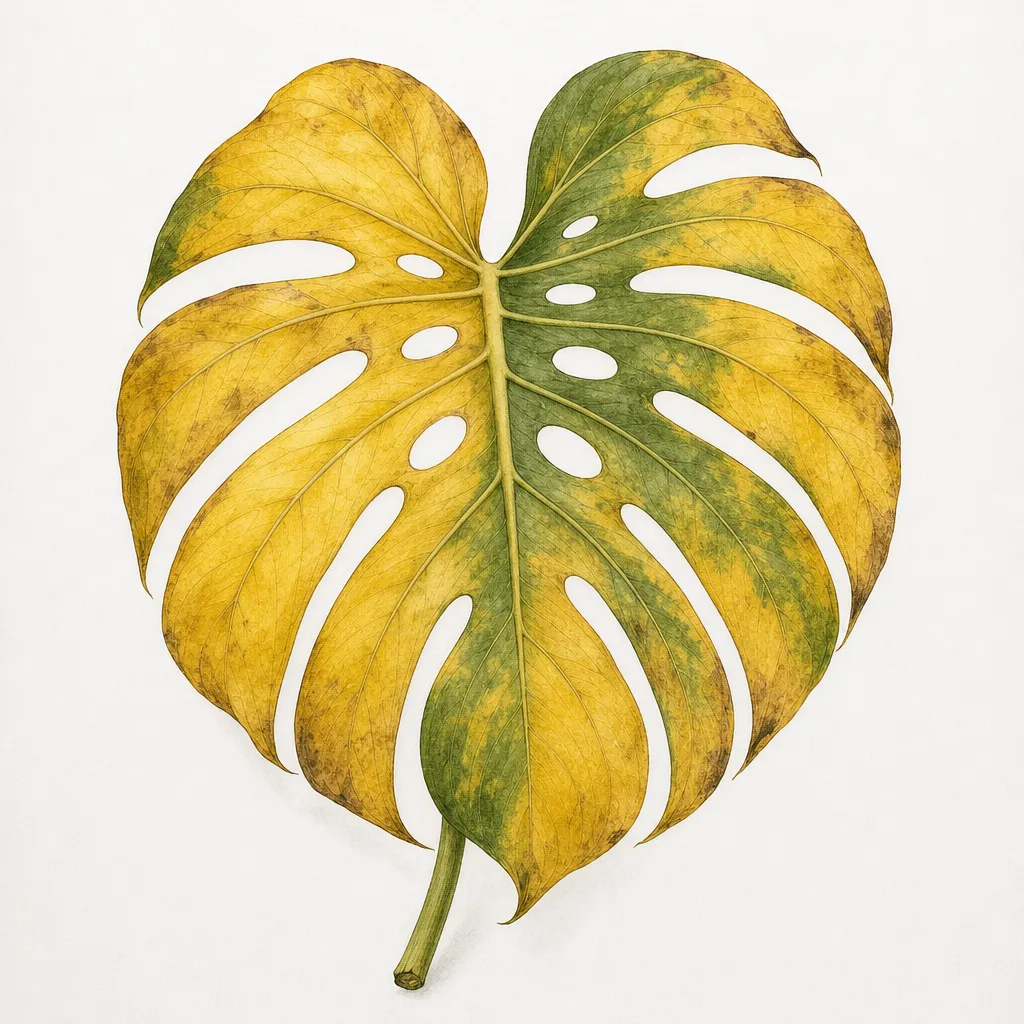
Monstera leaves most often turn yellow because of a watering problem, especially soil staying too wet, although an occasional old lower leaf can yellow naturally.
Not sure it's this? Scan your plant — free
What it is
Leaf yellowing, or chlorosis, happens when leaf tissue loses or makes too little chlorophyll, the green pigment used to capture light for photosynthesis. It is a symptom rather than one particular disease, and widespread yellowing can reduce the plant’s ability to make sugars for growth.
Also called: Yellowing monstera leaves, Leaf chlorosis
Plants affected: Monstera deliciosa, Monstera adansonii
Symptoms
- Previously green leaves fade to pale green or yellow, sometimes followed by browning or leaf drop.
- Yellowing with wilting despite wet soil can point to root rot.
- One occasional older, lower leaf yellows while the rest of the plant remains healthy.
Causes
- Watering too often or poor drainage keeps the root zone wet and encourages root rot.
- Too little water can also cause yellowing, so check the mix before deciding to withhold water.
- Insufficient light, cold conditions, drafts or an oversized pot can contribute.
- Nutrient shortages and sap-feeding pests are other possibilities, not reasons to fertilize or spray automatically.
- Natural aging can explain an occasional lower leaf turning yellow.
How to tell it apart
Start with the pot, not just the leaf color: check moisture below the surface and make sure drainage holes work. A dry surface does not mean the root ball is sufficiently dry. If the plant is wilting in wet soil, inspect the roots promptly: soft, brown, decaying roots suggest root rot, while firm roots are less concerning. Yellow leaves alone cannot distinguish overwatering from underwatering.
- Spider mite damage
- Look for many tiny pale speckles and fine webbing, especially underneath leaves, rather than only broad yellowing.
- Sun scorch
- Pale or scorched patches after increased sun exposure suggest scorch, particularly on exposed leaf surfaces.
- Fungal leaf spot
- Distinct dark spots with yellow margins suggest leaf spot rather than simple, even yellowing; appearance alone does not confirm the cause.
- Natural variegation
- Some monsteras naturally have differently colored patches. Compare with the plant’s established pattern rather than treating every pale area as new damage.
Treatment
- 1. Check moisture before the next watering Check the mix today rather than watering by the calendar. Recommendations differ: Ask Extension suggests letting the top 1–2 inches dry, while NC State recommends the top quarter to third. Treat these as guides, not interchangeable measurements: drying depth varies with pot size, mix and conditions. A dry surface does not establish that the root ball has dried sufficiently. In larger pots, check farther down into the mix and do not water while the lower mix remains wet. Once watering is needed, water thoroughly and let excess water drain completely. If the plant is wilting in wet soil, go to step 3 promptly rather than simply waiting for it to dry.
- 2. Fix drainage now Empty standing water from the saucer or outer pot. Make sure the growing container has unobstructed drainage holes; do not add a gravel layer as a drainage fix. After each watering, let the pot drain completely and empty the runoff so the roots are not left standing in water.
- 3. Inspect roots promptly if the plant is wilting in wet soil Gently slide the root ball out of its pot and check the roots. If roots remain firm, correct drainage and watering without unnecessary root pruning. If some roots are soft or rotting, remove affected roots with clean tools and repot salvageable plants in fresh, well-draining potting mix in a clean container with drainage holes. If decay is extensive, replacement may be necessary. Contact your local extension service if the findings are unclear. Wisconsin Extension does not recommend chemical fungicides for houseplant root rot.
- 4. Improve the growing spot This week, choose a bright spot out of direct sun and away from cold drafts. Aim for a room temperature of 60–85°F. If the plant is in a very dark corner, improve its light rather than trying to compensate with extra water.
- 5. Check for pests before treating Inspect leaf undersides and where leaf stalks meet stems this week. If you find mites or mealybugs, wash them off with water and continue checking regularly. Do not apply a pesticide simply because a leaf is yellow.
Prevention
- Check moisture below the surface before each watering; water less often when winter growth slows.
- Keep drainage holes clear and never leave the pot standing in drainage water.
- Avoid moving a small root ball into a much larger pot, which can leave excess mix wet for too long.
- Regularly inspect leaves and stems for pests so you can act before damage spreads.
When to worry
Inspect roots promptly if the plant wilts despite wet soil. Several yellowing leaves or soft, brown roots also deserve attention; do not wait for more leaves to decline before checking. Ask an extension service for help if the cause remains unclear. One occasional old lower leaf, with an otherwise healthy plant, is usually less concerning.
Safety
Monstera can harm people, cats and dogs if chewed or swallowed: its calcium oxalate crystals can irritate the mouth and throat, and sap can irritate skin. Keep the plant and fallen leaves away from children and pets, avoid sap contact, and contact a doctor, veterinarian or poison line after suspected ingestion or a concerning exposure. Handle cutting tools carefully and keep them out of children’s reach. When using packaged potting mix, follow its label for safe handling and storage, avoid breathing dust, and store it securely away from children and pets.
Sharing your home with pets or small children? See which plants our sources call safe for cats, dogs and kids.
FAQ
Does a yellow leaf always mean overwatering?
No. Underwatering, light problems, pests and normal aging can also cause yellowing. Check moisture below the surface and the overall pattern first.
How dry should the soil be before I water?
Guidance ranges from a dry top 1–2 inches to a dry top quarter to third. Pot size, mix and conditions matter: check farther down in larger pots, and do not water while the lower mix remains wet.
Should I cut off yellow leaves?
You can remove affected leaves, but pruning does not fix the cause. Avoid removing more than 25% of the plant in one pruning.
Should I add fertilizer?
Not automatically. Nutrient shortage is only one possibility, and root problems can produce similar symptoms. Check watering, drainage and roots first.
Is one yellow bottom leaf normal?
An occasional older lower leaf can yellow and fall naturally. Multiple yellowing leaves deserve a closer check.
Sources
- yellow/brown leaves on Monstera adansonii — Ask Extension
- Monstera deliciosa — North Carolina Extension Gardener Plant Toolbox
- Houseplant Problems — University of California Statewide IPM Program
- Leaf damage on houseplants — Royal Horticultural Society
- Root Rots on Houseplants — Wisconsin Horticulture
- What Does Yellowing or Chlorosis Tell Us About the Health of a Plant? — Montana State University Extension