
Monstera leaves turning black after cold
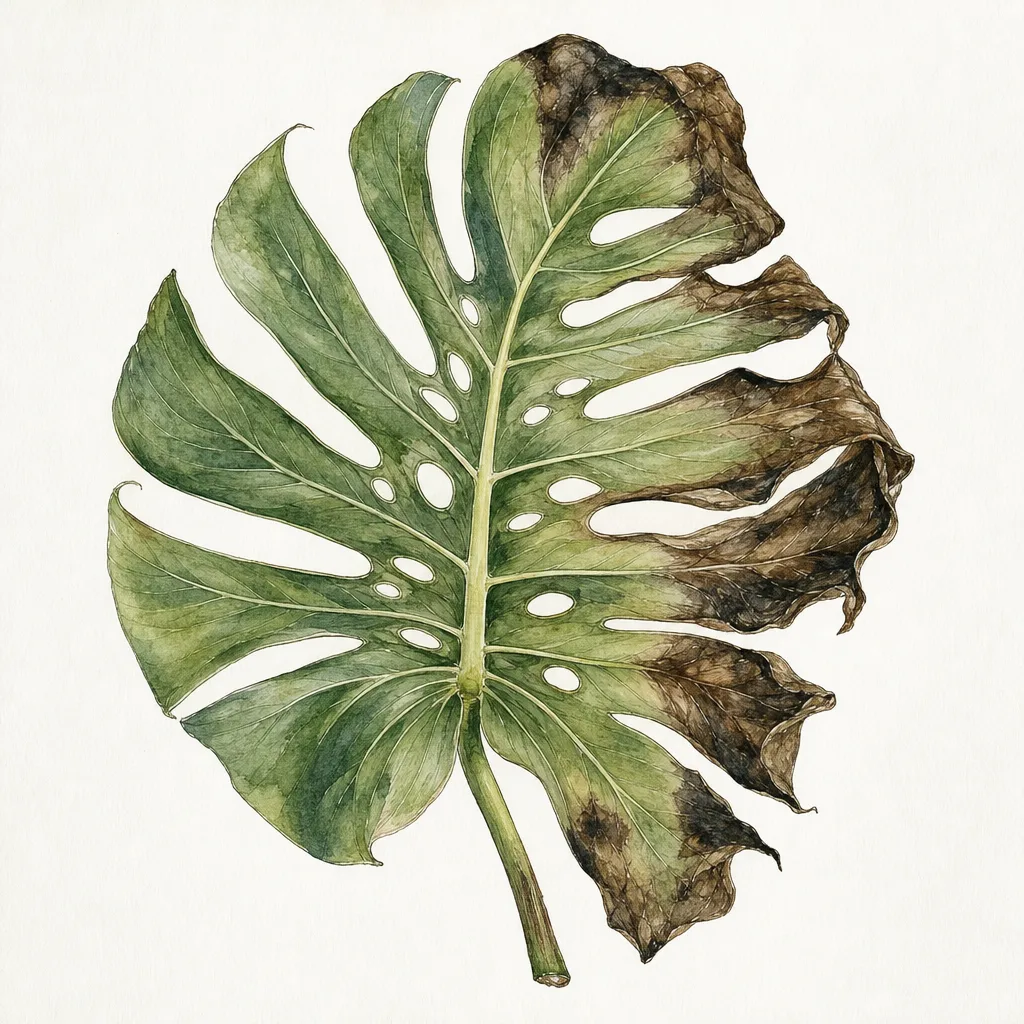
Monstera leaves turning black after cold exposure most likely have cold injury; move the plant to a warm, draft-free spot and avoid extra watering while you assess the damage. ([extension.umd.edu](https://www.extension.umd.edu/resource/diagnose-indoor-plant-problems))
Not sure it's this? Scan your plant — free
What it is
Cold injury is physical damage from temperatures below a plant's tolerance, rather than an infection or pest. Chilling above freezing disrupts cell membranes; freezing can form ice between cells and draw water out of them, causing tissue to collapse or die. ([edis.ifas.ufl.edu](https://edis.ifas.ufl.edu/publication/EP429/pdf))
Also called: Cold damage, Chilling injury, Freeze injury
Plants affected: Monstera deliciosa, Other tropical foliage houseplants
Symptoms
- Leaves or shoots turning black after cold exposure, with symptoms sometimes continuing to appear for up to a week. ([extension.umd.edu](https://www.extension.umd.edu/resource/diagnose-indoor-plant-problems))
- Limp leaves with wet-looking patches, followed by sunken or brown dead areas. ([edis.ifas.ufl.edu](https://edis.ifas.ufl.edu/publication/EP429/pdf))
Causes
- Exposure to temperatures below the plant's tolerance; many tropical foliage plants can suffer chilling injury around or below 50°F (10°C), without freezing. ([edis.ifas.ufl.edu](https://edis.ifas.ufl.edu/publication/EP429/pdf))
- Cold blasts from open windows or air-conditioning outlets. ([libguides.nybg.org](https://libguides.nybg.org/monstera))
- Longer exposure, lower temperatures and the plant's condition can increase the severity of injury. ([edis.ifas.ufl.edu](https://edis.ifas.ufl.edu/publication/EP429/pdf))
How to tell it apart
The timing is your strongest clue: blackening that follows a cold incident fits cold injury, but black leaves alone cannot confirm it. If the plant also wilts in wet soil, check the roots: dark, soft roots suggest rot rather than leaf-only cold damage. ([extension.umd.edu](https://www.extension.umd.edu/resource/diagnose-indoor-plant-problems))
- Overwatering and root rot
- Look for persistently soggy soil, wilting and dark, soft roots. Healthy roots should be firm and light-colored; cold injury and watering problems can occur together. ([extension.umd.edu](https://www.extension.umd.edu/resource/diagnose-indoor-plant-problems))
- Fungal or bacterial leaf spots
- Leaf infections can also cause dark blotches. Fungal spots are often roughly circular and may merge; appearance alone may not distinguish them from cold damage, so consider exposure history and seek help if spotting continues. ([ipm.ucanr.edu](https://ipm.ucanr.edu/home-and-landscape/houseplant-problems/))
- Sunburn
- A recent move into stronger sunlight, especially with bleached or whitened patches, points toward sunburn rather than cold injury. ([extension.umd.edu](https://www.extension.umd.edu/resource/diagnose-indoor-plant-problems))
- Dryness or fertilizer-salt scorch
- These commonly scorch leaf tips, margins or areas between veins. Check watering and feeding history rather than assuming every dark edge came from cold. ([extension.umd.edu](https://www.extension.umd.edu/resource/diagnose-indoor-plant-problems))
Treatment
- 1. Stop further cold exposure today Move the plant to bright, indirect light in a room kept around 65–80°F (18–27°C). Keep it away from open windows, air-conditioning outlets and heating vents; do not use a hot blast of air to warm it. ([plants.ces.ncsu.edu](https://plants.ces.ncsu.edu/plants/monstera-deliciosa/))
- 2. Check the soil before watering Today, feel below the surface. Wait until the upper quarter to third of the potting mix has dried before watering thoroughly, then empty the saucer after 15 minutes. Repeat according to soil dryness, not a fixed weekly schedule; extra water is not a cold-damage treatment. ([plants.ces.ncsu.edu](https://plants.ces.ncsu.edu/plants/monstera-deliciosa/))
- 3. Give the damage time to declare itself Photograph the affected leaves today and compare them daily for seven days. Cold-related blackening can keep appearing during that first week, so postpone heavy pruning rather than cutting away every drooping leaf immediately. ([extension.umd.edu](https://www.extension.umd.edu/resource/diagnose-indoor-plant-problems))
- 4. Skip feeding and sprays this week Do not fertilize to force recovery or apply a fungicide just because the leaves are black. Cold injury is not itself an infection; focus on stable conditions and avoid heavy pruning, excessive watering and fertilizer during the initial assessment period. ([edis.ifas.ufl.edu](https://edis.ifas.ufl.edu/publication/EP429/pdf))
- 5. Check for rot if the whole plant wilts If wilting comes with wet soil, gently slide the root ball out once this week and inspect it. Dark, soft roots need a root-rot assessment; firm, light-colored roots are reassuring. Contact your local extension service with photographs before making major cuts if you are unsure. ([extension.umd.edu](https://www.extension.umd.edu/resource/diagnose-indoor-plant-problems))
Prevention
- Protect the plant from temperatures below 50°F (10°C), rather than waiting for a frost warning. ([extension.umd.edu](https://www.extension.umd.edu/resource/diagnose-indoor-plant-problems))
- Choose a spot protected from cold window drafts, air conditioning and blasts of hot air. ([libguides.nybg.org](https://libguides.nybg.org/monstera))
- Reduce watering frequency in winter, checking the mix before each watering and removing collected drainage water. ([libguides.nybg.org](https://libguides.nybg.org/monstera))
When to worry
Seek an extension-service diagnosis if new blackening continues beyond the first week in stable warmth, the stem base becomes soft, or the plant wilts despite wet soil. These signs warrant checking for rot or another problem rather than assuming all damage is delayed cold injury; severely rotted plants may not be salvageable. ([extension.umd.edu](https://www.extension.umd.edu/resource/diagnose-indoor-plant-problems))
Safety
Monstera can harm people, cats and dogs. Its calcium oxalate crystals can irritate the mouth and throat, and sap can irritate skin. Keep the plant and fallen leaves away from children and pets; wear gloves when handling damaged tissue and avoid touching your eyes. If someone chews the plant or develops symptoms, contact a doctor or poison line; for a pet, contact a veterinarian. No treatment product is needed for cold injury itself. ([plants.ces.ncsu.edu](https://plants.ces.ncsu.edu/plants/monstera-deliciosa/))
Sharing your home with pets or small children? See which plants our sources call safe for cats, dogs and kids.
FAQ
Will the black areas turn green again?
Dead tissue will not recover. Brief chilling can cause recoverable injury, but prolonged exposure can cause irreversible damage. ([edis.ifas.ufl.edu](https://edis.ifas.ufl.edu/publication/EP429/pdf))
Should I cut off the black leaves immediately?
Usually not. Allow at least 3–7 days to assess the injury and avoid heavy pruning while its extent is still unclear. ([blogs.ifas.ufl.edu](https://blogs.ifas.ufl.edu/miamidadeco/2026/02/02/good-strategies-for-cold-damage-in-the-landscape-recovery-not-panic/))
Can cold damage happen without frost?
Yes. Tropical foliage plants can suffer chilling injury above freezing, often around or below 50°F (10°C). ([edis.ifas.ufl.edu](https://edis.ifas.ufl.edu/publication/EP429/pdf))
Why is it getting worse after I brought it indoors?
Cold-injury symptoms can continue appearing for up to a week after exposure; that does not by itself prove an infection. ([extension.umd.edu](https://www.extension.umd.edu/resource/diagnose-indoor-plant-problems))
Sources
- Diagnose Indoor Plant Problems — University of Maryland Extension
- Monstera deliciosa — North Carolina Extension Gardener Plant Toolbox
- Monstera (Monstera deliciosa) — New York Botanical Garden
- Houseplant Problems — UC Statewide IPM Program
- Good Strategies for Cold Damage in the Landscape: Recovery, Not Panic — UF/IFAS Extension