
Asphodelaceae
Haworthiopsis attenuata
- Family
- Asphodelaceae
- Genus
- Haworthiopsis
Pets and kids
- CatsSafe
- DogsSafe
- KidsNot sure
Why
Cats: Safe
Sources below say it is non-toxic to cats. Any plant can upset a stomach if a lot is eaten.
Dogs: Safe
Sources below say it is non-toxic to dogs. Any plant can upset a stomach if a lot is eaten.
Kids: Not sure
We found no reliable source on this plant for young children, so we don't call it safe. Keep it out of reach until you have checked with a doctor or poison control.
Is yours looking unwell? Scan your plant — free
Is Haworthiopsis attenuata safe for cats, dogs and kids?
Is Haworthiopsis attenuata safe for cats?
Our sources call Haworthiopsis attenuata non-toxic to cats. Any plant can upset a stomach if a lot is eaten.
Is Haworthiopsis attenuata safe for dogs?
Our sources call Haworthiopsis attenuata non-toxic to dogs. Any plant can upset a stomach if a lot is eaten.
Is Haworthiopsis attenuata safe for kids?
We found no reliable source on this plant for young children, so we don't call it safe. Keep it out of reach until you have checked with a doctor or poison control.
Ate some? Call your vet or the ASPCA Animal Poison Control Center at (888) 426-4435 (a fee may apply). For a child, call Poison Help at 1-800-222-1222 (US). If they are struggling to breathe or collapse, call 911. Don't give anything by mouth unless a vet or poison expert tells you to.
See all cat-safe plants, dog-safe plants and child-safe plants.
How to care for Haworthiopsis attenuata
Position your zebra plant in bright, indirect sunlight and soak the gritty potting mix only after it dries out completely.
Light
Place Haworthiopsis attenuata where it receives plenty of bright, indirect sunlight, such as an east- or west-facing windowsill. Insufficient light causes the dark green foliage to stretch and causes its white banded patterns to fade. Harsh, intense midday sun can scorch the foliage or turn the leaves dull brown.
- Shield the rosette from harsh direct afternoon sun with a sheer curtain to prevent scorching.
- Move the pot closer to a sunny window if the leaves lose their vivid markings or stretch out.
- Gentle morning sun helps keep the rosette compact and can impart an attractive reddish hue.
Sources: Haworthiopsis attenuata (Zebra Haworthia, Zebra Plant) | North Carolina Extension Gardener Plant Toolbox · Haworthiopsis attenuata | zebra plant
Watering
Check moisture by probing the soil with a wooden skewer or lifting the pot to gauge its weight. Water thoroughly only when the substrate has dried out completely from top to bottom. Reduce watering significantly during cold winter months when growth slows down, and never let moisture settle in the central crown.
- Water the surrounding potting mix at the base rather than pouring water directly into the rosette.
- Allow excess runoff to drain out completely and empty saucers immediately after watering.
- Wrinkled, slightly soft leaves signal thirst, while translucent or mushy lower leaves indicate overwatering.
Sources: Haworthiopsis attenuata (Zebra Haworthia, Zebra Plant) | North Carolina Extension Gardener Plant Toolbox · Haworthiopsis attenuata | zebra plant
Soil and potting
Plant in an exceptionally porous cactus and succulent potting mix amended with perlite, coarse sand, or pumice. Haworthiopsis attenuata possesses shallow roots and performs best in a wide, shallow container. Ensure the pot features unobstructed drainage holes so water flows freely away from the root system.
- Unglazed terracotta pots allow moisture to evaporate through the walls, preventing waterlogged roots.
- Incorporate gritty materials like pumice or coarse grit to ensure the substrate drains instantly.
- Never block drainage holes or leave the pot standing in pooled runoff.
Sources: Haworthiopsis attenuata (Zebra Haworthia, Zebra Plant) | North Carolina Extension Gardener Plant Toolbox · Haworthiopsis attenuata
Humidity and temperature
This succulent thrives in warm indoor temperatures between 60°F and 80°F (15°C to 27°C) and standard home humidity. It prefers dry air with good air circulation rather than steamy conditions. Protect the plant from cold drafts, uninsulated windowpanes, and chilly temperatures below 50°F (10°C).
- Keep the container away from drafty exterior doors, air-conditioning vents, and cold window glass in winter.
- Ensure good air circulation around the rosette to prevent stagnant moisture and fungal leaf spot.
- Do not mist the foliage, as high ambient humidity and wet leaves invite disease.
Sources: Haworthiopsis attenuata (Zebra Haworthia, Zebra Plant) | North Carolina Extension Gardener Plant Toolbox · Haworthiopsis attenuata | zebra plant
Feeding
Zebra plants require minimal feeding because they naturally grow in nutrient-poor environments. Apply a balanced liquid houseplant fertiliser or low-nitrogen succulent fertiliser diluted to half strength once or twice during the active spring and summer growing season. Withhold all fertilisers throughout autumn and winter when the plant is resting.
- Feed only when the soil is already moist to avoid chemical root burn.
- Use a fertiliser low in nitrogen to maintain a sturdy, compact rosette.
- Cease all feeding as temperatures drop in autumn and throughout the winter months.
Sources: Haworthiopsis attenuata | zebra plant · Haworthiopsis attenuata
Repotting
Because it is slow-growing, repotting is typically only necessary every two to three years in spring. Move the plant when clumping rosettes fill the pot to the rim or roots begin emerging from the drainage hole. Select a container only one to two inches wider than the previous pot, favoring shallow pans over deep pots.
- Repot in early spring just as new active seasonal growth commences.
- Choose a shallow container that matches the plant's natural clumping habit and root depth.
- Wait several days after repotting before watering so disturbed roots have time to callus.
Sources: Haworthiopsis attenuata (Zebra Haworthia, Zebra Plant) | North Carolina Extension Gardener Plant Toolbox · Haworthiopsis attenuata
Propagation
Propagate in spring or summer by detaching offsets, taking leaf cuttings, or sowing seeds. Gently separate well-rooted offshoots from the mother plant and plant them directly into gritty succulent mix. For leaf cuttings, remove a whole leaf cleanly, let the cut base dry for several days to callus, and set it on gritty compost until roots and miniature plantlets develop.
- Allow detached offsets and leaf wounds to callous over before potting them up.
- Keep newly planted offsets in bright, indirect light with barely moist potting mix.
- Harvest pups that have already begun developing their own independent root system.
Sources: Haworthiopsis attenuata (Zebra Haworthia, Zebra Plant) | North Carolina Extension Gardener Plant Toolbox · Haworthiopsis attenuata
Leaves and common problems
Haworthiopsis attenuata is generally hardy and trouble-free when its basic cultural needs are met. Most houseplant failures stem from overwatering, poorly draining soil, or stagnant dampness leading to root decay. Sap-sucking insects can occasionally hide in the tight crevices between leaves.
- Inspect the crevices between leaf bases regularly for early signs of pests.
- Avoid standing water in the rosette to keep fungal infections at bay.
- Provide adequate light to preserve the plant's distinctive white tubercles and leaf form.
root rot
You see: Leaves turn soft, translucent, and mushy near the base, and the rosette loosens in the pot.
Do: Unpot the plant, trim away all blackened or squishy roots, let the healthy tissue dry for two days, and replant in dry, gritty succulent soil.
You see: Small cottony white patches nestled deep between the bases of the rosette leaves.
Do: Dab pests directly with a cotton swab dipped in 70% isopropyl alcohol, or spray thoroughly with insecticidal soap.
leaf scorch
You see: Bleached, dry, white, or crunchy brown patches appearing on leaves exposed to harsh sun.
Do: Move the plant back from intense direct midday sunlight into gentle, bright indirect light.
etiolation
You see: Pale, elongated leaves with weak growth and faded white horizontal bands.
Do: Gradually relocate the succulent to a brighter spot receiving several hours of gentle sun or bright indirect light.
Sources: Haworthiopsis attenuata (Zebra Haworthia, Zebra Plant) | North Carolina Extension Gardener Plant Toolbox · Haworthiopsis attenuata | zebra plant
Is it safe for pets and children?
Cats, dogs and young children: see our checked verdict and its sources, or open it in the pet-safety checker.
Handling safely
- Wear gardening gloves or use clean, sharp shears when trimming flower stalks or dividing tight clumps to avoid skin irritation.
- Follow the manufacturer label instructions carefully when applying insecticidal sprays, keeping them away from pets and children.
Written from 3 cited sources, mostly university extension services and botanical gardens, and checked by a reviewer before publishing (October 27, 2026).
Common names
By language (6)
- arz
- هاورثيا اتينواتا
- Chinese
- 松之霜, 垂叶鹰爪草
- Finnish
- Pallerokirjotähti
- Polish
- Haworsja wąskolistna
- Swedish
- Prickhaworthia
- Ukrainian
- Гавортія атенуата
Synonyms
- Aloe attenuata Haw.
- Apicra attenuata (Haw.) Willd.
- Catevala attenuata (Haw.) Kuntze
- Haworthia argyrostigma Baker
- Haworthia attenuata (Haw.) Haw.
- Haworthia attenuata f. britteniana (Poelln.) M.B.Bayer
- Haworthia attenuata var. argyrostigma (Baker) A.Berger
- Haworthia attenuata var. attenuata
- Haworthia attenuata var. britteniana (Poelln.) Poelln.
- Haworthia attenuata var. caespitosa (A.Berger) R.S.Farden
- Haworthia attenuata var. deltoidea R.S.Farden
- Haworthia attenuata var. inusitata R.S.Farden
- Haworthia attenuata var. linearis R.S.Farden
- Haworthia attenuata var. minissima R.S.Farden
- Haworthia attenuata var. odonoghueana R.S.Farden
- Haworthia attenuata var. uitewaaliana R.S.Farden
- Haworthia fasciata var. caespitosa A.Berger
- Haworthia pumila subsp. attenuata (Haw.) Halda
Photos
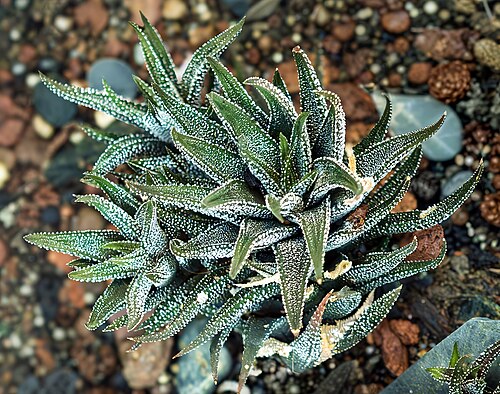
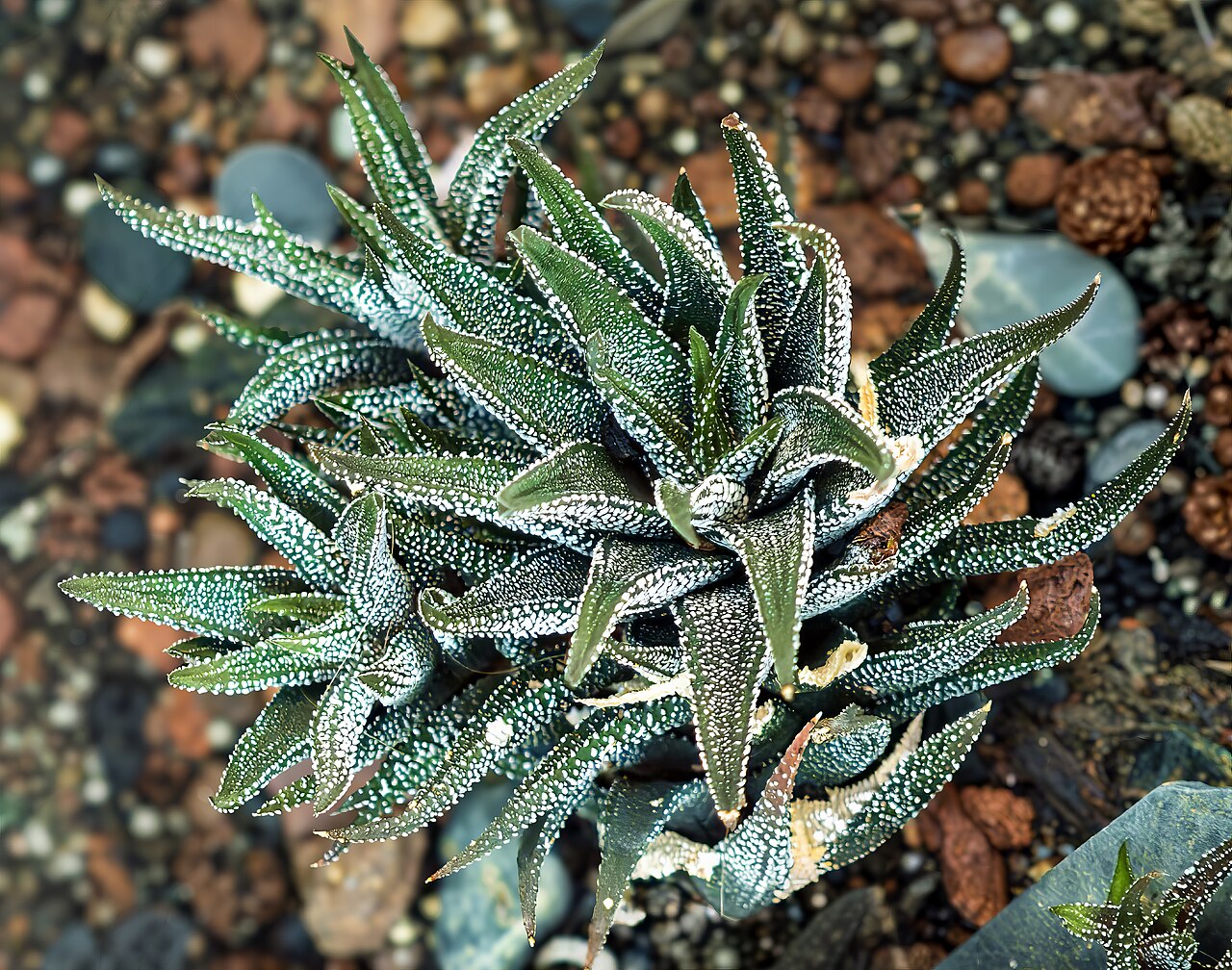
Photo: Didier Descouens, CC BY-SA 4.0, from Wikimedia Commons 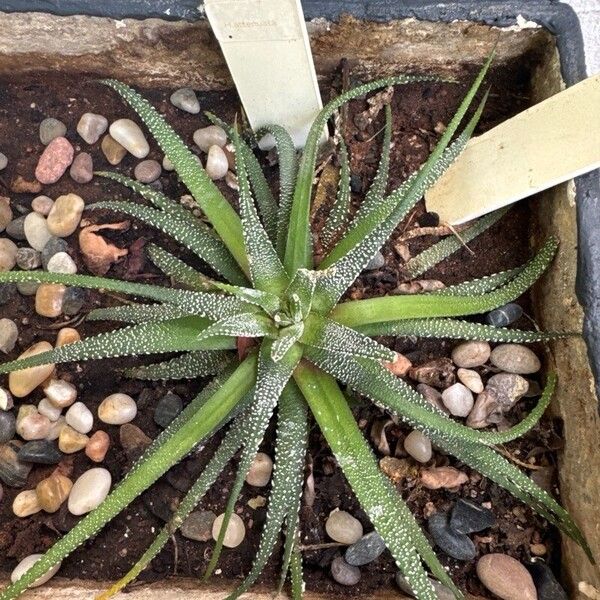
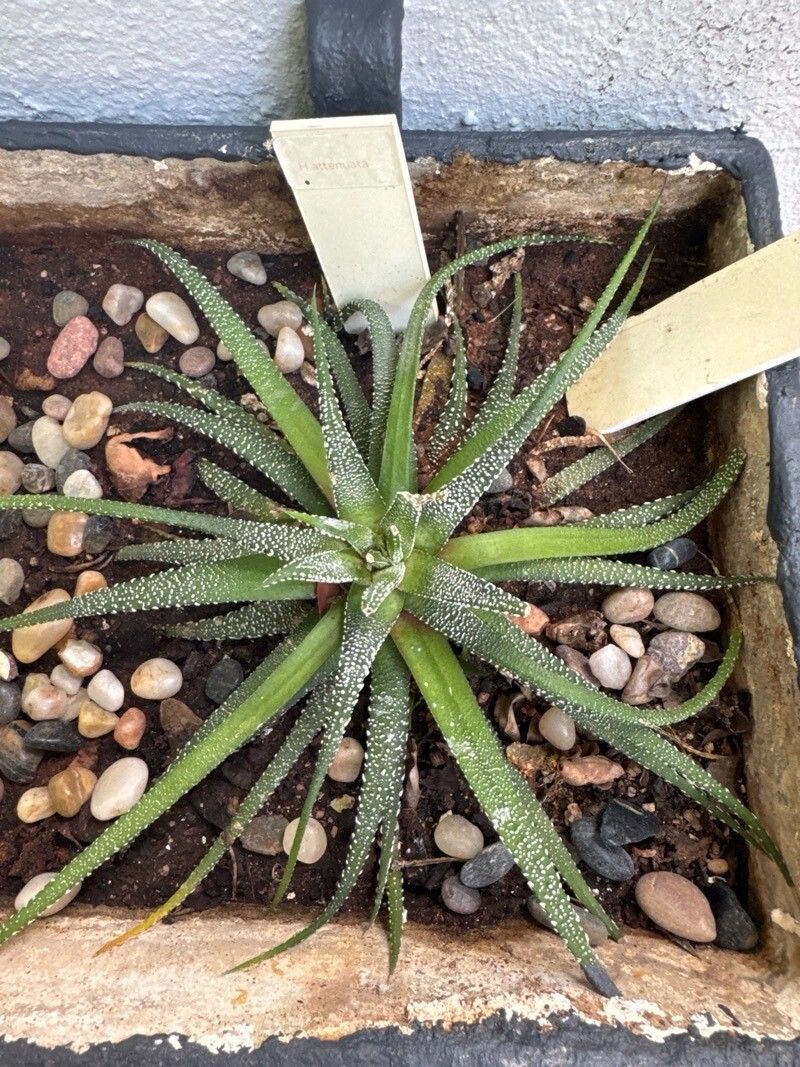
Photo: jeanne de klerk, CC BY-SA 4.0, from Pl@ntNet via GBIF
More in Haworthiopsis
- Zebra haworthiaHaworthiopsis fasciataAsphodelaceae
- Haworthiopsis coarctataAsphodelaceae
- Fairies washboard haworthiaHaworthiopsis limifoliaAsphodelaceae
- Haworthiopsis bruynsiiAsphodelaceae
- Haworthiopsis scabraAsphodelaceae
- Haworthiopsis viscosaAsphodelaceae
- Haworthiopsis longianaAsphodelaceae
- Haworthiopsis reinwardtiiAsphodelaceae
- Haworthiopsis pungensAsphodelaceae
- Haworthiopsis glaucaAsphodelaceae
- Haworthiopsis koelmaniorumAsphodelaceae
- Haworthiopsis nigraAsphodelaceae
Sources: classification, synonyms from World Flora Online Plant List (2026-06, CC0 1.0); common names, popularity from Wikidata (2026-10-26, CC0 1.0). About our plant data.