
ZZ plant stems falling over: causes and fixes
When ZZ plant stems fall over, the most likely culprit is overwatering causing root and rhizome rot, though severe underwatering or insufficient light can also cause stalks to flop.
Not sure it's this? Scan your plant — free
What it is
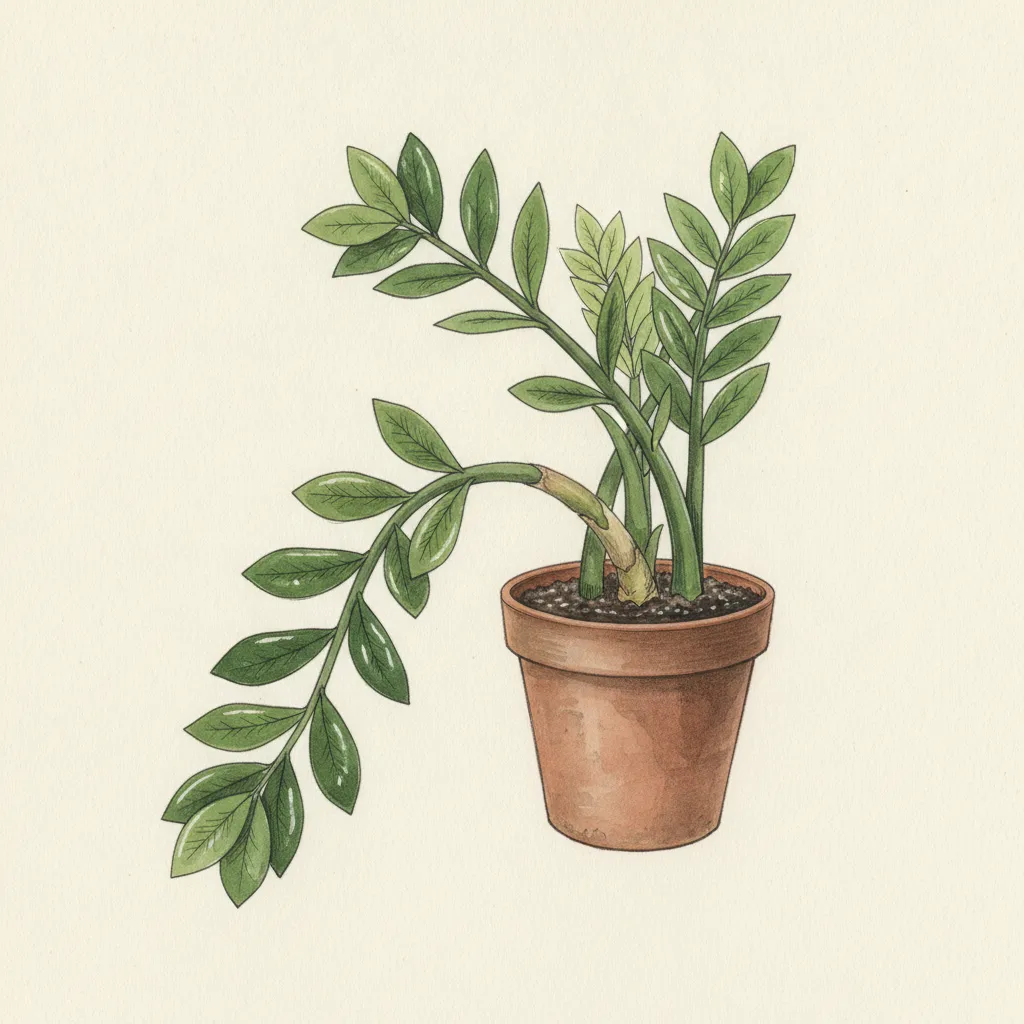
Flopping stems on a ZZ plant represents a mechanical collapse of the fleshy leaf stalks (petioles) caused by a loss of internal turgor pressure or fungal rot at the stem base. When kept in waterlogged potting medium, opportunistic pathogens attack the plant's underground potato-like rhizomes, destroying the anchor and vascular tissue that holds the stalks upright. Without firm subterranean support or steady cellular pressure, the heavy upright leaflets topple to the sides of the pot.
Also called: ZZ plant drooping, leaning ZZ plant stalks, flopping Zanzibar gem stems, weak ZZ plant petioles
Plants affected: Zamioculcas zamiifolia (ZZ plant, Zanzibar gem), Zamioculcas zamiifolia 'Raven', Zamioculcas zamiifolia 'Zenzi'
Symptoms
- Leaf stems (petioles) arching severely sideways or collapsing completely over the rim of the pot
- Stem bases near the soil line that feel soft, squishy, or pinched
- Yellowing or browning lower leaflets that drop when brushed
- Soil that stays damp for weeks after watering, accompanied by a sour or musty smell
- Shriveled, wrinkled stems and desiccated soil pulling away from the container edge
- Stretched, pale, spindly stalks with large spacing between leaflets leaning toward a distant window
Causes
- Overwatering and dense, poorly draining soil leading to rhizome and root rot (most common)
- Insufficient light causing etiolation, producing thin, weak stalks that cannot hold their own weight
- Prolonged underwatering that exhausts the water stored within the bulbous underground rhizomes
- Pot-bound, top-heavy mature stems naturally splaying outward without periodic pot rotation
How to tell it apart
Gently press your fingers into the base of the fallen stalk right at the soil line: if it feels squishy, bruised, or mushy and the surrounding soil is damp, overwatering and rhizome rot are almost certainly the cause. If the stalk base remains firm but feels rubbery, thin, and the soil is completely bone-dry and shrunk from the pot edges, prolonged underwatering is the issue. If the stalks are firm, light green, unusually tall with wide gaps between leaflets, and leaning toward the nearest light source, your plant is etiolated from inadequate light.
- Natural arching of mature stems
- Older ZZ plant stems can grow up to 3 feet long and naturally arch slightly under their own weight, but the stalks remain rock-firm at the soil line and the leaflets stay glossy and dark green.
- Cold drafts and chill damage
- Exposure to temperatures below 50°F causes sudden wilting, curling, and dark discoloration across multiple stems simultaneously, but the underground rhizomes initially remain firm rather than mushy.
- Pot-bound rhizome crowding
- Large, expanding rhizomes can warp or crack plastic pots and force outer stems outward at an angle, but all stems remain rigid, vigorous, and free of yellowing.
Treatment
- Stop watering immediately and assess moisture Do not give the plant any water while diagnosing the problem. Check the bottom drainage holes to confirm whether the potting medium is holding moisture. If the soil is bone-dry and stems are wrinkled, give the plant a thorough soak until water flows from the drainage holes, then discard all standing water from the saucer after 15 minutes.
- Unpot and prune away rotting tissue If stem bases are squishy or the soil is soggy, gently slide the plant from its container this week and remove the wet soil. Using clean pruners wiped with 70% isopropyl alcohol, trim off all soft, dark, or foul-smelling roots and any mushy sections of the potato-like rhizomes until only firm, pale, healthy tissue remains. Let the trimmed rhizomes air-dry on newspaper for 2 to 4 hours so cuts can callous.
- Repot in fresh, gritty potting mix Pot the surviving plant into a clean container with adequate drainage holes using a fast-draining blend, such as 50% standard potting soil, 25% perlite, and 25% coarse sand or pumice. Wait 7 to 10 days before applying any water to prevent fungal infection in the fresh root wounds.
- Prune unsalvageable or mushy stalks Cut completely severed, crimped, or rotten stalks cleanly off at the soil line using sterilized shears. If the upper half of a removed stalk has firm, healthy, glossy leaflets, you can snip individual leaflets or stem segments to root in water or moist perlite for new propagation.
- Move into bright, indirect light Place the plant in a location that receives moderate to bright indirect sunlight, such as 3 to 5 feet back from an east- or south-facing window. While ZZ plants tolerate low light, brighter indirect light encourages sturdy, compact cell growth and speeds soil drying.
- Stake leaning stems for temporary support For stems that are healthy but bending from thirst or mild light stretching, insert thin bamboo stakes into the soil near the pot edge—taking care not to impale rhizomes—and secure the stalks loosely with soft garden twine for 3 to 4 weeks while the plant stabilizes.
Prevention
- Water thoroughly only after the potting soil has dried out 100% from top to bottom, usually every 2 to 3 weeks in warm months and once a month or less during winter.
- Always use a pot with unobstructed bottom drainage holes and empty decorative drip trays 15 minutes after watering.
- Plant in a gritty, free-draining potting mixture composed of potting soil mixed with perlite or pumice.
- Keep the plant in medium to bright indirect light rather than dim corners to avoid weak, spindly stalks.
- Rotate the container a quarter turn every 1 to 2 weeks so stems grow evenly upright without leaning toward one light source.
When to worry
Worry if multiple stems collapse within a single week, if the stem bases emit a distinct rot odor, or if the tuberous rhizomes feel completely mushy when touched, which indicates advanced root rot that requires emergency unpotting and tissue surgery to prevent total plant loss.
Safety
ZZ plants contain sharp calcium oxalate crystals throughout their tissues, which cause immediate oral pain, burning, swelling, drooling, and digestive distress if chewed or swallowed. The plant is toxic to cats, dogs, and humans; if accidental ingestion occurs, contact a doctor, veterinarian, or a poison control center immediately. Wear gardening gloves when handling rotten rhizomes or cutting stalks, as the sap can cause skin irritation. If you use rubbing alcohol to sanitize pruning shears, store it out of reach of children and pets, keep it away from open flames, and apply it in a well-ventilated space.
Sharing your home with pets or small children? See which plants our sources call safe for cats, dogs and kids.
FAQ
Will a flopped ZZ plant stem stand back up on its own?
If the stem drooped strictly due to severe underwatering, it will often plump back up and regain rigidity within 24 to 48 hours of a thorough watering. However, if the base is rotted, bent, or severely stretched from low light, it will not straighten on its own and requires staking or pruning.
Should I cut off fallen ZZ plant stems?
Yes, if the base of the stalk is mushy, yellowed, or damaged, prune it off cleanly at soil level using clean pruners. You can save healthy top leaflets from the removed stem to propagate brand new plants in water or soil.
Can I stake a leaning ZZ plant?
Yes, staking with slender bamboo stakes and soft garden ties works well as a temporary fix while the plant recovers from dehydration or settles into a brighter location, provided the underground rhizomes are healthy and firm.
How often should I water my ZZ plant to prevent drooping?
Water only when the entire soil mass has dried out completely, which typically means every 10 to 14 days in spring and summer, and every 3 to 4 weeks during winter. Never water on a fixed calendar schedule without checking soil moisture first.