
Whiteflies on indoor plants: signs and treatment
Tiny white insects that flutter up when you touch a houseplant are most likely whiteflies; isolate the plant, wash the leaves, and treat the undersides if needed. ([extension.umn.edu](https://extension.umn.edu/garden-and-home/yard-and-garden/yard-and-garden-insects/insects-on-indoor-plants))
Not sure it's this? Scan your plant — free
What it is
Whiteflies are tiny, moth-like insects related to aphids and scale insects, rather than true flies. Adults and their young suck plant sap, weakening growth and leaving sticky waste called honeydew that can support black sooty mold. ([hgic.clemson.edu](https://hgic.clemson.edu/factsheet/common-houseplant-insects-related-pests/?utm_source=openai))
Also called: Whitefly infestation
Plants affected: Poinsettia, ivy, hibiscus, lantana, and many other indoor plants. ([extension.colostate.edu](https://extension.colostate.edu/resource/managing-houseplant-pests/))
Symptoms
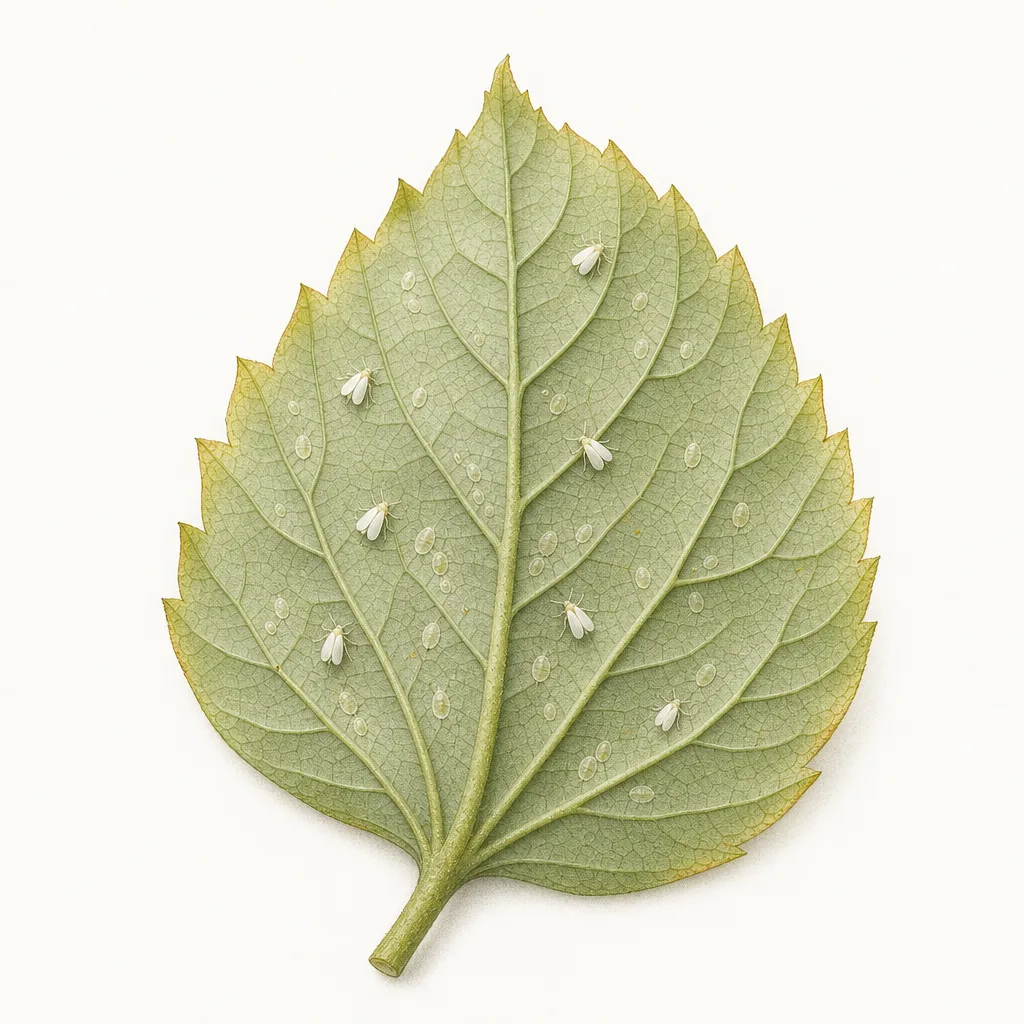
- Tiny white adults flutter up when the plant is handled or watered. ([extension.umn.edu](https://extension.umn.edu/garden-and-home/yard-and-garden/yard-and-garden-insects/insects-on-indoor-plants))
- Flat, oval, nearly transparent young insects cling to leaf undersides. ([extension.colostate.edu](https://extension.colostate.edu/resource/managing-houseplant-pests/))
- Leaves feel sticky or develop a black, soot-like coating. ([hgic.clemson.edu](https://hgic.clemson.edu/factsheet/common-houseplant-insects-related-pests/?utm_source=openai))
- Leaves yellow or drop, and growth becomes weaker with heavier infestations. ([extension.umn.edu](https://extension.umn.edu/garden-and-home/yard-and-garden/yard-and-garden-insects/insects-on-indoor-plants))
Causes
- Infested new plants or plants brought back indoors can introduce whiteflies. ([extension.colostate.edu](https://extension.colostate.edu/resource/managing-houseplant-pests/))
- Young whiteflies hide underneath leaves, so an infestation can go unnoticed while adults continue laying eggs. ([extension.colostate.edu](https://extension.colostate.edu/resource/managing-houseplant-pests/))
How to tell it apart
Gently disturb the foliage, then turn over several leaves. Whitefly adults are white and about 1/16 inch long; look underneath for flat, oval young insects as well. Yellowing or stickiness alone is not enough to identify whiteflies. ([extension.umn.edu](https://extension.umn.edu/garden-and-home/yard-and-garden/yard-and-garden-insects/insects-on-indoor-plants))
- Mealybugs
- Look for cottony or waxy clusters, especially where leaves join stems, rather than white adults fluttering from leaves. ([ipm.ucanr.edu](https://ipm.ucanr.edu/home-and-landscape/houseplant-problems/))
- Fungus gnats
- Adults are dark with clear wings and are associated with damp potting soil, rather than white insects clustered beneath leaves. ([extension.umn.edu](https://extension.umn.edu/garden-and-home/yard-and-garden/yard-and-garden-insects/insects-on-indoor-plants))
- Aphids
- Aphids are pear-shaped with visible legs and antennae. Their shed white skins can resemble white specks, but the skins do not fly. ([extension.umn.edu](https://extension.umn.edu/garden-and-home/yard-and-garden/yard-and-garden-insects/insects-on-indoor-plants))
- Spider mites
- Fine webbing and pale speckling suggest spider mites; they do not produce a flutter of white winged adults. ([ipm.ucanr.edu](https://ipm.ucanr.edu/home-and-landscape/houseplant-problems/))
Treatment
- 1. Isolate the affected plant today Separate it from other houseplants immediately and inspect nearby plants, especially leaf undersides. Wash your hands after handling infested foliage. ([ipm.ucanr.edu](https://ipm.ucanr.edu/home-and-landscape/houseplant-problems/))
- 2. Wash the leaves and remove badly infested parts Use lukewarm water in a sink or shower, reaching upper and lower leaf surfaces. Adjust the spray so it dislodges insects without tearing foliage. If the infestation is concentrated on a few leaves, remove and bag those leaves for disposal. ([hgic.clemson.edu](https://hgic.clemson.edu/factsheet/common-houseplant-insects-related-pests/?utm_source=openai))
- 3. Add a yellow sticky trap to monitor adults Place a trap in the affected plant's pot and check it during your weekly inspections. Traps catch flying adults, not the young attached to leaves, so do not rely on them alone. Follow the trap's instructions; handle it by its nonsticky edges and keep it and unused cards away from children and pets. ([ipm.ucanr.edu](https://ipm.ucanr.edu/home-and-landscape/houseplant-problems/))
- 4. If insects remain, use a labeled insecticidal soap Choose a product labeled for whiteflies, your plant, and indoor houseplant use. Check plant restrictions first: some houseplants are soap-sensitive. Test a small area and wait at least 48 hours for injury before treating the whole plant. Wet leaf undersides thoroughly at the label rate. Follow the label, including protective equipment and handling directions, and keep the product and treated plant away from pets and children as directed. ([hgic.clemson.edu](https://hgic.clemson.edu/factsheet/common-houseplant-insects-related-pests/?utm_source=openai))
- 5. Plan repeat treatment and weekly checks Soap works only when it directly wets the insects. Repeat applications may be needed every 4–7 days until pests are eliminated, but only if the label permits that interval. Check leaf undersides weekly rather than judging success only by fewer flying adults. Follow the label and keep pesticides away from pets and children. ([hgic.clemson.edu](https://hgic.clemson.edu/factsheet/insecticidal-soaps-for-garden-pest-control/?utm_source=openai))
Prevention
- Inspect new purchases and plants returning indoors before placing them near your collection. ([hgic.clemson.edu](https://hgic.clemson.edu/factsheet/common-houseplant-insects-related-pests/?utm_source=openai))
- Quarantine new plants. Extension recommendations differ: Minnesota suggests 1–2 weeks, while Clemson recommends six weeks; the longer period allows more time to spot hidden pests. ([extension.umn.edu](https://extension.umn.edu/garden-and-home/yard-and-garden/yard-and-garden-insects/insects-on-indoor-plants))
- Inspect leaf undersides weekly and periodically wash smooth-leaved plants to discourage pests. ([hgic.clemson.edu](https://hgic.clemson.edu/factsheet/common-houseplant-insects-related-pests/?utm_source=openai))
When to worry
Act promptly if leaf drop increases, growth weakens, or nearby plants become infested. If a plant is heavily infested or does not respond to treatment, discarding it may be the most practical way to protect the rest of your collection. ([extension.colostate.edu](https://extension.colostate.edu/resource/managing-houseplant-pests/))
Safety
Insecticidal soap is still a pesticide. Follow all label directions for mixing, protective equipment, application, re-entry, storage, and disposal; keep children and pets away as directed. Avoid spraying drought-stressed plants, and check plant restrictions before use. Store pesticides tightly closed in their original labeled containers, preferably locked away, separate from food, animal feed, and medicines. Keep sticky traps inaccessible to children and pets and follow their packaging instructions. ([extension.colostate.edu](https://extension.colostate.edu/resource/managing-houseplant-pests/))
Sharing your home with pets or small children? See which plants our sources call safe for cats, dogs and kids.
FAQ
Will yellow sticky traps get rid of whiteflies?
Not alone. They catch adults, but young whiteflies remain attached beneath leaves and need separate attention. ([ipm.ucanr.edu](https://ipm.ucanr.edu/home-and-landscape/houseplant-problems/))
Can I use dish soap?
A labeled insecticidal soap is a better choice: household soaps and detergents can injure plants. Follow the label and keep it away from pets and children. ([extension.colostate.edu](https://extension.colostate.edu/resource/managing-houseplant-pests/))
Do I need to replace the soil?
Usually not for whiteflies: their eggs and developing stages are on leaves, so treatment should focus there. ([extension.colostate.edu](https://extension.colostate.edu/resource/managing-houseplant-pests/))
Why do whiteflies return after spraying?
Contact sprays can miss hidden insects, and eggs can hatch afterward. Thorough underside coverage and label-directed repeat treatments are important. ([hgic.clemson.edu](https://hgic.clemson.edu/factsheet/common-houseplant-insects-related-pests/?utm_source=openai))
Sources
- Managing insects on indoor plants — University of Minnesota Extension
- Managing Houseplant Pests — Colorado State University Extension
- Houseplant Problems — UC Statewide IPM Program
- Common Houseplant Insects & Related Pests — Clemson Extension
- Insecticidal Soaps for Garden Pest Control — Clemson Extension
- Storing Pesticides Safely — US Environmental Protection Agency
- Common Houseplant Insects & Related Pests | Home & Garden Information Center
- Insecticidal Soaps for Garden Pest Control | Home & Garden Information Center