
White powder on lawn grass: causes and fixes
White powder on lawn grass is most likely powdery mildew, especially in shade; improving light and airflow usually matters more than spraying. ([ipm.ucanr.edu](https://ipm.ucanr.edu/agriculture/turfgrass/powdery-mildew/))
Not sure it's this? Scan your plant — free
What it is
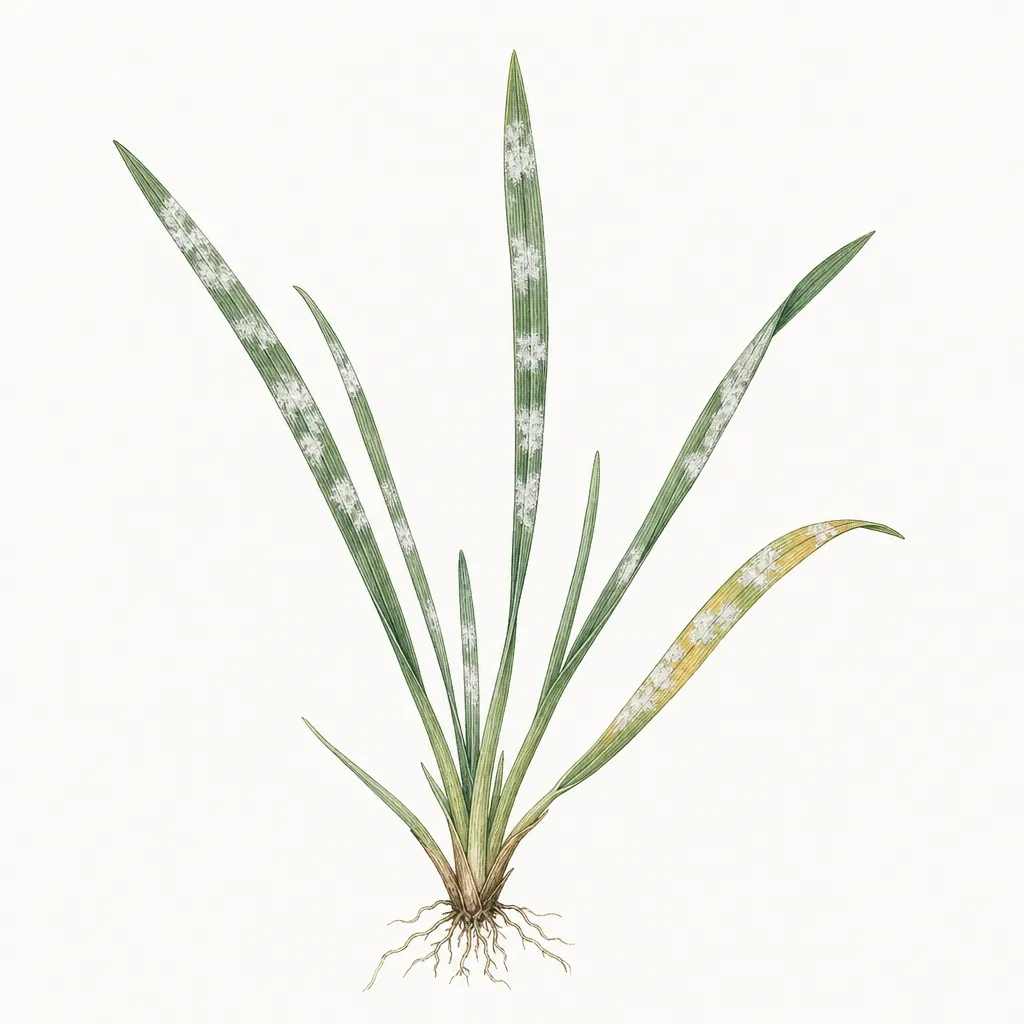
Powdery mildew is a fungal disease of grass caused by Blumeria graminis. Its growth and spores form a white coating on blades, and heavily infected leaves can yellow, brown and die, leaving grass weaker against drought and cold. ([extension.umd.edu](https://www.extension.umd.edu/resource/diseases-home-lawns))
Also called: Turfgrass powdery mildew
Plants affected: Kentucky bluegrass and fescues are especially susceptible; other lawn grasses can also be affected. ([ipm.ucanr.edu](https://ipm.ucanr.edu/agriculture/turfgrass/powdery-mildew/))
Symptoms
- Small white spots merge into a flour-like coating on grass blades. ([yardandgarden.extension.iastate.edu](https://yardandgarden.extension.iastate.edu/encyclopedia/powdery-mildew-turfgrass))
- Affected areas look white or gray, often where the lawn is shaded. ([ipm.ucanr.edu](https://ipm.ucanr.edu/agriculture/turfgrass/powdery-mildew/))
- Severely affected blades turn yellow, then brown, and may wither. ([yardandgarden.extension.iastate.edu](https://yardandgarden.extension.iastate.edu/encyclopedia/powdery-mildew-turfgrass))
Causes
- A susceptible grass growing in shade with poor air circulation. ([ipm.ucanr.edu](https://ipm.ucanr.edu/agriculture/turfgrass/powdery-mildew/))
- Humid conditions and moderate temperatures, often around 60–70°F; wet leaves are not required. ([yardandgarden.extension.iastate.edu](https://yardandgarden.extension.iastate.edu/encyclopedia/powdery-mildew-turfgrass))
- Excess nitrogen fertilizer can make outbreaks worse. ([yardandgarden.extension.iastate.edu](https://yardandgarden.extension.iastate.edu/encyclopedia/powdery-mildew-turfgrass))
How to tell it apart
Look closely at several blades: powdery mildew forms white patches that expand into a flour-like coating, rather than turning the leaf tissue itself white. A shaded location supports the diagnosis, but appearance alone cannot confirm it; an extension diagnostic clinic can help if you are unsure. ([yardandgarden.extension.iastate.edu](https://yardandgarden.extension.iastate.edu/encyclopedia/powdery-mildew-turfgrass))
- Slime mold
- Often appears suddenly after heavy rain as slimy masses that dry into white, gray or other-colored powder. The grass underneath is usually healthy or only slightly yellow; unlike powdery mildew, slime mold does not infect the grass. ([extension.illinois.edu](https://extension.illinois.edu/plant-problems/slime-molds))
- Gray snow mold
- Look for flattened, matted patches of pale or dead grass with white-gray fungal growth during cold, damp weather, often around snowmelt—not mainly flour-dusted, upright blades. ([extension.umd.edu](https://www.extension.umd.edu/resource/diseases-home-lawns))
Treatment
- Improve light and airflow first This week, identify shrubs overhanging the affected patch. Where appropriate, selectively trim branches blocking light or air movement; reducing shade and humidity around the blades helps suppress mildew. ([extension.umd.edu](https://www.extension.umd.edu/resource/diseases-home-lawns))
- Check your mowing height At the next mow, keep Kentucky bluegrass at 2½–3½ inches or fescues at 3–4 inches. Remove no more than one-third of blade height per cut, and do not mow wet, dormant or drought-stressed grass. Other grass types need different heights. ([extension.umd.edu](https://extension.umd.edu/resource/maintaining-established-lawn?utm_source=openai))
- Do not add extra fertilizer to force recovery Review recent feeding before applying anything this week. Avoid an extra nitrogen application aimed at greening up the white patch: excessive nitrogen can worsen mildew, while adequate—not excessive—fertility supports recovery. ([yardandgarden.extension.iastate.edu](https://yardandgarden.extension.iastate.edu/encyclopedia/powdery-mildew-turfgrass))
- Use simple removal only if it is slime mold If the coating matches slime mold instead, leave it alone or gently brush or rake off the dried growth. It normally disappears without treatment; a hose rinse is another option once dry weather arrives. ([extension.illinois.edu](https://extension.illinois.edu/plant-problems/slime-molds))
- Reserve fungicide for severe, confirmed mildew If grass is dying or thinning, contact your local extension service this week before buying a lawn fungicide labeled for powdery mildew. Fungicides are rarely needed. If advised, follow the label for dose, repeat interval and protective equipment, and keep the product and treated area away from pets and children as directed. ([yardandgarden.extension.iastate.edu](https://yardandgarden.extension.iastate.edu/encyclopedia/powdery-mildew-turfgrass))
Prevention
- Choose shade-tolerant, mildew-resistant grass varieties when renovating a repeatedly affected area. ([yardandgarden.extension.iastate.edu](https://yardandgarden.extension.iastate.edu/encyclopedia/powdery-mildew-turfgrass))
- Replace grass with a suitable lawn alternative where shade is too deep for healthy turf. ([extension.umd.edu](https://www.extension.umd.edu/resource/diseases-home-lawns))
- Maintain suitable mowing height, adequate moisture and balanced fertility rather than pushing lush growth. ([ipm.ucanr.edu](https://ipm.ucanr.edu/agriculture/turfgrass/powdery-mildew/))
When to worry
Seek a diagnosis if coated grass turns brown, dies or noticeably thins, especially if the problem keeps returning. Severe mildew weakens grass, making drought and cold damage more likely. ([yardandgarden.extension.iastate.edu](https://yardandgarden.extension.iastate.edu/encyclopedia/powdery-mildew-turfgrass))
Safety
If using a fungicide, follow every label instruction, including protective clothing and re-entry restrictions. Keep pets and children away from the product and treated lawn as directed. Store it tightly closed in its original labeled container, out of their reach, never in a food or drink container. For accidental exposure, follow the label’s first-aid directions and contact a doctor, veterinarian or poison line as appropriate. ([epa.gov](https://www.epa.gov/pets/read-label-first-protect-your-pets?utm_source=openai))
Sharing your home with pets or small children? See which plants our sources call safe for cats, dogs and kids.
FAQ
Will powdery mildew kill my lawn?
Severely infected leaves can die, but fungicides are rarely necessary. Correcting the growing conditions is usually the main treatment. ([yardandgarden.extension.iastate.edu](https://yardandgarden.extension.iastate.edu/encyclopedia/powdery-mildew-turfgrass))
Does powdery mildew mean I am overwatering?
Not necessarily. It favors humidity, shade and poor airflow, and does not require wet leaves. ([yardandgarden.extension.iastate.edu](https://yardandgarden.extension.iastate.edu/encyclopedia/powdery-mildew-turfgrass))
Can it spread to my roses or vegetables?
The mildew affecting lawn grass is different from the kinds affecting roses or cucumbers; a lawn outbreak is not their source of infection. ([extension.umd.edu](https://www.extension.umd.edu/resource/diseases-home-lawns))
Should I wash the white powder off?
Washing is an option for slime mold after dry weather begins. For powdery mildew, focus on reducing shade and improving airflow rather than washing the blades. ([extension.illinois.edu](https://extension.illinois.edu/plant-problems/slime-molds))
Sources
- Powdery Mildew-Turfgrass — Iowa State University Extension and Outreach
- Powdery Mildew — UC Statewide IPM Program
- Diseases of Home Lawns — University of Maryland Extension
- Slime Molds — Illinois Extension
- Maintaining an Established Lawn — University of Maryland Extension
- Read the Label First: Protect Your Pets — US EPA
- Maintaining an Established Lawn | University of Maryland Extension
- Read the Label First: Protect Your Pets | US EPA