
White mold on houseplant soil: causes and fixes
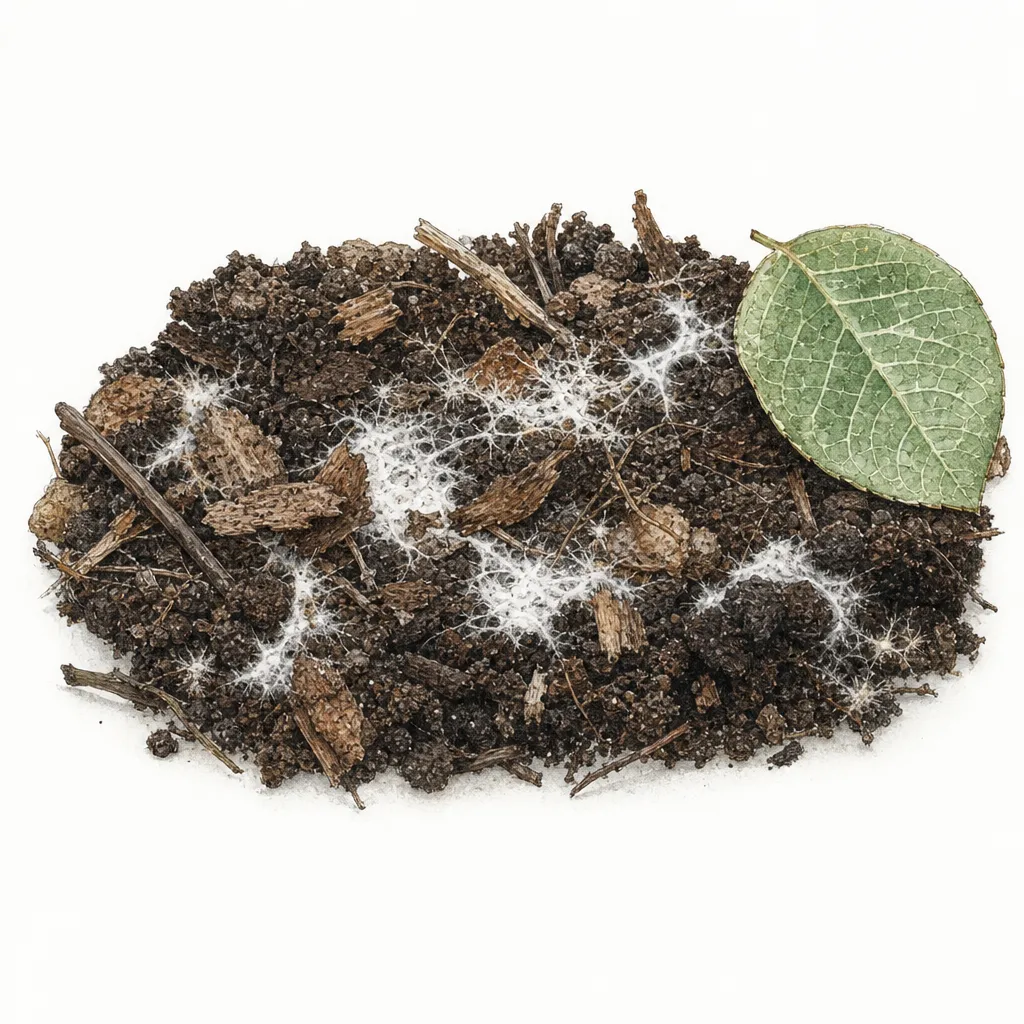
White, fuzzy mold on houseplant soil is most likely harmless fungal growth feeding on decaying material, but it often signals that the mix stays too wet.
Not sure it's this? Scan your plant — free
What it is
Saprophytic soil molds are fungi that break down dead organic material in potting mix. Their visible threads form a network called mycelium; this surface growth usually does not damage the plant directly, although persistently wet conditions can also encourage root problems.
Also called: Saprophytic fungal growth
Plants affected: Houseplants grown in organic potting mixes
Symptoms
- White, fuzzy or threadlike patches across the potting-mix surface.
- The plant may still look healthy despite the growth on its soil.
Causes
- Potting mix stays wet for too long because of frequent watering or inadequate drainage.
- Crowded pots and poor air movement favor fungal growth; insufficient light can contribute.
- Decaying organic material in the mix provides food for these fungi.
How to tell it apart
Look closely without stirring up the soil: threads or fuzz across the surface suggest fungal growth. A hard white crust suggests mineral deposits instead. Surface mold alone does not establish root rot. If the plant wilts, check moisture first: dry soil can also cause wilting. Decline despite wet soil calls for a prompt root inspection; soft, mushy, decaying roots are concerning. Appearance alone cannot identify the exact fungus.
- Mineral or fertilizer salt buildup
- A white crust on the soil and pot edges, rather than threadlike fuzz, suggests accumulated salts from fertilizer or hard water.
- Powdery mildew
- This produces a white powdery coating on leaves, rather than growth confined to the soil surface.
- Mealybugs
- Look for individual white, cottony insects or waxy clusters on foliage, in leaf joints, or around roots, rather than a threadlike soil covering.
Treatment
- Check moisture and adjust watering first Check the mix before watering. For many houseplants, wait until roughly the top inch feels dry; if it still feels wet, check again in one or two days. Follow your plant's particular moisture needs rather than forcing every species to dry out completely. When watering is needed, wet the root ball thoroughly and let excess water drain.
- Stop the pot sitting in water Empty standing water today. Make sure the growing pot has drainage holes; a decorative outer pot is not a substitute. After future watering, empty collected water within about 30–45 minutes. Do not add a gravel layer to compensate for missing drainage holes.
- Repot only if drainage or roots need attention If the plant wilts, check moisture first. If the mix remains wet and the plant is declining, promptly inspect the roots. Remove only soft, mushy, decaying roots with clean tools; retain firm roots and repot into an appropriately sized container with drainage and suitable fresh mix. Extensive root decay may make recovery unlikely. If drainage is poor even without wilting, address the container or compacted mix rather than repeatedly removing surface mold.
- Remove the visible surface growth If you can handle moldy material safely, carefully scrape away the affected surface mix and replace what you removed with fresh potting mix. Remove fallen leaves at the same time. A full repot is not normally necessary just for surface mold; correcting watering and drainage matters more than removing every visible thread.
- Give the plant breathing room This week, separate crowded pots so air can move between them. Check that the plant receives suitable light for its species rather than leaving it in an overly dark position.
Prevention
- Check moisture regularly, but water according to the plant's needs rather than a fixed weekly schedule.
- Use a pot with drainage holes sized to the root ball; an unnecessarily large pot can keep the mix wet too long.
- Empty water that collects in saucers or decorative outer pots after watering.
- Remove dead leaves from the soil surface and leave space between pots for air movement.
When to worry
Act promptly if the plant is declining despite wet soil or its roots are soft, mushy, and decaying. Extensive root decay may make recovery unlikely. Ask your local extension service for help if you are unsure, especially if moldlike growth also appears on damaged leaves or stems. Surface mold on an otherwise healthy plant usually does not mean the plant has a disease.
Safety
Mold can trigger allergy or asthma symptoms, especially in sensitive people. Avoid disturbing or breathing mold and potting-mix dust, follow any handling precautions on the potting-mix label, and wash your hands afterward. People with asthma, mold allergies, or weakened immune systems should avoid handling moldy material. Contact a healthcare professional if exposure causes symptoms. For replacement potting mix, follow the label's storage instructions and keep it out of reach of children and pets.
Sharing your home with pets or small children? See which plants our sources call safe for cats, dogs and kids.
FAQ
Will white soil mold kill my plant?
Usually not directly. The bigger concern is persistently wet mix, which can also encourage root problems.
Do I need to throw away all the soil?
Usually no. For an otherwise healthy plant, removing affected surface mix and correcting watering, drainage, and airflow are generally enough.
Why does the mold keep coming back?
Removing the fuzz without correcting excess moisture, poor drainage, or limited airflow leaves the conditions that encouraged it unchanged.
Does wilting mean the plant has root rot?
No. Dry soil can also cause wilting, so check moisture first. If the mix remains wet and the plant is declining, promptly inspect the roots.
Should I put cinnamon or baking soda on it?
Start with watering and drainage changes instead. Reports of cinnamon helping are anecdotal, and too much baking soda can add harmful sodium to the mix.