
Weeping fig dropping leaves after moving indoors
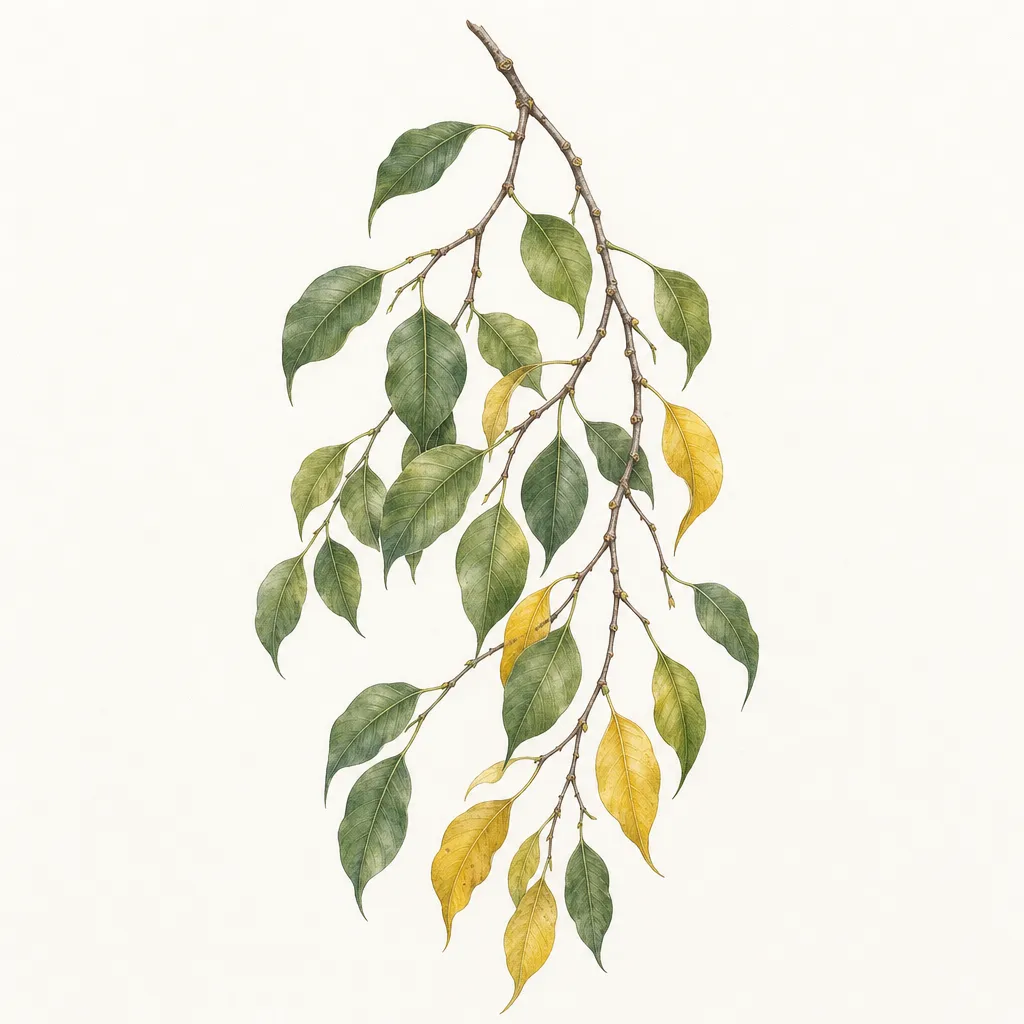
Your weeping fig is most likely dropping leaves as it adjusts to lower indoor light and changed conditions; steady light, careful watering, and protection from drafts usually help it recover. ([plants.ces.ncsu.edu](https://plants.ces.ncsu.edu/plants/ficus-benjamina/common-name/weeping-fig/))
Not sure it's this? Scan your plant — free
What it is
Move-related leaf drop is a stress response to changed growing conditions, rather than a pest or infection. A weeping fig sheds foliage when its environment changes, especially its light level, leaving fewer leaves to support growth while it adjusts and produces foliage suited to the new conditions. ([plants.ces.ncsu.edu](https://plants.ces.ncsu.edu/plants/ficus-benjamina/common-name/weeping-fig/))
Also called: Acclimation leaf drop, Environmental stress leaf drop
Plants affected: Weeping fig (Ficus benjamina)
Symptoms
- Leaves begin falling after the move indoors, leaving the canopy thinner. ([yardandgarden.extension.iastate.edu](https://yardandgarden.extension.iastate.edu/faq/several-houseplants-were-brought-indoors-fall-are-dropping-leaves-why))
- Leaves may yellow before falling, although leaf color alone cannot identify the cause. ([yardandgarden.extension.iastate.edu](https://yardandgarden.extension.iastate.edu/how-to/diagnosing-houseplant-problems-improper-environmental-conditions))
- With suitable conditions, leaf loss eventually slows and new leaves develop. ([plants.ces.ncsu.edu](https://plants.ces.ncsu.edu/plants/ficus-benjamina/common-name/weeping-fig/))
Causes
- An abrupt change from brighter outdoor light to dimmer indoor light. ([yardandgarden.extension.iastate.edu](https://yardandgarden.extension.iastate.edu/how-to/diagnosing-houseplant-problems-improper-environmental-conditions))
- Cold drafts, heating vents, or sudden temperature changes. ([content.ces.ncsu.edu](https://content.ces.ncsu.edu/extension-gardener-handbook/18-plants-grown-in-containers))
- Soil kept too wet or allowed to become too dry. ([missouribotanicalgarden.org](https://www.missouribotanicalgarden.org/gardens-gardening/your-garden/help-for-the-home-gardener/advice-tips-resources/gardening-help-faqs/question/1576/why-is-my-weeping-fig-dropping-leaves?utm_source=openai))
- Lower indoor humidity, especially during the heating season. ([content.ces.ncsu.edu](https://content.ces.ncsu.edu/extension-gardener-handbook/18-plants-grown-in-containers))
How to tell it apart
The timing is the strongest clue: shedding starts after bringing the plant indoors or changing its position. Check soil moisture, drafts, leaf undersides, and stems before assuming it is only adjustment; watering problems and pests can occur at the same time. No single leaf symptom confirms move-related stress. ([content.ces.ncsu.edu](https://content.ces.ncsu.edu/extension-gardener-handbook/18-plants-grown-in-containers))
- Overwatering and root trouble
- The plant wilts even though the soil stays wet, or its pot stands in drainage water. Persistently wet conditions can kill roots, preventing them from supplying enough water to the leaves. ([yardandgarden.extension.iastate.edu](https://yardandgarden.extension.iastate.edu/how-to/diagnosing-houseplant-problems-improper-environmental-conditions))
- Underwatering
- Wilting comes with a dry root ball. Water may run down the pot's sides without soaking the dry soil, so runoff alone does not prove the roots received water. ([yardandgarden.extension.iastate.edu](https://yardandgarden.extension.iastate.edu/how-to/diagnosing-houseplant-problems-improper-environmental-conditions))
- Spider mites
- Look for many tiny pale speckles on leaves and fine webbing around growing tips, rather than leaf shedding alone. ([content.ces.ncsu.edu](https://content.ces.ncsu.edu/extension-gardener-handbook/18-plants-grown-in-containers))
- Scale insects or mealybugs
- Brown bumps on stems, white cottony clusters, or sticky deposits point toward insects rather than adjustment alone. ([content.ces.ncsu.edu](https://content.ces.ncsu.edu/extension-gardener-handbook/18-plants-grown-in-containers))
Treatment
- Choose one bright, protected indoor spot This week, settle the plant near a window with bright, indirect light, away from heating vents and drafty doors. Keep it there rather than repeatedly trying new locations; weeping figs can shed leaves after being moved. ([plants.ces.ncsu.edu](https://plants.ces.ncsu.edu/plants/ficus-benjamina/common-name/weeping-fig/))
- Check the soil before adding water Check moisture regularly this week instead of watering on a fixed day. For an established tree in a large pot, Missouri Botanical Garden recommends waiting until the top 2–3 inches feel dry, then watering generously until a little drains out and emptying the saucer. Do not let the entire root ball dry out. ([missouribotanicalgarden.org](https://www.missouribotanicalgarden.org/gardens-gardening/your-garden/help-for-the-home-gardener/advice-tips-resources/gardening-help-faqs/question/1576/why-is-my-weeping-fig-dropping-leaves?utm_source=openai))
- Inspect for pests before treating anything Examine leaf undersides, growing tips, and stems now, then repeat during your regular care checks. Look for speckles, webbing, sticky patches, bumps, or cottony clusters. If you find them, get the pest identified before choosing a treatment; leaf drop alone is not evidence of an infestation. ([content.ces.ncsu.edu](https://content.ces.ncsu.edu/extension-gardener-handbook/18-plants-grown-in-containers))
- Allow recovery time while watching the trend Keep care consistent this week and over the coming weeks. Sources give different recovery windows: NC State says shedding after a room change should stop within a few weeks under similar conditions, while Iowa State allows 1–2 months after the fall move indoors. These describe different moves, not a guaranteed deadline. ([content.ces.ncsu.edu](https://content.ces.ncsu.edu/extension-gardener-handbook/18-plants-grown-in-containers))
Prevention
- For the next seasonal move, use a shaded porch for 1–2 weeks before bringing the plant fully indoors, provided temperatures remain suitable. Missouri Botanical Garden recommends bringing weeping figs inside before nights fall below 55°F. ([missouribotanicalgarden.org](https://www.missouribotanicalgarden.org/gardens-gardening/your-garden/help-for-the-home-gardener/advice-tips-resources/gardening-help-faqs/question/1576/why-is-my-weeping-fig-dropping-leaves?utm_source=openai))
- Keep its indoor location bright and away from drafts or direct heater airflow. ([plants.ces.ncsu.edu](https://plants.ces.ncsu.edu/plants/ficus-benjamina/common-name/weeping-fig/))
- Base watering on soil moisture, not the calendar, and discard drainage water. ([missouribotanicalgarden.org](https://www.missouribotanicalgarden.org/gardens-gardening/your-garden/help-for-the-home-gardener/advice-tips-resources/gardening-help-faqs/question/1576/why-is-my-weeping-fig-dropping-leaves?utm_source=openai))
When to worry
Investigate promptly if the plant wilts while its soil remains wet or shows pest signs. If shedding is not easing after several weeks, recheck light, drafts, and watering rather than simply waiting; continued loss beyond the 1–2-month adjustment window warrants advice from your local extension service. ([yardandgarden.extension.iastate.edu](https://yardandgarden.extension.iastate.edu/how-to/diagnosing-houseplant-problems-improper-environmental-conditions))
Safety
Weeping fig sap can irritate skin, and the plant can cause stomach upset and skin irritation in pets. Keep the tree and fallen leaves away from children and pets; avoid sap contact and wear gloves when handling damaged stems. Contact a doctor or poison line after human ingestion or a troublesome exposure, and a veterinarian or animal poison line if a pet chews the plant. No treatment product is needed for adjustment-related leaf drop. ([utia.tennessee.edu](https://utia.tennessee.edu/publications/wp-content/uploads/sites/269/2025/04/W1128C.pdf?utm_source=openai))
Sharing your home with pets or small children? See which plants our sources call safe for cats, dogs and kids.
FAQ
Is my weeping fig dying?
Not necessarily. Leaf shedding after a move is common, and plants can recover with suitable, consistent care. Wet-soil wilting or pest signs need a closer check. ([yardandgarden.extension.iastate.edu](https://yardandgarden.extension.iastate.edu/faq/several-houseplants-were-brought-indoors-fall-are-dropping-leaves-why))
How long will it keep dropping leaves?
It may settle within a few weeks, but adjustment after moving indoors in fall can take 1–2 months. ([content.ces.ncsu.edu](https://content.ces.ncsu.edu/extension-gardener-handbook/18-plants-grown-in-containers))
Will the leaves grow back?
New leaves can develop once conditions are suitable, including leaves better adjusted to the new light level. Recovery is not guaranteed if another problem remains. ([plants.ces.ncsu.edu](https://plants.ces.ncsu.edu/plants/ficus-benjamina/common-name/weeping-fig/))
Should I water more because leaves are falling?
No—not without checking the soil. Both overly wet and overly dry roots can cause leaf drop. ([missouribotanicalgarden.org](https://www.missouribotanicalgarden.org/gardens-gardening/your-garden/help-for-the-home-gardener/advice-tips-resources/gardening-help-faqs/question/1576/why-is-my-weeping-fig-dropping-leaves?utm_source=openai))
Sources
- Weeping Fig — North Carolina Extension Gardener Plant Toolbox
- Why is my weeping fig dropping leaves? — Missouri Botanical Garden
- 18. Plants Grown in Containers — NC State Extension
- Several houseplants that were brought indoors in fall are dropping leaves. Why? — Iowa State University Extension
- Diagnosing Houseplant Problems from Improper Environmental Conditions — Iowa State University Extension
- Gardening Help FAQs