
Thrips on houseplants: silver streaks on leaves
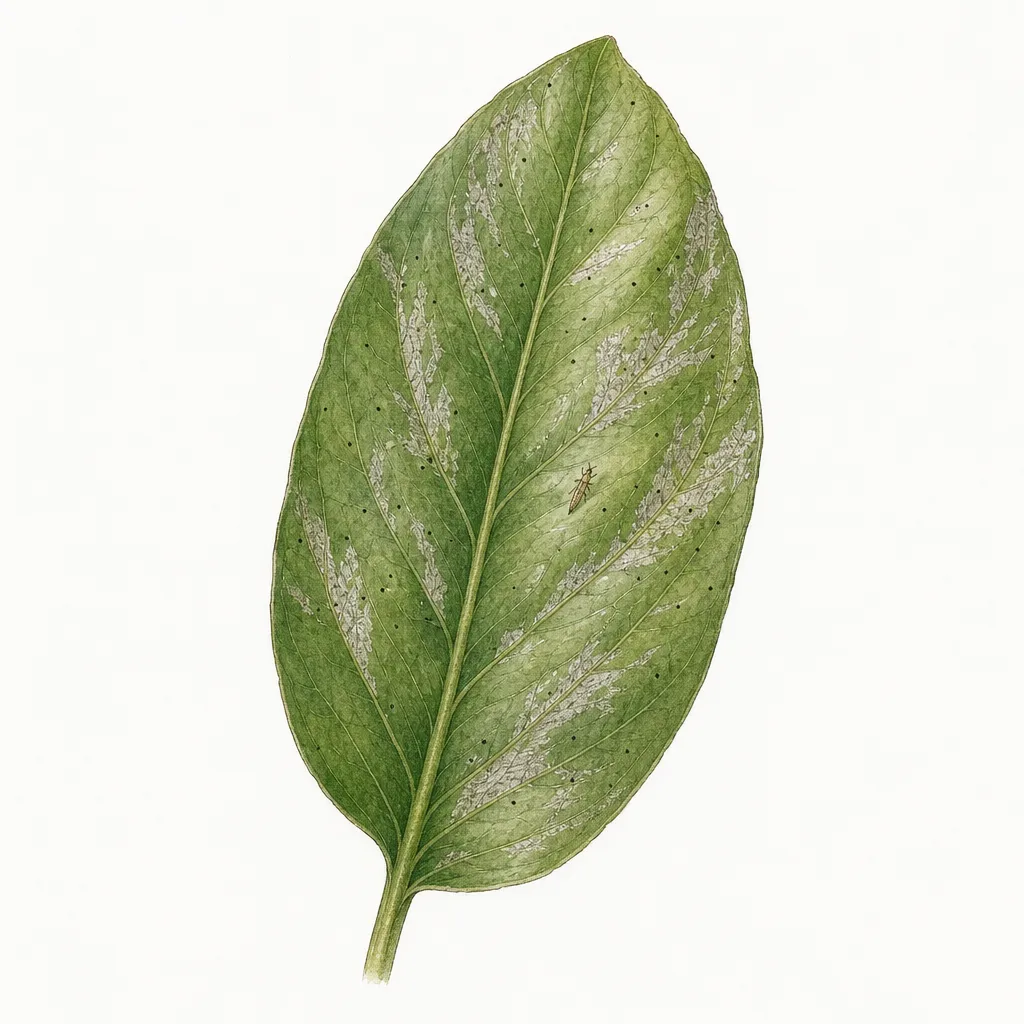
Irregular silver streaks on houseplant leaves most likely point to thrips, especially if you also find shiny black specks and tiny, slender insects. ([extension.umn.edu](https://extension.umn.edu/garden-and-home/yard-and-garden/yard-and-garden-insects/insects-on-indoor-plants))
Not sure it's this? Scan your plant — free
What it is
Thrips are tiny, narrow-bodied insects; adults have fringed wings. Plant-feeding species puncture the outer cells of leaves and flowers and suck out their contents, leaving scarred tissue and sometimes distorted growth. ([ipm.ucanr.edu](https://ipm.ucanr.edu/home-and-landscape/thrips/))
Also called: Thrips damage
Plants affected: Many foliage and flowering houseplants. ([ipm.ucanr.edu](https://ipm.ucanr.edu/home-and-landscape/houseplant-problems/))
Symptoms
- Irregular silvery streaks, patches, or scratches across leaves. ([extension.umn.edu](https://extension.umn.edu/garden-and-home/yard-and-garden/yard-and-garden-insects/insects-on-indoor-plants))
- Tiny, shiny black droppings near damaged areas. ([ipm.ucanr.edu](https://ipm.ucanr.edu/home-and-landscape/houseplant-problems/))
- Scarred or distorted flowers; curled, papery leaves or stunted new growth. ([ipm.ucanr.edu](https://ipm.ucanr.edu/home-and-landscape/thrips/))
- With heavier infestations, leaves may yellow and drop. ([ipm.ucanr.edu](https://ipm.ucanr.edu/home-and-landscape/houseplant-problems/))
Causes
- Infested plants can introduce pests into a previously healthy collection. ([extension.colostate.edu](https://extension.colostate.edu/resource/managing-houseplant-pests/))
- Adult thrips can fly, and their small size allows them through many window screens. ([extension.colostate.edu](https://extension.colostate.edu/resource/managing-houseplant-pests/))
- Eggs hidden in plant tissue and later stages sheltered in soil or plant crevices can escape leaf sprays, allowing the infestation to continue. ([ipm.ucanr.edu](https://ipm.ucanr.edu/home-and-landscape/thrips/))
How to tell it apart
Before spraying, gently tap a damaged leaf or flower over white paper. Look for slender, moving insects, usually around 1/16 inch long or smaller; use a magnifying glass to inspect leaf undersides and tight crevices. Silver scarring plus black droppings supports thrips, but silver marks alone are not enough to confirm them. ([ipm.ucanr.edu](https://ipm.ucanr.edu/home-and-landscape/thrips/))
- Spider mites
- Usually cause finer pale speckling rather than larger silver scars. Fine silk webbing supports spider mites, although it is not always present. ([extension.colostate.edu](https://extension.colostate.edu/resource/managing-houseplant-pests/))
- Broad or cyclamen mites
- New leaves become thickened, brittle, stunted, and cupped downward. These mites are too small to identify reliably without a microscope. ([ipm.ucanr.edu](https://ipm.ucanr.edu/home-and-landscape/houseplant-problems/))
- Sunburn or chemical spray injury
- Consider a recent move into stronger light or a recent spray application. Both can cause leaf blemishes, so look for live thrips before assuming the damage is an infestation. ([ipm.ucanr.edu](https://ipm.ucanr.edu/home-and-landscape/houseplant-problems/))
Treatment
- 1. Separate the plant and check its neighbors Move it away from other houseplants today. Inspect nearby plants too, including leaf undersides and new growth; keep affected plants separate while managing the pests. ([extension.umn.edu](https://extension.umn.edu/garden-and-home/yard-and-garden/yard-and-garden-insects/insects-on-indoor-plants))
- 2. Wash off exposed thrips This week, rinse a small plant in the sink or a larger one in the shower, directing water across both leaf surfaces. Use enough pressure to dislodge insects without tearing leaves, and let foliage dry promptly. Washing reduces exposed pests but is not a complete cure. ([extension.umn.edu](https://extension.umn.edu/garden-and-home/yard-and-garden/yard-and-garden-insects/insects-on-indoor-plants))
- 3. Remove the worst-infested parts If infestation is concentrated in a few leaves or flowers, remove those parts now. Bag and discard them, and clear fallen plant debris from the pot. You do not need to remove every silver-marked leaf. ([extension.umn.edu](https://extension.umn.edu/garden-and-home/yard-and-garden/yard-and-garden-insects/insects-on-indoor-plants))
- 4. Use a labeled contact treatment if live thrips remain Choose an insecticidal soap labeled for thrips on indoor houseplants and suitable for your plant. Follow the label's dilution, application interval, and maximum number of treatments; there is no universal safe recipe. Thoroughly cover insects, leaf undersides, and affected growing points as directed: dried soap residue does not keep killing pests. Avoid homemade dish-soap sprays, which can burn leaves. Keep the product and treated plant away from pets and children as the label directs. ([extension.umn.edu](https://extension.umn.edu/garden-and-home/yard-and-garden/yard-and-garden-insects/insects-on-indoor-plants))
- 5. Monitor rather than judging old scars Begin weekly inspections this week and continue over the following weeks. A yellow or blue sticky card near the foliage can help detect flying adults, but cannot eliminate the infestation alone. Follow its handling directions and keep the adhesive away from children and pets. Look for fewer live insects and undamaged new growth; old silver scars will remain. ([ipm.ucanr.edu](https://ipm.ucanr.edu/home-and-landscape/houseplant-problems/))
Prevention
- Inspect plants before buying them and keep new arrivals separate for a few weeks before placing them with your collection. ([extension.colostate.edu](https://extension.colostate.edu/resource/managing-houseplant-pests/))
- Check leaves, flowers, and growing points whenever you water, and remove dead plant debris regularly. ([extension.umn.edu](https://extension.umn.edu/garden-and-home/yard-and-garden/yard-and-garden-insects/insects-on-indoor-plants))
When to worry
Seek help from your local extension service if new growth stays badly distorted or live thrips persist despite correctly applied treatments. Thrips can transmit certain plant viruses, but silver scars alone do not diagnose a virus. Discarding a heavily infested, badly damaged plant is a reasonable way to protect the rest of your collection. ([extension.colostate.edu](https://extension.colostate.edu/resource/managing-houseplant-pests/))
Safety
Even insecticidal soap is a pesticide: follow the label for protective equipment, ventilation, application, and when people and pets may approach treated plants. Store it tightly closed in its original labeled container, inaccessible to children and pets, and away from food or pet bowls. Store and handle sticky cards according to their packaging directions, with adhesive out of reach. For suspected pesticide exposure, contact a doctor, poison line, or veterinarian and have the label available. ([epa.gov](https://www.epa.gov/pets/read-label-first-protect-your-pets?utm_source=openai))
Sharing your home with pets or small children? See which plants our sources call safe for cats, dogs and kids.
FAQ
Will the silver streaks turn green again?
No. Feeding scars are permanent; watch new growth for improvement instead. ([ipm.ucanr.edu](https://ipm.ucanr.edu/home-and-landscape/thrips/))
Why do thrips return after spraying?
Hidden eggs and sheltered stages can survive leaf treatments. Contact sprays also miss insects they do not directly wet. ([ipm.ucanr.edu](https://ipm.ucanr.edu/home-and-landscape/thrips/))
Do sticky cards get rid of thrips?
No. They help detect flying adults, but other stages remain on or around the plant. ([extension.colostate.edu](https://extension.colostate.edu/resource/managing-houseplant-pests/))
How long should new plants stay separate?
Extension guidance varies: Minnesota recommends one to two weeks; Colorado State recommends a few weeks. Inspect throughout that period. ([extension.umn.edu](https://extension.umn.edu/garden-and-home/yard-and-garden/yard-and-garden-insects/insects-on-indoor-plants))