
String of pearls bald on top: causes and fixes
A string of pearls that is bald on top most likely has sparse growth from too little light or dieback from overly wet soil; check for soft stems before adding water. ([rhs.org.uk](https://www.rhs.org.uk/plants/string-of-beads?utm_source=openai))
Not sure it's this? Scan your plant — free
What it is
Bare-top growth is a loss or shortage of leafy stems across the pot surface, not a single disease. Inadequate light produces weak, sparsely leafed growth, while excessively wet potting mix can allow roots and stems to rot. ([rhs.org.uk](https://www.rhs.org.uk/plants/string-of-beads?utm_source=openai))
Also called: Sparse string of pearls, Balding string of pearls
Plants affected: String of pearls (Curio rowleyanus, formerly Senecio rowleyanus)
Symptoms
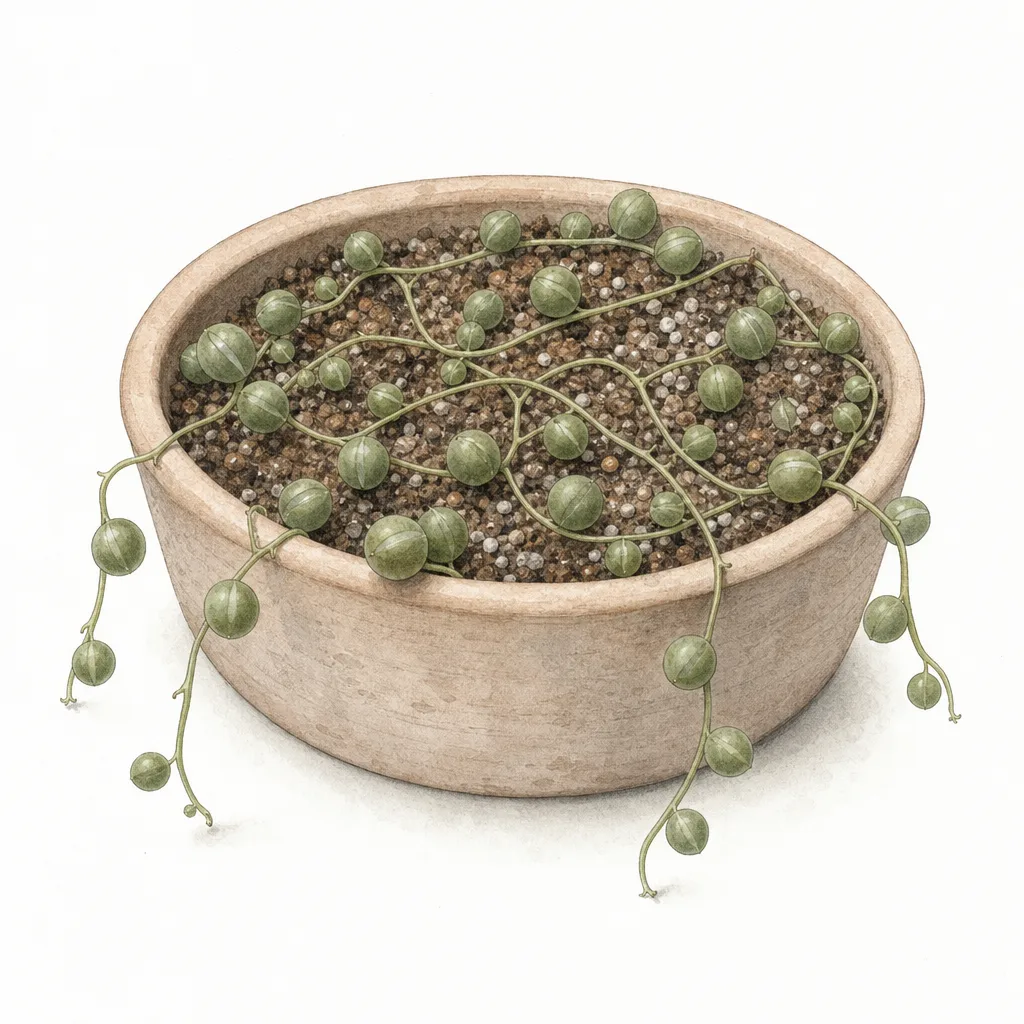
- Visible soil between sparse strands, with small pearls spaced widely along stretched stems. ([rhs.org.uk](https://www.rhs.org.uk/plants/string-of-beads?utm_source=openai))
- Shriveled pearls and rotting stems when the potting mix stays excessively wet. ([rhs.org.uk](https://www.rhs.org.uk/plants/string-of-beads/how-to-grow-string-of-beads))
- Dark, soft roots if root rot is involved. ([extension.umd.edu](https://extension.umd.edu/resource/diagnose-indoor-plant-problems))
Causes
- Insufficient light, which encourages straggly stems and smaller, sparser leaves. ([rhs.org.uk](https://www.rhs.org.uk/plants/string-of-beads?utm_source=openai))
- Frequent watering, poor drainage or an oversized pot that stays wet around the plant's shallow roots. ([hort.extension.wisc.edu](https://hort.extension.wisc.edu/articles/string-of-pearls-senecio-rowleyanus/))
- Age-related decline: older plants can die back after several years and may be better renewed from healthy stem cuttings. ([plants.ces.ncsu.edu](https://plants.ces.ncsu.edu/plants/curio-rowleyanus/common-name/senecio-rowleyanus/))
How to tell it apart
Look at the remaining growth and check the mix before watering. Long, thin stems with widely spaced, small pearls suggest insufficient light. If the plant is wilting while the mix is wet, gently slide out the root ball: healthy roots are firm and light-colored; dark, soft roots suggest rot. Baldness alone cannot identify the cause. ([rhs.org.uk](https://www.rhs.org.uk/plants/string-of-beads?utm_source=openai))
- Underwatering
- Dry mix and shriveled pearls suggest thirst, but shriveling also happens with overwatering. Check moisture and root firmness rather than judging by the pearls alone. ([plants.ces.ncsu.edu](https://plants.ces.ncsu.edu/plants/curio-rowleyanus/common-name/senecio-rowleyanus/))
- Sunburn
- Bleached or scorched patches, especially after a move into stronger sunlight, suggest sunburn rather than low-light stretching. ([extension.umd.edu](https://extension.umd.edu/resource/diagnose-indoor-plant-problems))
- Mealybugs
- Look for cottony white clusters in stem crevices, sticky deposits or black sooty growth. Heavy infestations can cause premature leaf loss. ([rhs.org.uk](https://www.rhs.org.uk/biodiversity/mealybug))
Treatment
- 1. Check for rot before watering again Today, feel the stems at soil level. If they are soft or the plant is wilting in wet mix, inspect the roots. Cut away rotten portions with clean scissors and keep only firm, healthy sections for replanting or cuttings. ([extension.umd.edu](https://extension.umd.edu/resource/diagnose-indoor-plant-problems))
- 2. Give the pot surface bright light This week, move it near a bright window where light reaches the top as well as the hanging strands. Bright indirect light is suitable indoors; increase exposure gradually rather than moving straight into harsh direct sun. ([plants.ces.ncsu.edu](https://plants.ces.ncsu.edu/plants/curio-rowleyanus/common-name/senecio-rowleyanus/))
- 3. Reset watering around dryness, not a calendar For an established plant, let the mix dry between waterings, then water the mix rather than misting the foliage. Empty collected water after drainage. Water less during slow winter growth. Sources differ: Wisconsin Extension recommends complete drying between waterings, while NC State advises against complete drying; both warn against overwatering. ([hort.extension.wisc.edu](https://hort.extension.wisc.edu/articles/string-of-pearls-senecio-rowleyanus/))
- 4. Correct a waterlogged setup if needed If drainage is poor or roots have rotted, repot this week into fresh, free-draining cactus potting mix in a shallow container with drainage holes. Avoid a large volume of unused mix around the shallow roots. Leave a healthy, freely draining plant undisturbed. ([hort.extension.wisc.edu](https://hort.extension.wisc.edu/articles/string-of-pearls-senecio-rowleyanus/))
- 5. Root healthy stems across the gaps Once wet-soil problems are corrected, loop a healthy attached strand onto the bare surface and gently secure it with a bent wire staple. Alternatively, take 3–4-inch healthy tip cuttings, remove the lowest 3–4 pearls and lightly cover those leaf attachment points with moist mix. Keep the rooting area lightly moist, not soaked; cuttings may root in about a month. ([hort.extension.wisc.edu](https://hort.extension.wisc.edu/articles/string-of-pearls-senecio-rowleyanus/))
Prevention
- Keep the plant in bright indirect light; avoid leaving the pot top shaded while only the trailing ends receive light. ([plants.ces.ncsu.edu](https://plants.ces.ncsu.edu/plants/curio-rowleyanus/common-name/senecio-rowleyanus/))
- Use a shallow, draining pot and let established plants dry between waterings instead of following a fixed weekly schedule. ([hort.extension.wisc.edu](https://hort.extension.wisc.edu/articles/string-of-pearls-senecio-rowleyanus/))
- Inspect new plants for cottony insects and isolate them from your collection for at least a month when possible. ([rhs.org.uk](https://www.rhs.org.uk/biodiversity/mealybug))
When to worry
Act promptly if stems become soft or dark, roots are mushy, or the plant wilts despite wet soil. Save firm, healthy tip cuttings while they remain; severely rotted plants may need to be discarded. ([extension.umd.edu](https://extension.umd.edu/resource/diagnose-indoor-plant-problems))
Safety
String of pearls is toxic to people and pets if eaten, and its sap can irritate skin. Keep plants, fallen pearls and cuttings away from children and pets; wear gloves when cutting. After ingestion, contact a doctor, veterinarian or poison line promptly; seek medical advice for a skin reaction. Follow potting-mix label directions for handling and storage, avoid breathing dust, wash hands afterward, and store the bag closed away from children and pets. ([plants.ces.ncsu.edu](https://plants.ces.ncsu.edu/plants/curio-rowleyanus/common-name/senecio-rowleyanus/))
Sharing your home with pets or small children? See which plants our sources call safe for cats, dogs and kids.
FAQ
Can I make the top fuller without cutting it?
Yes. Loop a healthy attached stem back across the pot and gently pin it against the mix so it can root. ([rhs.org.uk](https://www.rhs.org.uk/plants/string-of-beads/how-to-grow-string-of-beads))
Should I mist a bald string of pearls?
Not as routine care. Established plants dislike humid conditions; lightly moistening the rooting area for new cuttings is a separate propagation technique. ([rhs.org.uk](https://www.rhs.org.uk/plants/string-of-beads/how-to-grow-string-of-beads))
Do shriveled pearls always mean it needs water?
No. Both underwatering and overwatering can cause wilting or shriveling, so check the mix and roots first. ([plants.ces.ncsu.edu](https://plants.ces.ncsu.edu/plants/curio-rowleyanus/common-name/senecio-rowleyanus/))
How long do replacement cuttings take to root?
RHS guidance gives about a month under suitable conditions; that is rooting time, not a promise that the whole pot will look full. ([rhs.org.uk](https://www.rhs.org.uk/plants/string-of-beads/how-to-grow-string-of-beads))
Sources
- String of Pearls, Curio rowleyanus — Wisconsin Horticulture
- String of beads and its relatives — RHS Plant Guide
- How to grow string of beads — RHS Growing Guide
- String of Pearls — North Carolina Extension Gardener Plant Toolbox
- Diagnose Indoor Plant Problems — University of Maryland Extension
- Mealybug — RHS Advice
- String of beads and its relatives / RHS Plant Guide