
Spider plant brown tips: causes and fixes
Spider plant brown tips most often point to dry air, watering stress, or mineral and fertilizer buildup—not necessarily a dying plant.
Not sure it's this? Scan your plant — free
What it is
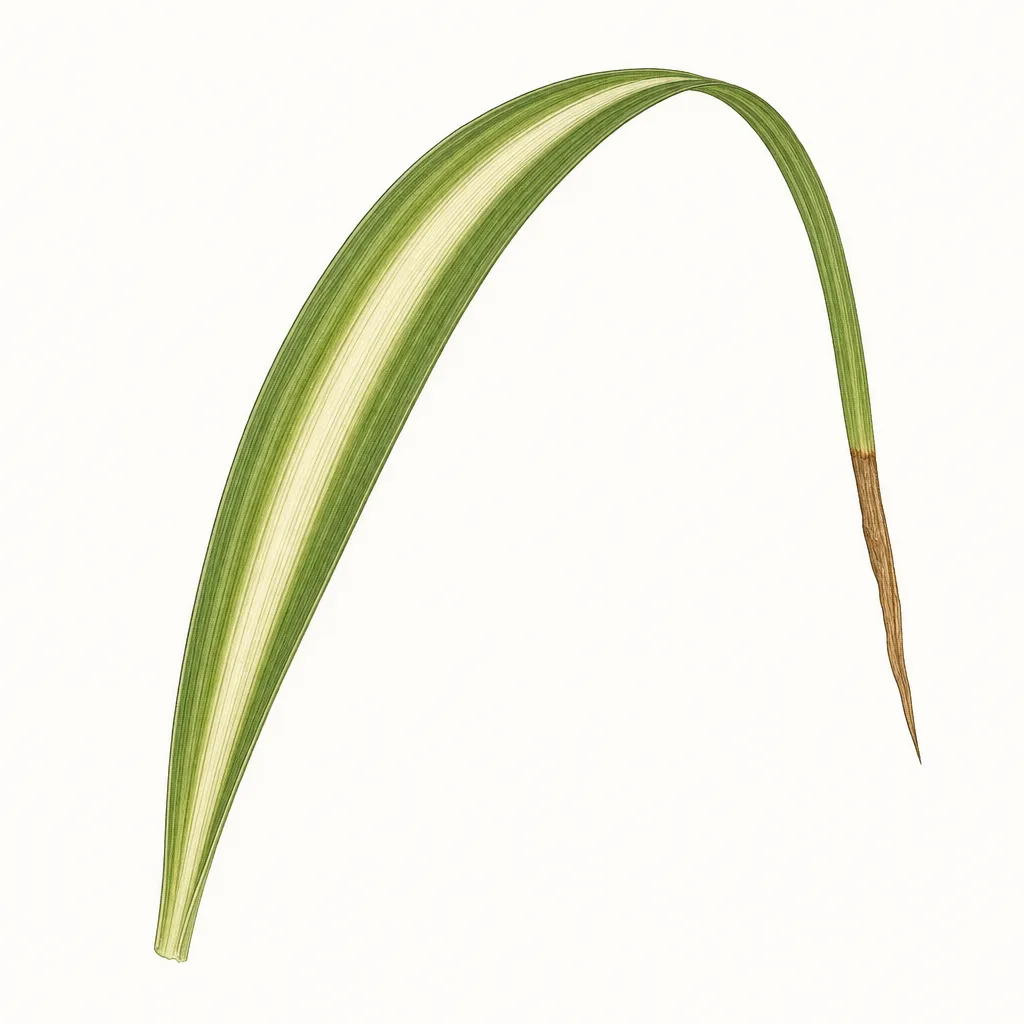
Leaf-tip burn is the drying and death of tissue at the pointed ends of leaves. Water stress or chemical injury damages this tissue; excess salts can also make it harder for roots to take up water.
Also called: Brown leaf tips, Tip browning
Plants affected: Spider plant (Chlorophytum comosum)
Symptoms
- Dry, brown ends on otherwise green leaves, sometimes extending along the edges.
- Dry, curling or faded leaves alongside brown tips when watering has been inconsistent.
Causes
- Very dry indoor air, especially during the heating season. Iowa State identifies low humidity as the most likely cause of houseplant tip browning; RHS lists several possible causes without ranking one first.
- Letting the potting mix stay dry too long, or keeping it too wet.
- Mineral or fertilizer salts accumulating in the potting mix.
- Sensitivity to fluoride in irrigation water.
- Strong direct sunlight or crowded roots leaving too little potting mix to hold water.
How to tell it apart
Brown tips alone cannot identify the cause. Feel the potting mix, check that the pot drains, look for white crust on the soil or pot, and review recent fertilizer use. Very dry soil suggests water shortage; white crust supports salt buildup. Yellowing leaves with persistently wet soil call for a closer check of the roots.
- Root trouble from overwatering
- Yellowing or dropping leaves, persistently wet soil and deteriorating roots suggest a root problem rather than isolated, dry leaf tips.
- Sun scorch
- Leaves fade, bleach or develop broader damaged areas after strong direct sun exposure, rather than browning only at their points.
- Loss of variegation
- Leaves become greener and lose their contrasting stripes in insufficient light. This is a color change, not dry brown tissue.
Treatment
- 1. Check moisture and correct drainage Check the potting mix before the next watering. When it becomes slightly dry, water the whole root ball until water drains from the pot, then empty the saucer. If the mix is still wet, wait. Use soil moisture rather than a fixed weekly schedule, and do not leave the pot standing in water.
- 2. Address salt buildup if the clues fit If you see white crust or have been feeding heavily, pause fertilizer. If the mix is not already waterlogged and the pot drains freely, flush it with at least three times the pot's volume of water—for example, 3 liters for a 1-liter pot. Let it drain completely and discard the runoff. Do not flush a pot without drainage holes.
- 3. Try a different water source If you have been using tap water, use distilled water or collected rainwater at the next needed watering, especially if tips keep browning despite steady moisture. Continue using it for subsequent waterings and judge the response by new growth, not existing brown tips.
- 4. Reduce drying heat and harsh sun This week, move the plant into bright, indirect light away from radiators and heating vents. If the air is very dry, consider a room humidifier; follow its operating and cleaning instructions.
- 5. Trim damaged tips if you wish Use scissors to remove the dry brown ends without cutting into healthy green tissue. This improves appearance but does not treat the cause. Watch emerging leaves for improvement; existing brown tissue will not turn green.
Prevention
- Check moisture regularly, water the whole root ball when the mix becomes slightly dry, and discard drainage water.
- Do not add extra fertilizer to treat brown tips; excessive feeding can cause them. Follow the fertilizer label whenever feeding.
- Keep the plant in bright, indirect light and away from drying heating vents.
- Check for crowded roots if the plant dries unusually quickly or roots have displaced much of the potting mix; repot into a container with drainage when needed.
When to worry
A few brown tips are common and usually do not mean the plant is dying. Investigate promptly if whole leaves yellow or drop, the plant wilts despite wet soil, or roots deteriorate; these signs suggest more than a cosmetic tip problem.
Safety
ASPCA lists spider plants as non-toxic to cats and dogs. If a pet becomes unwell after chewing one, contact a veterinarian or animal poison line; seek advice from a doctor or poison line for a concerning human ingestion. If using fertilizer, follow the label, keep it in its original labeled container away from children and pets, avoid skin and eye contact, and wash hands after handling. Keep trimming scissors away from children and pets.
Sharing your home with pets or small children? See which plants our sources call safe for cats, dogs and kids.
FAQ
Can brown tips turn green again?
No. The browned tissue is dead. Care changes protect healthy tissue and new growth.
Should I cut off the brown tips?
You can trim them for appearance, avoiding healthy green tissue. Correct the underlying care problem too, or browning may return.
Does my spider plant need more water?
Only if the potting mix is becoming dry. Both too much and too little water can contribute to brown tips.
Should I mist my spider plant?
Guidance differs in emphasis: RHS suggests occasional misting, while Iowa State recommends humidity measures such as a humidifier. First check watering and move the plant away from drying heat.
Sources
- Why does my houseplant have brown leaf tips and edges? — Iowa State University Extension
- Spider plant (Chlorophytum comosum) — New York Botanical Garden
- How to grow spider plants — Royal Horticultural Society
- Mineral and Fertilizer Salt Deposits on Indoor Plants — University of Maryland Extension
- Caring for Houseplants — University of Missouri Extension
- Toxic and Non-toxic Plants: Spider Plant — ASPCA