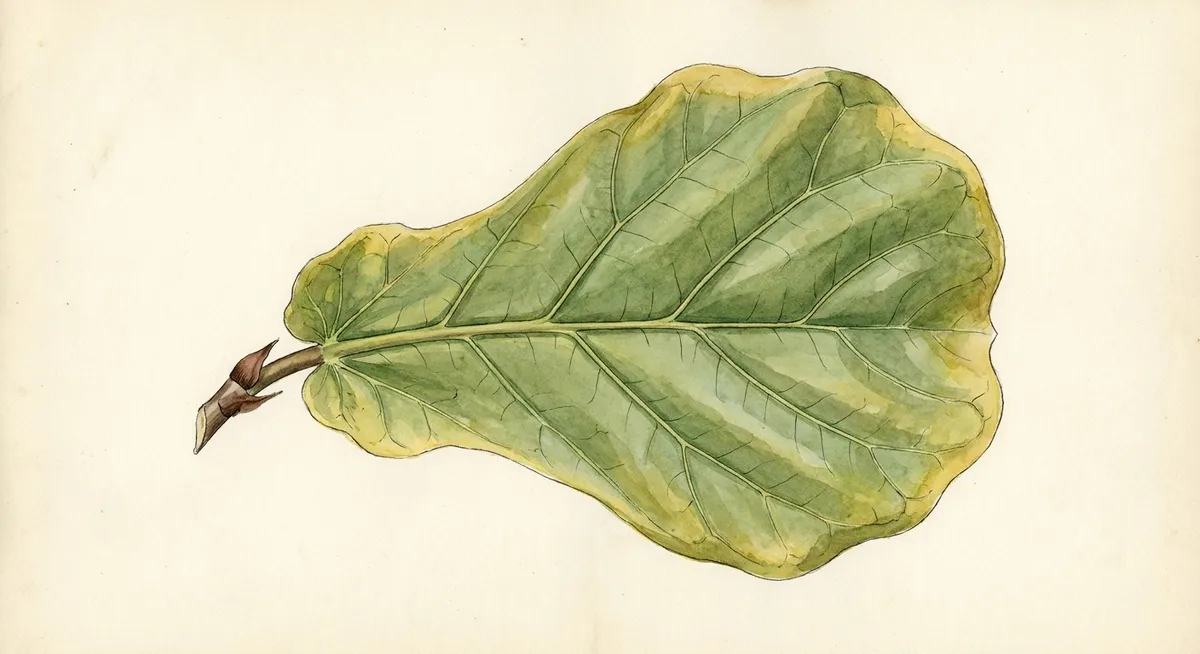
Rubber plant leaves turning yellow and falling off
Your rubber plant is most likely shedding yellow leaves because of overwatering or poor drainage, though sudden drops in light, cold drafts, or moving the pot can cause the exact same reaction.
Not sure it's this? Scan your plant — free
What it is
Rubber plant leaf drop is a physiological stress disorder in which Ficus elastica aborts foliage, most often triggered by waterlogged roots or abrupt environmental shifts. When soggy potting soil deprives roots of oxygen or when ambient light drops sharply, the plant cannot sustain its large, heavy leaves and triggers an abscission layer at the base of the leaf stem. If uncorrected, lingering wetness invites opportunistic fungal pathogens that rot root tissue and can eventually collapse the plant.
Also called: Rubber tree chlorosis, Ficus leaf drop, Ficus elastica leaf drop, Rubber plant lower leaf loss
Plants affected: Ficus elastica (Rubber plant), Ficus elastica 'Burgundy', Ficus elastica 'Tineke', Ficus elastica 'Ruby', Ficus elastica 'Robusta', Ficus elastica 'Decora'
Symptoms
- Oldest, lower leaves turn an even, pale yellow before falling
- Leaves feel soft, limp, or slightly leathery rather than crisp before dropping
- Leaves detach with minimal resistance or fall when lightly brushed
- Soil stays damp for more than 10 to 14 days after watering
- Faint sour, musty smell rising from the potting mix
- Stunted or stalled new leaf shoots at the top of the stem
Causes
- Overwatering or planting in containers without adequate drainage, suffocating the roots
- Insufficient light or moving the plant away from a bright window into a dark corner
- Acclimation shock following a change in location, repotting, or purchase from a nursery
- Exposure to cold drafts below 55°F (13°C) or rapid temperature fluctuations near heating vents
- Underwatering that forces the plant to abandon its oldest leaves to conserve moisture
- Heavy infestations of sap-sucking pests like spider mites, scale, or mealybugs
How to tell it apart
Check the soil moisture and location of the falling leaves. If the lower leaves turn completely yellow while the soil is still cool and wet several inches down, overwatering is almost certainly the culprit. If the soil is bone dry and leaves droop with dry edges before falling, underwatering is the issue. If the plant was moved within the last three to four weeks and the soil moisture is moderate, shedding is likely an acclimation stress response. If leaves show speckled yellow dots or fine webs underneath, suspect spider mites.
- Natural leaf senescence
- A rubber plant shedding a single, very old bottom leaf every few months while producing steady, healthy new growth up top is normal aging, whereas multiple leaves yellowing and dropping in a span of one to two weeks indicates stress.
- Underwatering stress
- Underwatered foliage generally curls inward, feels papery, and develops dry, crispy brown tips or margins before dropping, accompanied by potting soil that has pulled away from the pot rim.
- Spider mite injury
- Spider mites cause tiny, scattered yellow speckles (stippling) and a dusty, bronzed appearance across the leaf surface, often with fine webbing in leaf axils, rather than a solid, uniform yellowing of the whole leaf.
- Bacterial or fungal leaf spot
- Leaf spots form localized, irregular brown or black patches surrounded by yellow halos, whereas watering and light-induced leaf drop turns the entire leaf yellow from stem to tip.
Treatment
- Pause watering and verify soil drainage Stop watering immediately and probe the top 2 to 3 inches (5–8 cm) of soil with your finger or a wooden chopstick. If the soil feels damp, hold off on adding any water until the top 2 to 3 inches feel dry, which may take 10 to 14 days. Empty any pooled runoff from the pot saucer within 15 minutes of watering to keep roots out of standing water.
- Inspect and trim rotted roots if potting mix smells foul If the soil remains waterlogged or emits a marshy smell, slide the plant out of its pot. Prune away any brown, mushy, or hollow roots using shears wiped with 70% isopropyl alcohol, preserving only firm white or cream roots. Repot the plant into clean, well-draining indoor potting mix amended with roughly 25% perlite or pumice, using a pot with unobstructed drainage holes.
- Relocate to consistent, bright indirect light Position your rubber plant near an east-facing window or 3 to 5 feet away from an unobstructed south- or west-facing window where it receives bright, filtered light. Leave it in this chosen location rather than shifting it around, as rubber plants take several weeks to stabilize after any move.
- Prune completely yellowed leaves Yellow leaves will not turn green again. Using clean bypass pruners, snip off completely yellowed or dying leaves roughly 0.5 inches (1 cm) out from the main trunk. Disinfect your pruner blades between cuts with rubbing alcohol and wipe away any dripping sap with a moist paper towel.
- Treat for sap-feeding pests if present Wipe both sides of remaining leaves with a damp microfiber cloth to remove dust. If you find scale insects, mealybugs, or spider mites, spray the foliage with an insecticidal soap or horticultural oil, carefully following the manufacturer's label instructions for dilution and repeat every 7 to 10 days for 3 weeks.
Prevention
- Allow the top 2 to 3 inches of potting medium to dry out before watering again, and reduce watering frequency further in winter.
- Always grow rubber plants in containers with drainage holes and well-aerated potting soil.
- Provide sustained bright, indirect sunlight and avoid placing the plant in dark corners or hallway recesses.
- Maintain steady room temperatures between 65°F and 80°F (18°C to 27°C) and keep plants clear of drafty entryways, open windows, and AC vents.
- Wipe leaves down with a soft, moist rag once a month to remove dust and optimize light absorption.
When to worry
Worry if the main stem turns soft or wrinkled near the soil level, if leaves drop by three or more per week, or if more than half of the foliage has fallen despite letting the soil dry. This indicates widespread root rot, requiring prompt propagation of healthy upper stem cuttings before the central trunk dies completely.
Safety
Rubber plants produce a milky latex sap containing ficin and ficusin that irritates skin, eyes, and mucous membranes, and is toxic to pets and people if chewed or ingested. If a child or pet swallows any part of the plant, contact a doctor, veterinarian, or poison control hotline immediately. If you apply an insecticidal soap or horticultural spray, wear gloves, store the container tightly sealed out of reach of children and pets, and always follow label directions.
FAQ
Will yellow rubber plant leaves ever turn green again?
No, once rubber plant foliage loses its chlorophyll and turns yellow, the discoloration is permanent, and the plant will eventually drop the leaf.
Is it normal for a rubber plant to drop leaves after being moved?
Yes, Ficus species are notoriously sensitive to environmental changes; moving the pot can induce stress that causes several lower leaves to drop over the following two to four weeks while it acclimates.
How often should I water my indoor rubber plant?
Rather than watering on a calendar schedule, water only when the top 2 to 3 inches of soil feel dry to the touch, usually every 7 to 12 days in warm months and every 2 to 3 weeks during winter.
Should I cut off yellow leaves or let them drop naturally?
You can cut them off with clean shears or gently bend them down; if they are ready to drop, they will detach with almost no pressure.