
Rubber plant corky bumps on leaves: causes and fixes
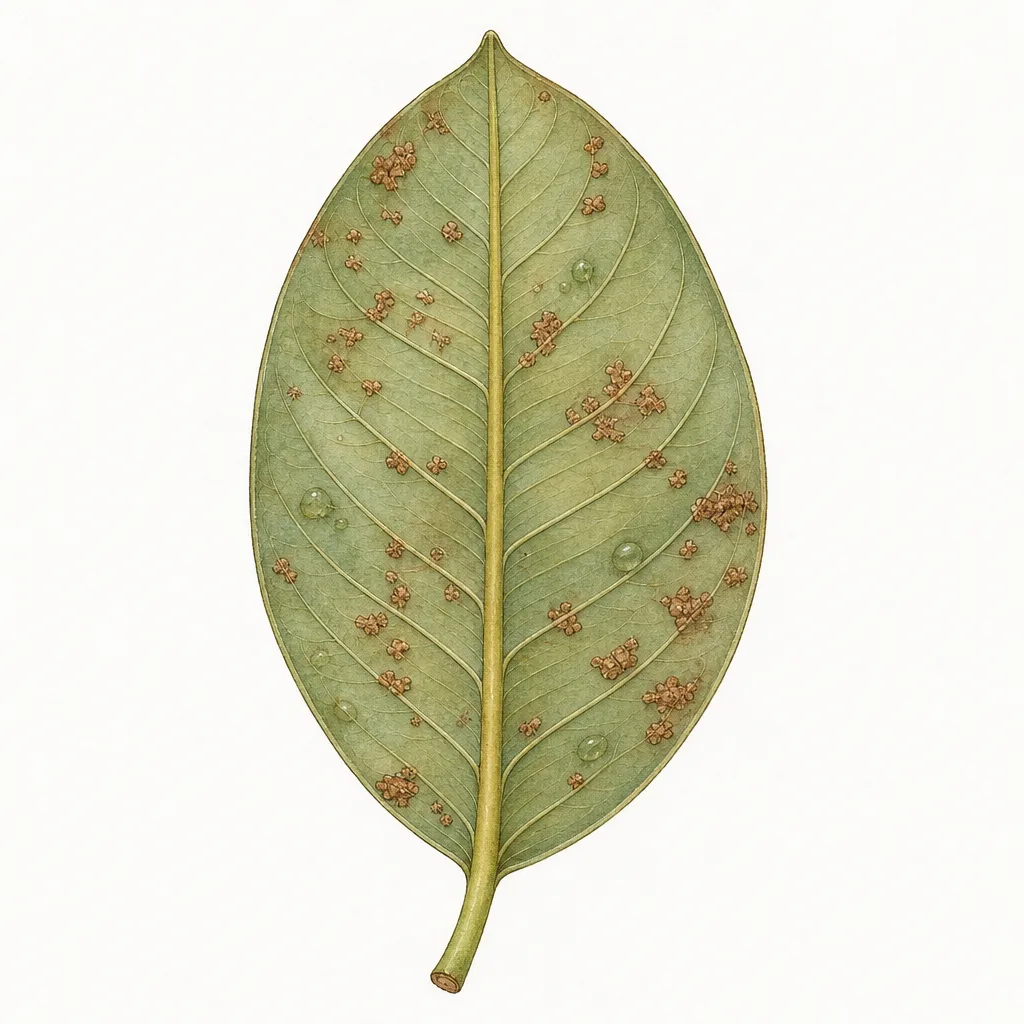
Corky bumps on rubber plant leaves are most likely edema—water-related blistering that turns into rough scars, especially underneath the leaves. ([portal.ct.gov](https://portal.ct.gov/caes/home/plant-pest-handbook/pphr/rubberplant-ficus?utm_source=openai))
Not sure it's this? Scan your plant — free
What it is
Edema is a noninfectious disorder that develops when roots absorb water faster than leaves release it. Pressure damages leaf cells, leaving raised blisters that become tan or brown corky tissue. ([ipm.ucanr.edu](https://ipm.ucanr.edu/home-and-landscape/edema/?utm_source=openai))
Also called: Oedema, Corky scab
Plants affected: Rubber plant (Ficus elastica)
Symptoms
- Raised, scab-like patches, especially on leaf undersides. ([portal.ct.gov](https://portal.ct.gov/caes/home/plant-pest-handbook/pphr/rubberplant-ficus?utm_source=openai))
- Fresh spots that look water-soaked, then become rusty-brown and corky as they age. ([portal.ct.gov](https://portal.ct.gov/caes/home/plant-pest-handbook/pphr/rubberplant-ficus?utm_source=openai))
Causes
- Watering too often or keeping the potting mix excessively wet. ([portal.ct.gov](https://portal.ct.gov/caes/home/plant-pest-handbook/pphr/rubberplant-ficus?utm_source=openai))
- Low light and cool, cloudy conditions that slow water loss from leaves. ([portal.ct.gov](https://portal.ct.gov/caes/home/plant-pest-handbook/pphr/rubberplant-ficus?utm_source=openai))
- High humidity combined with wet soil, allowing water to accumulate in leaf tissue. ([ipm.ucanr.edu](https://ipm.ucanr.edu/home-and-landscape/edema/?utm_source=openai))
How to tell it apart
Look underneath several leaves. Edema is more likely when rough brown patches follow water-soaked blisters and the mix has stayed wet. Its scars are damaged leaf tissue rather than insects sitting on top; scale insects usually flake off with gentle pressure. Appearance alone cannot confirm the diagnosis. ([portal.ct.gov](https://portal.ct.gov/caes/home/plant-pest-handbook/pphr/rubberplant-ficus?utm_source=openai))
- Scale insects
- Look for separate oval bumps along veins, leaf stalks, or stems. Gently test one with a cotton swab: scale usually flakes off, unlike a corky leaf scar. Sticky honeydew supports soft scale, but its absence does not rule out other scales. ([extension.umd.edu](https://extension.umd.edu/resource/scale-insects-indoor-plants?utm_source=openai))
- Anthracnose leaf disease
- On rubber plants, this can start as tan or brown dead tissue at leaf tips and advance across the leaf, rather than forming mainly raised underside blisters. Affected leaves may brown and drop. ([portal.ct.gov](https://portal.ct.gov/caes/home/plant-pest-handbook/pphr/rubberplant-ficus?utm_source=openai))
Treatment
- Pause watering while the mix is still moist Check the soil by touch before every watering this week. Wait until it feels slightly dry, not completely dried out. Then water thoroughly until excess drains away; use soil condition rather than a fixed weekly schedule. ([hgic.clemson.edu](https://hgic.clemson.edu/factsheet/rubber-plant/))
- Let excess water escape Empty the saucer or decorative outer pot now and after every watering. Check that the growing pot has drainage holes. If the mix remains excessively wet because it drains poorly, repot into fresh, well-draining houseplant mix. ([hgic.clemson.edu](https://hgic.clemson.edu/factsheet/rubber-plant/))
- Improve the growing conditions This week, choose a bright spot with indirect light or gentle morning light near an east-facing window. Allow air to circulate around the leaves without exposing the plant to cold drafts; avoid temperatures below 55°F. ([hgic.clemson.edu](https://hgic.clemson.edu/factsheet/rubber-plant/))
- Keep the leaves and watch new growth Leave otherwise healthy scarred leaves attached; removing foliage can worsen edema. Existing corky scars will not heal, so judge improvement by healthier new growth rather than expecting old bumps to disappear. ([rhs.org.uk](https://www.rhs.org.uk/problems/oedema))
Prevention
- Before each watering, check that the soil has dried slightly; never leave the pot standing in drained water. ([hgic.clemson.edu](https://hgic.clemson.edu/factsheet/rubber-plant/))
- Recheck moisture especially carefully during cool, cloudy periods instead of watering automatically. ([portal.ct.gov](https://portal.ct.gov/caes/home/plant-pest-handbook/pphr/rubberplant-ficus?utm_source=openai))
- Maintain good drainage and air circulation without letting the root ball become completely dry. ([rhs.org.uk](https://www.rhs.org.uk/problems/oedema))
When to worry
A few stable corky scars are usually cosmetic. Seek help from a local extension service if leaves keep yellowing or dropping while the soil stays wet, or if dead patches advance across leaves: overwatering, root rot, or leaf disease may need a different response. ([ipm.ucanr.edu](https://ipm.ucanr.edu/home-and-landscape/edema/?utm_source=openai))
Safety
Rubber plant's milky sap can irritate skin and the stomach if eaten. Keep the plant away from children and pets that chew plants, and avoid touching leaking sap. Contact a doctor or poison line after human ingestion or a concerning reaction, and a veterinarian or animal poison line after pet ingestion. If repotting, follow the potting mix label's handling and storage precautions, avoid breathing dust, wash hands afterward, and keep the closed bag away from children and pets. ([hgic.clemson.edu](https://hgic.clemson.edu/factsheet/rubber-plant/))
Sharing your home with pets or small children? See which plants our sources call safe for cats, dogs and kids.
FAQ
Will the corky bumps disappear?
No. Damaged tissue cannot be restored; improved conditions help protect future growth. ([ipm.ucanr.edu](https://ipm.ucanr.edu/home-and-landscape/edema/?utm_source=openai))
Can edema spread to my other plants?
No. Edema is a noninfectious disorder, not a contagious disease. ([ipm.ucanr.edu](https://ipm.ucanr.edu/home-and-landscape/edema/?utm_source=openai))
Should I cut off affected leaves?
Not just for edema scars. Keep otherwise healthy leaves; reducing foliage can worsen the problem. ([rhs.org.uk](https://www.rhs.org.uk/problems/oedema))
Does edema always mean I watered too much?
Not necessarily. Low light, cool conditions, and high humidity can also upset the balance between water uptake and water loss. ([portal.ct.gov](https://portal.ct.gov/caes/home/plant-pest-handbook/pphr/rubberplant-ficus?utm_source=openai))
Sources
- Rubberplant (Ficus) — Connecticut Agricultural Experiment Station
- Edema — UC Statewide Integrated Pest Management Program
- Oedema — Royal Horticultural Society
- Rubber Plant — Clemson Cooperative Extension
- Scale Insects on Indoor Plants — University of Maryland Extension
- Rubberplant Ficus
- Edema / Home and Landscape / UC Statewide IPM Program (UC IPM)
- Scale Insects on Indoor Plants | University of Maryland Extension