
Red thread in lawn: signs and what to do
Red or pink threads sticking out of grass blades most likely mean red thread, a fungal lawn disease that usually improves with better growing conditions rather than fungicide. ([hort.extension.wisc.edu](https://hort.extension.wisc.edu/articles/red-thread/))
Not sure it's this? Scan your plant — free
What it is
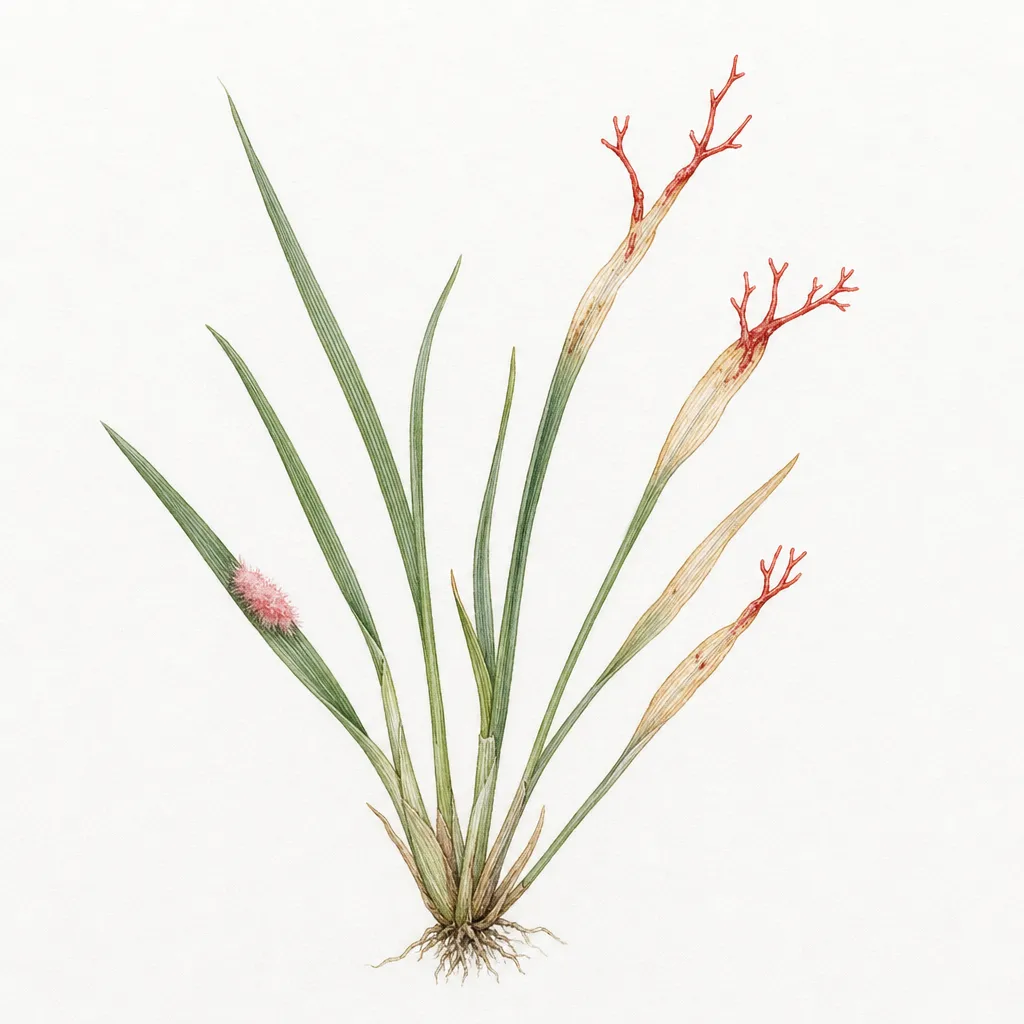
Red thread is a disease caused by the fungus Laetisaria fuciformis, which infects grass leaves and produces thick, red survival structures. Infected blades die back and bleach, leaving discolored patches in the lawn. ([extension.psu.edu](https://extension.psu.edu/downloadable/download/sample/sample_id/120375/))
Also called: Red thread disease
Plants affected: Fine fescues, Perennial ryegrass, Kentucky bluegrass, Tall fescue
Symptoms
- Circular or uneven patches, commonly 4 inches to 2 feet across, with a pinkish or reddish cast. ([content.ces.ncsu.edu](https://content.ces.ncsu.edu/red-thread-in-turf))
- Thick, red or pink threads projecting from affected blades, sometimes resembling tiny antlers. ([extension.purdue.edu](https://www.extension.purdue.edu/extmedia/BP/BP-104-W.pdf))
- Grass blades dying back from their tips and turning tan, pale gray, or bleached white. ([hort.extension.wisc.edu](https://hort.extension.wisc.edu/articles/red-thread/))
- Pink, cottony growth when leaves are wet; patches may merge during prolonged outbreaks. ([content.ces.ncsu.edu](https://content.ces.ncsu.edu/red-thread-in-turf))
Causes
- Prolonged leaf wetness during cool, damp weather favors the fungus, especially in spring and fall. ([content.ces.ncsu.edu](https://content.ces.ncsu.edu/red-thread-in-turf))
- Slow grass growth increases susceptibility; contributing stresses include inadequate nutrition, drought, shade, and heavy foot traffic. ([content.ces.ncsu.edu](https://content.ces.ncsu.edu/red-thread-in-turf))
- Low nitrogen often contributes, but an outbreak does not prove that your lawn needs fertilizer: well-maintained lawns can develop red thread too. ([extension.purdue.edu](https://www.extension.purdue.edu/extmedia/BP/BP-104-W.pdf))
How to tell it apart
Inspect several blades at the edge of a patch while the grass is damp. Thick, red threads projecting beyond the blades are the strongest visible clue; pink fuzz alone is not enough because pink patch can look similar. ([hort.extension.wisc.edu](https://hort.extension.wisc.edu/articles/red-thread/))
- Pink patch
- Produces pink, web-like growth in similar weather, but lacks the thick red tendrils projecting from blades that distinguish red thread. ([hort.extension.wisc.edu](https://hort.extension.wisc.edu/articles/red-thread/))
- Lawn rust
- Orange or rusty-brown spores rub off onto shoes or hands, rather than forming thick red threads. ([extension.umd.edu](https://extension.umd.edu/resource/diagnose-home-lawn-problems))
- Dollar spot
- Look for hourglass-shaped marks across individual blades, with pale centers and dark edges, rather than red projections. ([extension.umd.edu](https://extension.umd.edu/resource/diagnose-home-lawn-problems))
Treatment
- Check the feeding plan before adding fertilizer This week, review recent applications and your local Extension lawn-feeding guidance. Adequate nitrogen helps grass outgrow red thread, but excess can encourage other diseases. Use nitrogen lawn fertilizer only if your regional schedule calls for it, at the recommended rate, and follow the label; do not add repeated doses to chase the patches. ([content.ces.ncsu.edu](https://content.ces.ncsu.edu/red-thread-in-turf))
- Stop keeping the blades wet Turn off late-afternoon or evening sprinkler cycles now. If rain is sufficient, skip watering; otherwise water only when the grass begins to wilt, preferably between midnight and 6 a.m. Wet the root zone thoroughly rather than sprinkling a little every day. ([content.ces.ncsu.edu](https://content.ces.ncsu.edu/red-thread-in-turf))
- Remove infected clippings during the outbreak At each mowing while symptoms are active, collect clippings from affected patches instead of leaving them behind. Remove clippings from mowing equipment before moving into healthy areas. ([content.ces.ncsu.edu](https://content.ces.ncsu.edu/red-thread-in-turf))
- Give recovery time before considering a spray Watch for healthy new growth over the next few weeks. Most affected turf recovers within a few weeks, although severe cases can cause greater damage. If patches keep expanding or repeatedly return, contact Extension this week for diagnosis before buying a home-lawn fungicide labeled for red thread; follow its label and keep it away from pets and children. ([extension.psu.edu](https://extension.psu.edu/downloadable/download/sample/sample_id/120375/))
Prevention
- Maintain a regional, grass-specific fertility program rather than giving the lawn large, occasional nitrogen doses. ([extension.purdue.edu](https://www.extension.purdue.edu/extmedia/BP/BP-104-W.pdf))
- Avoid frequent light watering and evening irrigation that prolongs leaf wetness. ([content.ces.ncsu.edu](https://content.ces.ncsu.edu/red-thread-in-turf))
- Where practical, reduce shrub crowding that blocks sunlight and air movement around affected lawn areas. ([content.ces.ncsu.edu](https://content.ces.ncsu.edu/red-thread-in-turf))
When to worry
Seek a diagnosis if patches continue expanding, leave bare ground, or show no healthy regrowth after several weeks of favorable growing conditions. Sources differ on severity: Wisconsin and Purdue describe red thread as nonlethal and largely cosmetic, while Penn State notes that severe cases can kill whole plants. Recovery is the usual outcome, but persistent damage deserves another look. ([hort.extension.wisc.edu](https://hort.extension.wisc.edu/articles/red-thread/))
Safety
Follow the label for every fertilizer or fungicide, including handling, protective clothing, watering, and re-entry instructions. Keep children and pets away during application and for the label's stated interval. Store products closed in their original labeled containers in a locked location away from children and animals. Wear the protective equipment required by the label, and keep products out of drains. For suspected human poisoning, contact Poison Control at 1-800-222-1222; for animal exposure, contact a veterinarian. ([ipm.ucanr.edu](https://ipm.ucanr.edu/home-and-landscape/understanding-pesticides/))
Sharing your home with pets or small children? See which plants our sources call safe for cats, dogs and kids.
FAQ
Will red thread kill my lawn?
Usually not: most affected lawns recover. However, Penn State reports that severe infections can kill individual plants, so extensive or persistent damage needs diagnosis. ([extension.psu.edu](https://extension.psu.edu/downloadable/download/sample/sample_id/120375/))
How long does recovery take?
Often a few weeks, once growing conditions improve; it is not an overnight fix. ([extension.psu.edu](https://extension.psu.edu/downloadable/download/sample/sample_id/120375/))
Do I need a fungicide?
Usually no. Improving growing conditions is normally enough, and routine fungicide treatment is generally not recommended for home lawns. ([hort.extension.wisc.edu](https://hort.extension.wisc.edu/articles/red-thread/))
Does red thread mean I need more nitrogen?
Not necessarily. Low nitrogen is a common contributor, but outbreaks also occur in well-fertilized turf. Review your feeding schedule before adding more. ([extension.purdue.edu](https://www.extension.purdue.edu/extmedia/BP/BP-104-W.pdf))
Sources
- Red Thread — University of Wisconsin–Madison Extension
- Red Thread in Turf — NC State Extension
- Turfgrass Diseases: Red Thread — Penn State Extension
- Turfgrass Disease Profiles: Red Thread — Purdue Extension
- Diagnose Home Lawn Problems — University of Maryland Extension
- Understanding Pesticides — University of California Statewide IPM Program