
Pothos long stems with few leaves: causes and fixes
Pothos with long stems and few leaves most likely needs brighter indirect light, though watering-related leaf loss and aging can also leave vines bare.
Not sure it's this? Scan your plant — free
What it is
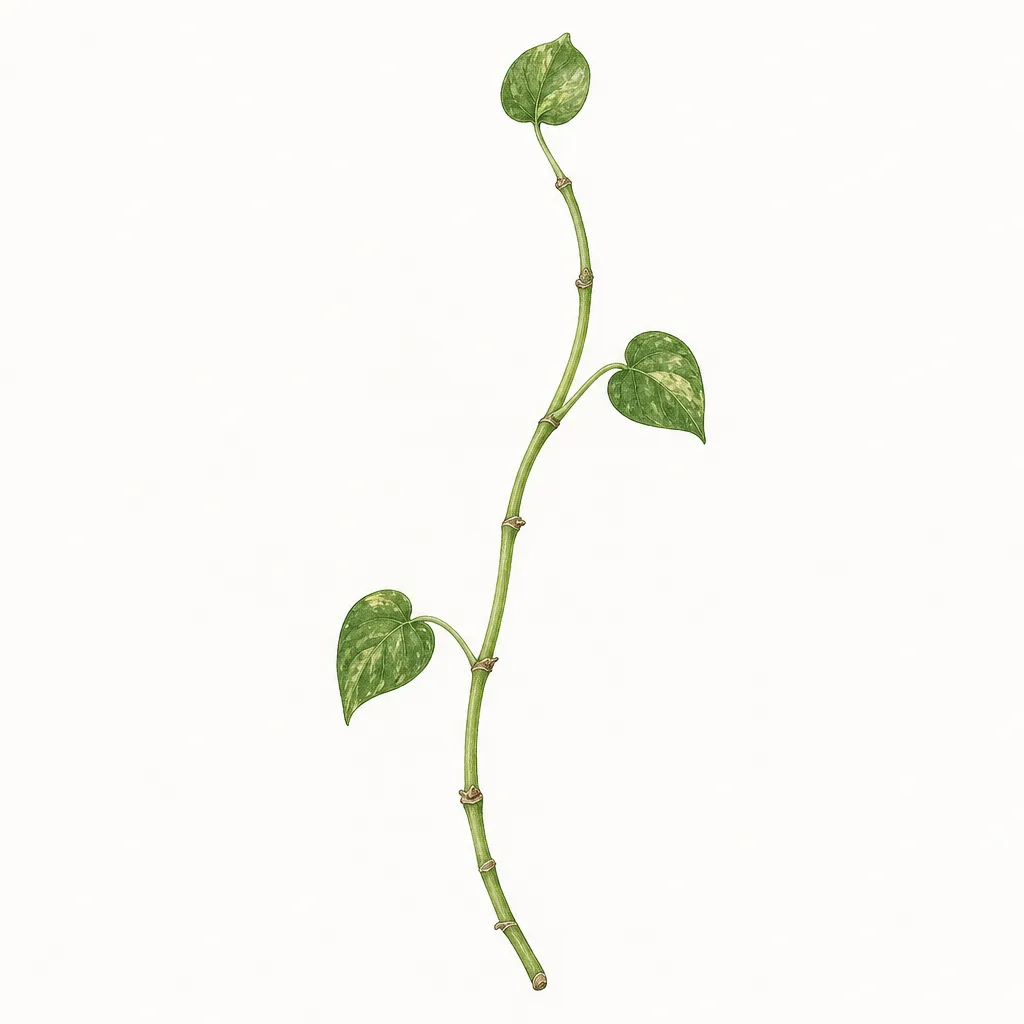
Legginess is stretched growth with unusually long spaces between nodes—the points where leaves attach to a stem. In insufficient light, stems may stretch and older leaves may drop, leaving thin, sparsely covered vines. Bare stems caused by leaf loss can look similar without having stretched growth.
Also called: Sparse pothos, Spindly pothos growth
Plants affected: Pothos (Epipremnum aureum), including golden, Jade, Neon and Marble Queen pothos
Symptoms
- Long, thin stems with unusually wide gaps between leaf attachment points.
- Growth leaning or reaching toward a light source.
- Bare older sections with most remaining leaves near the vine tips.
- Variegated leaves becoming greener in dim conditions.
Causes
- Insufficient light: pothos tolerates dim conditions, but may become stretched and lose leaves when light is inadequate.
- Watering-related leaf loss: excessive wetness or prolonged dryness can leave vines sparse without lengthening the spaces between nodes.
- Aging: older leaves can yellow and fall, leaving foliage concentrated toward the ends of long vines.
How to tell it apart
Compare the newest growth with older bare sections. Unusually wide gaps between nodes, especially on growth reaching toward a window, support low-light legginess. Normal spacing with empty leaf scars suggests leaf loss instead. Check moisture below the soil surface: yellowing and dropping leaves with persistently wet mix suggest excessive wetness, while drooping leaves and dry, brown edges with dry mix suggest insufficient water. These clues narrow the cause but do not prove it.
- Normal aging of a trailing vine
- Older leaves gradually yellow and drop while newer growth remains leafy. Long vines alone do not establish low-light stretching; compare the spaces between nodes on older and newer growth.
- Overwatering and root rot
- Yellowing, falling leaves and rotting stems suggest more than simple stretching. Root rot is more likely when roots are soft, mushy or losing their outer tissue, especially with persistently wet potting mix and declining foliage. Root color alone is not diagnostic.
- Underwatering damage
- Drooping leaves and dry, brown leaf edges, together with dry potting mix below the surface, suggest the plant has been kept too dry rather than simply receiving too little light.
Treatment
- Move it into brighter, indirect light This week, choose a brighter window-side position where strong direct sun does not strike the leaves. Pothos tolerates low light, but brighter indirect light supports better growth; strong direct sun can scorch foliage. Judge improvement by new growth, not by whether old bare sections refill.
- Check below the surface before watering Check below the surface; let approximately the top 1–2 inches of potting mix dry before watering, adjusting for pot size and conditions. If the mix below is still wet, wait. Then water thoroughly and discard collected runoff. Use a pot with drainage holes rather than watering by a fixed calendar. This moisture threshold follows SDSU Extension's pothos guidance: https://extension.sdstate.edu/pothos-devils-ivy-golden-pothos-house-plant-how
- Prune selected sparse parent vines After addressing light and watering, use clean, sharp scissors to shorten selected overlong vines. Cut the parent vine just above a healthy node, leaving viable nodes on the remaining stem from which new shoots can develop. Improved light will not shorten existing stretched internodes—the gaps between nodes—or reliably replace leaves at old leaf scars. A fuller appearance comes from new shoots and, optionally, rooted cuttings planted together. NYBG recommends spring trimming; Wisconsin Extension describes selective pruning without a seasonal restriction. If growth is slow now, limit this week's work to a light tidy-up and save a major cutback for active growth.
- Optionally root healthy cuttings for a fuller pot Prepare the removed healthy vine pieces separately: make the bottom cut just below a node and place that node in water, keeping leaves above the water. Unlike the parent-vine cut above a node, this keeps a node on the cutting for rooting. Wisconsin Extension reports roots developing in about 3–4 weeks. Once rooted, several cuttings can be planted together for a fuller appearance; this does not replace correcting low light.
Prevention
- Keep pothos in bright, indirect light rather than relying on its ability to survive in a dim corner.
- Check moisture below the surface before watering; lower-light plants generally use water more slowly.
- Use a container with drainage holes and discard collected runoff.
- Prune selectively as vines become too long or sparse, leaving healthy nodes on the parent stems.
When to worry
Sparse stems alone usually call for a care review rather than emergency treatment. Act promptly if leaves are rapidly yellowing or falling, stems are rotting, or the mix remains persistently wet. Root rot is more likely when roots are soft, mushy or losing their outer tissue, especially with persistently wet potting mix and declining foliage. Root color alone is not diagnostic. Ask a local extension service for help if the cause remains unclear.
Safety
Pothos contains insoluble calcium oxalate crystals and can harm people, cats and dogs if chewed; its sap can also irritate skin. Wear gloves when pruning, wash your hands afterward, and keep the plant, cuttings and discarded leaves away from children and pets. Handle scissors carefully and store them out of reach. If someone chews the plant or develops symptoms, contact a doctor or poison line; for a pet, contact a veterinarian or animal poison line promptly. ASPCA Animal Poison Control is available at 888-426-4435; a fee may apply.
Sharing your home with pets or small children? See which plants our sources call safe for cats, dogs and kids.
FAQ
Can pothos get leggy even though it is a low-light plant?
Yes. Tolerating low light does not mean it will stay full there. Insufficient light can cause stretched growth and leaf loss.
Will leaves grow back on the bare stems?
Do not count on leaves returning at old leaf scars. Better light supports new growth, while selective pruning can encourage new shoots; existing stretched gaps will not shorten.
Where should I cut a long pothos vine?
Cut the parent vine just above a healthy node, leaving viable nodes behind. If making cuttings from the removed piece, prepare each cutting with its bottom cut just below a node.
Should I water when the soil surface looks dry?
Not on appearance alone. Check below the surface and let approximately the top 1–2 inches dry, adjusting for pot size and conditions. Wait if the mix below is still wet.
Can I root the pieces I trim off?
Yes, if they are healthy and include a node. Keep the node in water and the leaves above it; roots commonly develop in about 3–4 weeks.
Sources
- Lighting for indoor plants and starting seeds — University of Minnesota Extension
- Pothos (Epipremnum aureum) — New York Botanical Garden
- Epipremnum aureum — North Carolina Extension Gardener Plant Toolbox
- Pothos, Epipremmum aureum — Wisconsin Horticulture
- Pothos (Devil’s Ivy, Golden Pothos): House Plant How-To — SDSU Extension
- Toxic and Non-toxic Plants: Devils Ivy — ASPCA