
Poinsettia not turning red: causes and fixes
Your poinsettia most likely needs longer, uninterrupted dark nights to turn red again, along with bright daylight and several weeks of patience. ([extension.umd.edu](https://www.extension.umd.edu/resource/poinsettias))
Not sure it's this? Scan your plant — free
What it is
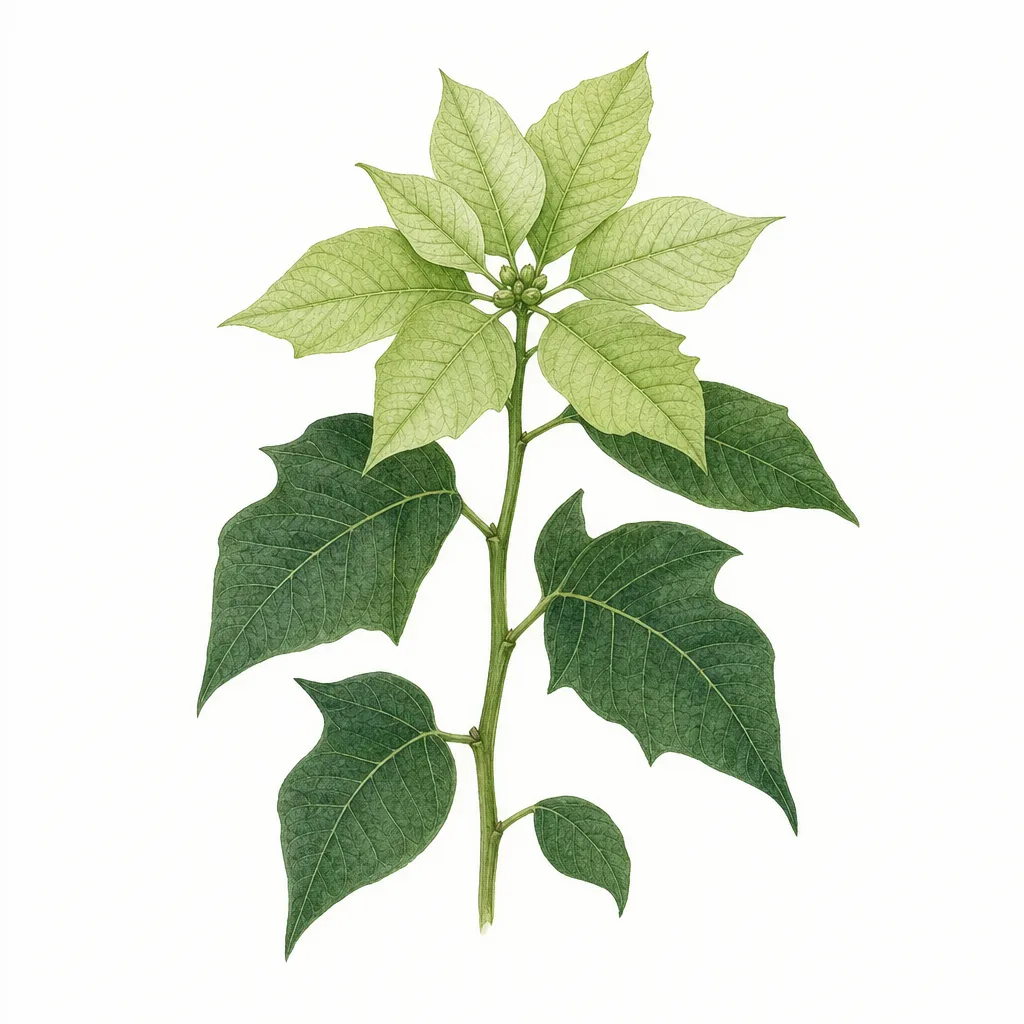
Delayed bract coloring is a delay in the poinsettia’s seasonal flowering response, not necessarily a disease. Bracts—the modified leaves surrounding its tiny yellow flowers—remain green when flowering is delayed; the plant can still live as a green houseplant. ([extension.umd.edu](https://www.extension.umd.edu/resource/poinsettias))
Also called: Poinsettia not reblooming
Plants affected: Poinsettia (Euphorbia pulcherrima)
Symptoms
- The upper bracts remain green instead of developing their expected color. ([extension.umn.edu](https://extension.umn.edu/garden-and-home/yard-and-garden/gardening-in-minnesota/poinsettia))
- The plant may otherwise look healthy, but its seasonal flower display is delayed. ([extension.umd.edu](https://www.extension.umd.edu/resource/poinsettias))
Causes
- Room lights, outdoor lighting or opening a lit closet interrupt the long nights needed for flowering. ([extension.umd.edu](https://www.extension.umd.edu/resource/poinsettias))
- The daily light–dark routine started late or has not continued long enough. ([accessibility.extension.msstate.edu](https://accessibility.extension.msstate.edu/publications/selecting-and-maintaining-poinsettias))
- Pinching or pruning after early September can delay holiday flowering. ([extension.umd.edu](https://www.extension.umd.edu/resource/poinsettias))
- The variety naturally produces pink, white or patterned bracts rather than solid red ones. ([extension.umn.edu](https://extension.umn.edu/garden-and-home/yard-and-garden/gardening-in-minnesota/poinsettia))
How to tell it apart
Check the plant’s original color and review its nighttime location: does anyone switch on a light, or does outdoor light reach it? A green plant without wilting or leaf loss, combined with interrupted nights, points toward delayed flowering rather than a watering problem. ([extension.umd.edu](https://www.extension.umd.edu/resource/poinsettias))
- A naturally non-red variety
- Check the original tag or an earlier photo. White, pink and marbled varieties should not be expected to become solid red. ([extension.umd.edu](https://www.extension.umd.edu/resource/poinsettias))
- Normal fading after flowering
- Previously colorful bracts fade after their display, unlike bracts that have not developed seasonal color yet. ([accessibility.extension.msstate.edu](https://accessibility.extension.msstate.edu/publications/selecting-and-maintaining-poinsettias))
- Watering stress
- Wilting with dry soil suggests the plant needs water; leaf drop with soggy soil suggests overwatering. These are different from simply remaining green. ([extension.umn.edu](https://extension.umn.edu/garden-and-home/yard-and-garden/gardening-in-minnesota/poinsettia))
Treatment
- Start a strict nighttime routine tonight Give 14 continuous hours of complete darkness every night, such as 5 p.m. to 7 a.m. Use an unused dark room or a roomy, lightproof cardboard box. Avoid crushing leaves, and do not uncover it or switch lights on during those hours. ([extension.umd.edu](https://www.extension.umd.edu/resource/poinsettias))
- Return it to bright light every morning Remove the cover daily and provide 6–8 hours of bright daylight near a sunny window. Do not leave it in a closet around the clock: daytime light is also needed during the coloring period. ([accessibility.extension.msstate.edu](https://accessibility.extension.msstate.edu/publications/selecting-and-maintaining-poinsettias))
- Keep temperatures steady Choose a spot around 65–70°F, away from heating vents and cold drafts. Keep leaves from touching cold window glass, and avoid temperatures below 50°F. ([extension.umn.edu](https://extension.umn.edu/garden-and-home/yard-and-garden/gardening-in-minnesota/poinsettia))
- Check moisture rather than watering by the calendar Check the soil surface daily and water when it feels dry to a light touch. Water thoroughly until excess drains out, then empty the saucer. Remove decorative wrapping that traps water. ([extension.umn.edu](https://extension.umn.edu/garden-and-home/yard-and-garden/gardening-in-minnesota/poinsettia))
- Leave the growing tips intact and allow time Do not pinch or prune this week. Continue the daily routine: extension estimates vary from 6–8 to 7–10 weeks. Starting November 1, 2026, may bring color in December or January, but Christmas color is not guaranteed. ([accessibility.extension.msstate.edu](https://accessibility.extension.msstate.edu/publications/selecting-and-maintaining-poinsettias))
Prevention
- For next year’s holiday display, begin the uninterrupted-night routine around late September or October 1. ([extension.umd.edu](https://www.extension.umd.edu/resource/poinsettias))
- Finish pinching before early September, and keep the nighttime location free of artificial light. ([extension.umd.edu](https://www.extension.umd.edu/resource/poinsettias))
When to worry
Green bracts alone are not an emergency. Wilting, substantial leaf drop or visible insects deserve closer attention; ask your local extension service for help if you suspect disease or pests. ([extension.umn.edu](https://extension.umn.edu/garden-and-home/yard-and-garden/gardening-in-minnesota/poinsettia))
Safety
Keep poinsettias away from children and pets. Eating them can cause mouth irritation or stomach upset, and the sap can irritate skin; serious poisoning is uncommon. Wear gloves when handling broken stems and avoid touching your eyes. For human exposure, contact a doctor or Poison Control at 1-800-222-1222; for pet ingestion, contact a veterinarian or ASPCA Poison Control at 888-426-4435. ([poison.org](https://www.poison.org/articles/poinsettias))
Sharing your home with pets or small children? See which plants our sources call safe for cats, dogs and kids.
FAQ
Are the red parts flowers?
No. They are modified leaves called bracts; the tiny yellow structures in their center are the flowers. ([extension.umd.edu](https://www.extension.umd.edu/resource/poinsettias))
Can I keep it in darkness all day?
No. Pair 14 dark hours each night with 6–8 hours of bright daylight. ([accessibility.extension.msstate.edu](https://accessibility.extension.msstate.edu/publications/selecting-and-maintaining-poinsettias))
Can a room light delay the color?
Yes. Artificial light during the dark period can delay flowering and bract coloring. ([extension.umd.edu](https://www.extension.umd.edu/resource/poinsettias))
When can I stop covering it?
Mississippi State Extension advises stopping the nightly darkness treatment once colored bracts begin appearing. ([accessibility.extension.msstate.edu](https://accessibility.extension.msstate.edu/publications/selecting-and-maintaining-poinsettias))
Sources
- Growing and caring for poinsettia — University of Minnesota Extension
- Poinsettias — University of Maryland Extension
- Selecting and Maintaining Poinsettias — Mississippi State University Extension
- Keeping Your Poinsettia Alive for Next Christmas and Getting It to Re-Bloom — SDSU Extension
- Are poinsettias poisonous? — National Capital Poison Center
- Poinsettia — ASPCA