
Peony leaves turning black in fall: causes and care
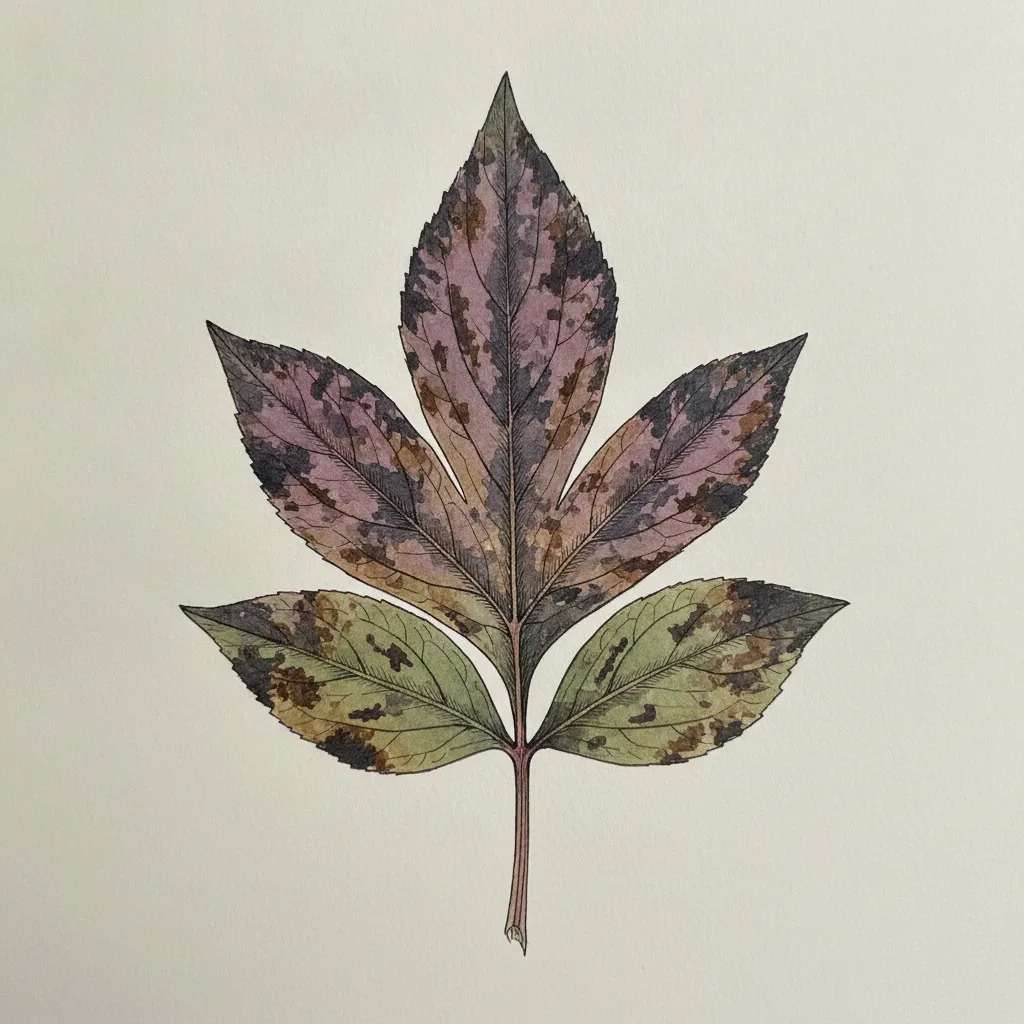
Peony leaves turning black in fall are most likely entering their natural winter dormancy, a process frequently accelerated by cold frost and common late-season fungal infections like leaf blotch or botrytis.
Not sure it's this? Scan your plant — free
What it is
Peony late-season dieback is the natural senescence of herbaceous peonies as cooler temperatures and shorter daylight signal the plant to channel stored energy into its underground crown and roots. This dying foliage is commonly colonized by fungal pathogens such as Graphiopsis chlorocephala (peony leaf blotch) or Botrytis paeoniae (gray mold), which thrive in aging tissue and turn leaves leathery, purple, or black. While the blackened foliage is unsightly and harbors fungal spores over winter, the dormant root crowns below ground remain healthy and unharmed.
Also called: Peony leaf blotch, Peony measles, Botrytis blight of peony, Autumn peony senescence
Plants affected: Herbaceous peony (Paeonia lactiflora), Intersectional / Itoh peony (Paeonia lactiflora x suffruticosa), Tree peony (Paeonia suffruticosa)
Symptoms
- Foliage transitioning from speckled reddish-purple or bronze to completely blackened, leathery leaves
- Irregular dark brown or purplish-black blotches coalescing across mature leaf blades
- Stems collapsing, drooping, or developing dark sunken streaks late in the season
- Velvety gray or brown fungal mold appearing on decaying stems and buds during wet autumn spells
- Crisp, blackened top growth collapsing flat against the soil after the first autumn freeze
Causes
- Natural seasonal dormancy (senescence) as the peony pulls carbohydrates into its root system for winter
- Subfreezing autumn frost rupturing leaf cell walls, causing immediate water-soaking and blackening
- Peony leaf blotch fungus (Graphiopsis chlorocephala, formerly Cladosporium paeoniae), which peaks on mature leaves in late summer and fall
- Botrytis blight (Botrytis paeoniae or Botrytis cinerea), which thrives in damp, cool autumn weather
- Overhead watering, dense planting, or prolonged shade that keeps late-season foliage wet
How to tell it apart
Observe the timing and inspect the crown at the soil surface. If the blackening develops gradually in late September, October, or November—or appears overnight following a hard freeze—and the subterranean crown remains firm with plump pink buds ('eyes'), the plant is undergoing normal seasonal dieback. In contrast, blackening that occurs in spring or early summer on actively growing shoots indicates an aggressive blight rather than typical autumn dormancy.
- Phytophthora crown and stem rot
- Phytophthora strikes during wet conditions in spring or midsummer, turning stem bases and roots into a soft, water-soaked, foul-smelling black mush, whereas fall dieback leaves the root crown firm, sound, and fully intact.
- Powdery mildew
- Powdery mildew creates a distinct dusty white or ash-gray film across the upper leaf surfaces starting in midsummer before the leaf slowly scorches brown, whereas fall fungal blotch forms shiny, dark purple-to-black lesions directly in the leaf tissue without white powder.
- Foliar nematodes
- Foliar nematodes produce sharp, wedge-shaped yellow or purple sections strictly bounded by major leaf veins, while late-season dieback and leaf blotch spread irregularly across the entire leaf blade.
Treatment
- Cut herbaceous peony stems to the ground Take sharp pruners and cut all herbaceous peony stems back to 1 to 2 inches above the soil line. For tree peonies, do not cut woody stems; carefully clip off only the blackened leaves.
- Bag and throw away all clipped foliage and fallen debris Rake up every fallen leaf, stem fragment, and old seed pod beneath the plant. Seal everything in a heavy plastic trash bag and discard it with municipal waste; do not compost it, because home compost piles rarely get hot enough to destroy overwintering fungal structures.
- Sanitize pruning tools thoroughly Wipe cutting blades with 70% isopropyl rubbing alcohol or a 10% household bleach solution between clumps and when you finish to stop fungal spores from transferring to other perennials.
- Clear and refresh mulch around the base Rake away old mulch that lay under infected leaves. Replace it with a fresh 2-inch layer of clean wood chips or compost around the perimeter for root insulation, keeping it drawn back from the center so crown eyes are covered by no more than 1 to 2 inches of soil.
- Schedule a preventive copper fungicide application for spring If leaf blotch was severe this year, plan to spray newly emerging red shoots in spring with a liquid copper fungicide or Bordeaux mixture when they reach 2 to 4 inches tall, repeating every 10 to 14 days until buds develop. Always follow the product label instructions and keep it away from pets and children.
Prevention
- Cut herbaceous peony stems flush to ground level every single autumn and remove all debris.
- Direct water exclusively at the base of the plant using drip irrigation or a soaker hose, keeping foliage dry.
- Space peony clumps at least 3 to 4 feet apart to ensure generous airflow around the foliage.
- Plant peonies in full sunlight (at least 6 hours per day) and well-draining soil to prevent fungal moisture traps.
- Prune surrounding overhanging shrubs or tree branches to maximize sunlight and breeze throughout the growing season.
When to worry
Do not worry if your peony collapses and blackens in late autumn—this is a normal seasonal transition for herbaceous varieties. You should only worry if black rot attacks emerging shoots in spring, if flower buds fail to open and rot prematurely, or if the underground crown feels soft, mushy, or rotted.
Safety
Peonies contain paeonol and can cause vomiting, diarrhea, and lethargy if ingested by dogs or cats, as well as mild stomach upset in humans; keep pets away from cut debris and contact a veterinarian, physician, or poison control center if ingested. If applying any copper fungicide or garden spray in spring, store it in its original container out of reach of children and pets, wear waterproof gloves and eye protection, and follow the product label precisely.
Sharing your home with pets or small children? See which plants our sources call safe for cats, dogs and kids.
FAQ
Should I cut down my peony when the leaves turn black in the fall?
Yes, herbaceous peonies should be cut down to 1 to 2 inches above the soil line in fall once foliage blackens or dies back. For tree peonies, leave the woody framework standing and prune away only the dead foliage.
Can I put blackened peony foliage in my compost bin?
No, you should never compost diseased peony debris. Fungal spores and resilient fungal resting bodies (sclerotia) from Botrytis and leaf blotch easily survive average compost temperatures and can reinfect your garden next year.
Will my peony come back in the spring after the leaves turn black?
Yes, as long as the blackening occurred in late summer or fall. Herbaceous peonies naturally abandon their aboveground stems each winter while their robust underground crowns and roots remain healthy and ready to send up new shoots in spring.
Why do peony leaves turn black instead of yellow in autumn?
While some perennials turn yellow, peony foliage is especially prone to sudden cellular collapse from freezing temperatures and late-season fungal blotch (Graphiopsis chlorocephala), both of which cause rapid, dark brown-to-black tissue necrosis.