
Pansies wilting in wet soil: causes and fixes
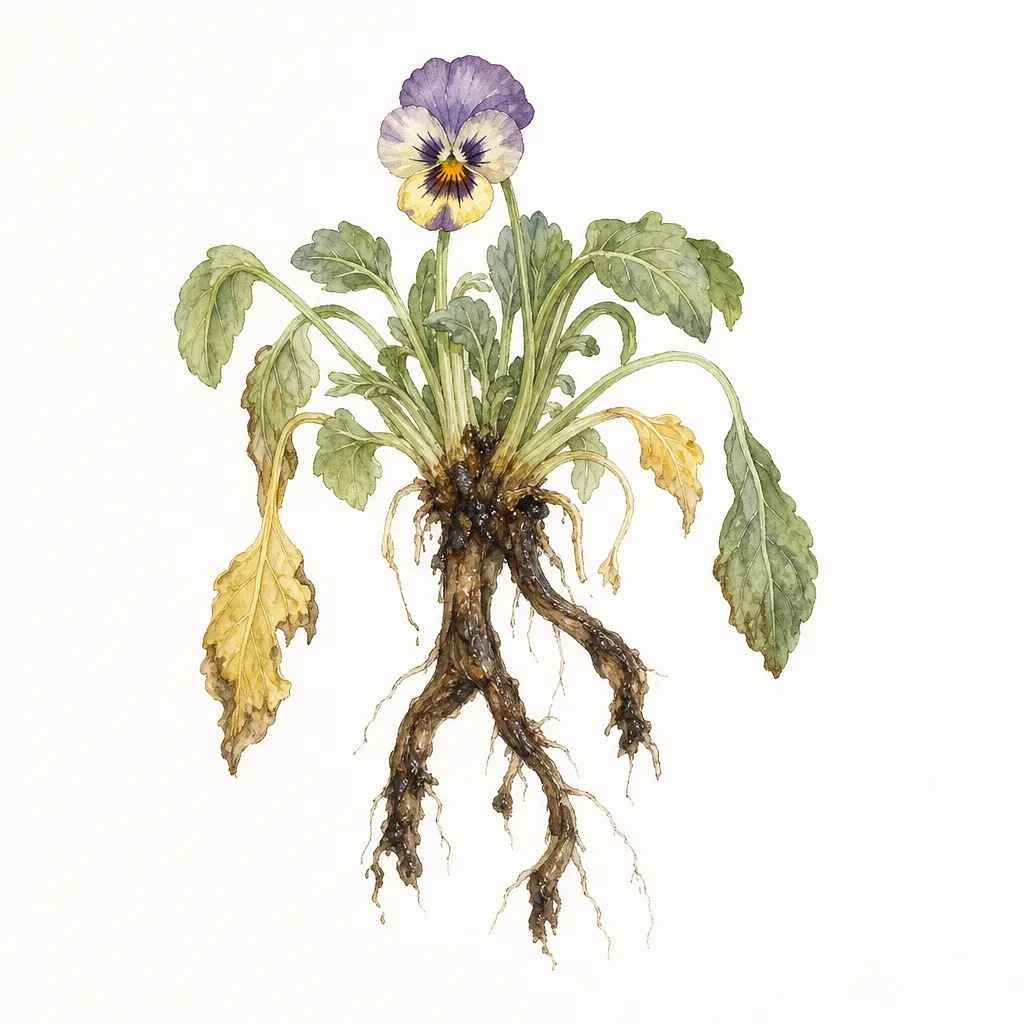
Pansies wilting in wet soil most likely have waterlogged, struggling roots, possibly with root rot, so check the roots before adding more water.
Not sure it's this? Scan your plant — free
What it is
Waterlogging happens when excess water leaves too little oxygen around roots, damaging their ability to take up water. Root rot is a separate disease process in which soilborne organisms destroy roots and sometimes the crown, where stems meet roots; saturated conditions favor several of these organisms.
Also called: Overwatering damage, Root and crown rot
Plants affected: Garden pansies, Violas
Symptoms
- Drooping leaves and stems even though the soil is wet.
- Yellowing lower leaves, poor growth, or eventual collapse.
- Brown, water-soaked, mushy roots; the outer root layer may slide off, leaving thin strands.
- A brown, damaged stem base or a crown so rotten that the plant comes away easily.
Causes
- Watering too often or soil that drains poorly, leaving roots short of oxygen.
- Heavy soil or low garden spots where water collects.
- Root-rotting organisms, including Pythium and Phytophthora, carried in infected plants, soil, or plant debris.
How to tell it apart
Gently lift one badly affected pansy with its root ball and examine the roots and stem base. Dark, soft roots or an outer layer that slips away strongly suggest rot; firm, light-colored roots are healthier. Wilting alone cannot identify the cause, and a plant diagnostic lab is needed to identify the particular root-rot organism.
- Underwatering
- Check the root ball itself, not just the nearby soil. A dry root ball supports lack of water; a wet root ball with decaying roots supports root trouble.
- Heat stress
- Pansies struggle in hot weather and may develop yellow foliage and stretched stems. Heat alone does not establish root rot: inspect the roots for brown, mushy decay.
- Black root rot
- Blackened roots may suggest this different root disease, but symptoms overlap with other rots. A lab test is the reliable way to separate them.
Treatment
- Pause watering while the root zone is wet Skip the next scheduled watering and check the soil each day this week. Resume only after it has dried slightly; do not let pansies become bone-dry. Use soil moisture rather than a fixed watering schedule.
- Inspect one affected plant before treating the bed This week, gently lift one wilting pansy and check its roots and crown. Look for soft, dark tissue and roots whose outer covering slips off. This helps distinguish suspected rot from wilting without obvious decay.
- Remove badly rotted plants Remove plants with mushy crowns or extensive root decay, along with infected plant debris, rather than trying to revive them with extra water. Check nearby pansies for similar symptoms this week.
- Choose a better-drained place before replacing losses This week, identify low spots where water collects. Put replacement pansies in an elevated, well-drained bed rather than back into the same soggy position; buy plants without signs of root disease. Correct drainage before replanting.
Prevention
- Keep soil moist but well-drained, allowing it to dry slightly between waterings.
- Use elevated beds where ordinary garden soil stays wet.
- Start with healthy plants and remove infected plants and debris promptly.
When to worry
Act promptly if crowns become mushy, plants collapse, or more pansies develop symptoms. If losses continue after watering and drainage are corrected, contact your local extension service about submitting a sample for diagnosis.
Safety
No chemical treatments are recommended in these steps. Wash your hands after handling soil and diseased plants.
FAQ
Why do pansies wilt when the soil is already wet?
Waterlogged or rotting roots cannot supply enough water to the leaves, even with water all around them.
Does wet soil always mean root rot?
No. Waterlogging itself can damage roots through oxygen shortage; visible decay supports suspected root rot.
Should I let the soil dry out completely?
No. Let it dry only slightly between waterings; pansies need moisture without saturation.
Can badly rotted pansies be saved?
Plants with extensive root or crown rot are best removed. Correct drainage before replacing them.