
Orchid roots turning brown and mushy: causes and fixes
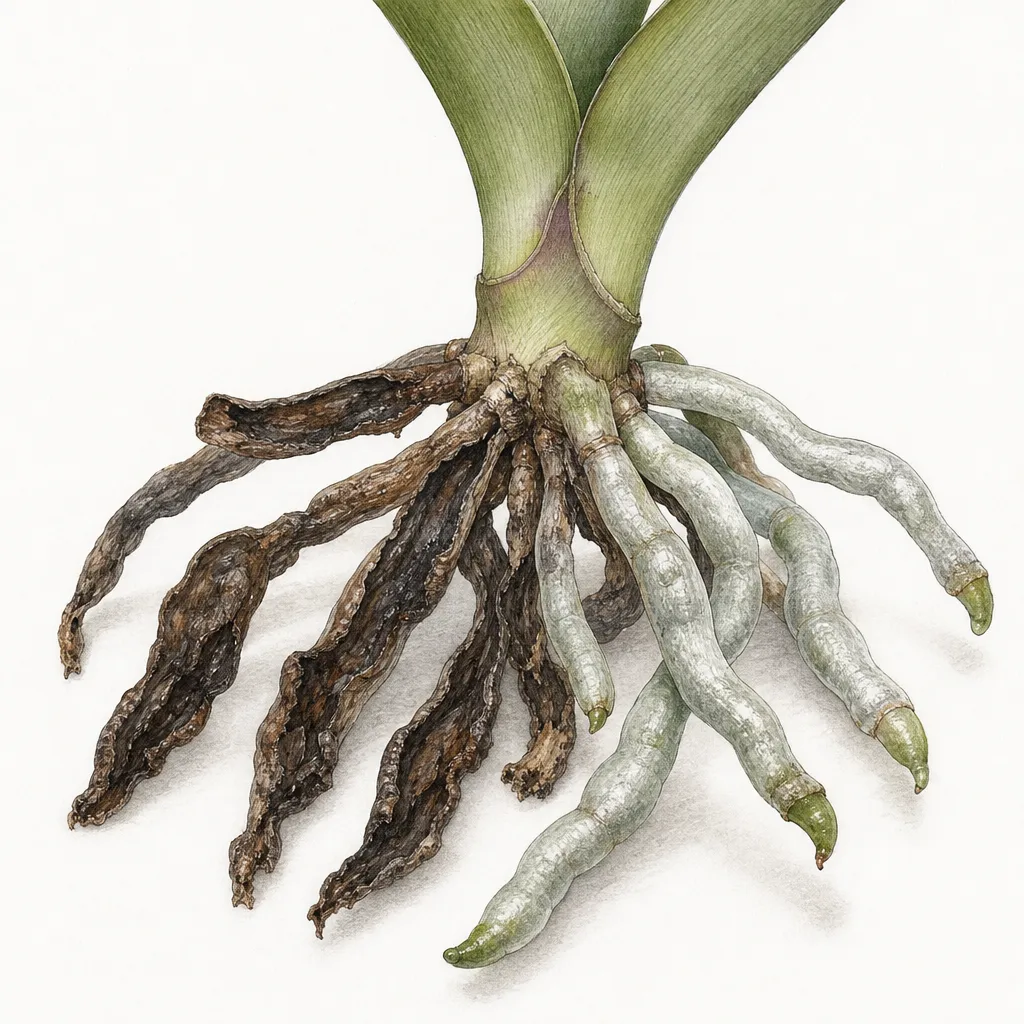
Brown, mushy orchid roots most likely mean root rot from staying too wet; remove dead roots and repot in fresh, airy orchid mix. ([hgic.clemson.edu](https://hgic.clemson.edu/repotting-your-orchid/))
Not sure it's this? Scan your plant — free
What it is
Root rot is the decay and death of root tissue, often associated with a wet, poorly aerated growing mix. Disease-causing fungi can invade the roots and sometimes spread into the plant's base, reducing water uptake and causing decline. ([hgic.clemson.edu](https://hgic.clemson.edu/repotting-your-orchid/))
Also called: Root decay
Plants affected: Phalaenopsis (moth orchids), Cattleya, Oncidium, Other potted orchids
Symptoms
- Roots feel mushy or hollow rather than firm. ([rhs.org.uk](https://www.rhs.org.uk/plants/phalaenopsis/growing-guide))
- Brown or black roots are soft when gently squeezed. ([libguides.nybg.org](https://libguides.nybg.org/orchidpottingdividing))
- Leaves may yellow, shrivel or become limp as the plant declines. ([aos.org](https://www.aos.org/orchid-care/orchid-pests-and-diseases/bulb-stem-and-root-rots))
Causes
- Watering too often or leaving the pot standing in water. ([rhs.org.uk](https://www.rhs.org.uk/plants/phalaenopsis/growing-guide))
- Old bark breaking into small pieces that hold more moisture and leave less air around roots. ([hgic.clemson.edu](https://hgic.clemson.edu/repotting-your-orchid/))
- A pot much larger than the root system, or consistently wet sphagnum moss. ([hgic.clemson.edu](https://hgic.clemson.edu/repotting-your-orchid/))
- Fungal infection, sometimes following root injury or damage from accumulated fertilizer salts. ([aos.org](https://www.aos.org/orchid-care/orchid-pests-and-diseases/bulb-stem-and-root-rots))
How to tell it apart
Gently unpot the orchid, remove the old mix and feel the roots. Mushy or hollow roots are unhealthy; firm roots deserve a closer look before cutting. Color alone is unreliable: New York Botanical Garden notes that healthy roots can range from chestnut brown to greenish-white, depending on the orchid. ([rhs.org.uk](https://www.rhs.org.uk/plants/phalaenopsis/growing-guide))
- Healthy brown roots
- Some orchids naturally have brown roots. Firmness, rather than brown color alone, helps distinguish them from decay. ([libguides.nybg.org](https://libguides.nybg.org/orchidpottingdividing))
- Underwatering
- Roots kept too dry may shrivel and die; wet rot is more likely when roots are mushy and the mix stays wet. ([rhs.org.uk](https://www.rhs.org.uk/plants/phalaenopsis/growing-guide))
- Fertilizer burn
- Look for dead root tips, brown leaf tips and salt deposits on the pot. Salt injury can also make roots vulnerable to rot. ([yardandgarden.extension.iastate.edu](https://yardandgarden.extension.iastate.edu/how-to/diagnosing-issues-orchids-grown-indoors))
Treatment
- Remove the wet mix this week Empty any standing water, gently slide the orchid out and remove the old growing mix. Active root decay is a reason to repot now rather than wait for flowering to finish, although flowers may drop early. ([libguides.nybg.org](https://libguides.nybg.org/orchidpottingdividing))
- Disinfect your cutting tools Clean the blades, then soak them in 70% rubbing alcohol for at least 10 minutes, following the product label. Disinfect again between cuts through diseased tissue. See the handling precautions below. ([libguides.nybg.org](https://libguides.nybg.org/orchidpottingdividing))
- Trim only dead or rotting root tissue Cut away mushy, hollow or clearly dead sections, preserving firm living roots. Clemson Extension specifically advises removing only dead root material; do not cut every root simply because it is brown. ([hgic.clemson.edu](https://hgic.clemson.edu/repotting-your-orchid/))
- Repot into fresh, airy mix For a moth orchid, use premoistened bark-based orchid mix and a clean pot with drainage holes, just large enough for the remaining roots. Keep the crown—the point where leaves meet—above the mix. Settle the bark gently without crushing it. ([hgic.clemson.edu](https://hgic.clemson.edu/repotting-your-orchid/))
- Water, drain and reassess before watering again After repotting a moth orchid, wet the mix thoroughly and let excess water drain completely. This week, check moisture below the surface before watering again; do not water while it remains wet. Keep water out of the crown. ([rhs.org.uk](https://www.rhs.org.uk/plants/phalaenopsis/growing-guide))
Prevention
- Check moisture inside the pot, not just at the surface, and empty the saucer after watering. ([rhs.org.uk](https://www.rhs.org.uk/plants/phalaenopsis/growing-guide))
- Replace bark mix about every two years, or sooner if it crumbles and stays wet. ([hgic.clemson.edu](https://hgic.clemson.edu/repotting-your-orchid/))
- Choose a pot that fits the roots rather than the leaves. ([hgic.clemson.edu](https://hgic.clemson.edu/repotting-your-orchid/))
- Keep tools clean and provide air movement around plants. ([aos.org](https://www.aos.org/orchid-care/orchid-pests-and-diseases/bulb-stem-and-root-rots))
When to worry
Seek help from a university extension service or orchid society this week if nearly all roots are dead, or decay reaches the stem, crown or swollen storage stems. Isolate a plant with spreading rot: some orchid diseases can spread through splashing water and may require diagnosis-specific treatment or disposal. ([aos.org](https://www.aos.org/orchid-care/orchid-pests-and-diseases/bulb-stem-and-root-rots))
Safety
Follow the labels on rubbing alcohol and potting mix for handling, protective equipment and storage. Keep products in their original containers, away from pets and children. Use rubbing alcohol away from flames or heat, avoid eye contact, and use it on tools rather than pouring it onto roots. If a product is swallowed or causes an exposure injury, contact a doctor, veterinarian or poison line.
Sharing your home with pets or small children? See which plants our sources call safe for cats, dogs and kids.
FAQ
Should I cut off every brown root?
No. Some healthy orchid roots are brown. Remove dead or mushy tissue, not roots judged by color alone. ([libguides.nybg.org](https://libguides.nybg.org/orchidpottingdividing))
Can I repot while it is flowering?
Yes, if necessary to address decay. Repotting during bloom can shorten the flower display. ([aos.org](https://www.aos.org/orchid-care-and-culture-sheets/repotting))
How often should I water afterward?
Use moisture as your guide, not a rigid schedule. Guidance differs: Iowa State says to let orchids dry between waterings, while RHS cautions against completely drying moth-orchid roots. Avoid both soggy mix and prolonged dryness. ([yardandgarden.extension.iastate.edu](https://yardandgarden.extension.iastate.edu/how-to/diagnosing-issues-orchids-grown-indoors))
Do I need a fungicide?
Not automatically. Repotting guidance emphasizes removing dead roots and replacing wet mix; the American Orchid Society recommends targeted systemic fungicides for specific fungal rots. Get a diagnosis first; if advised, follow the label and keep the product away from pets and children. ([hgic.clemson.edu](https://hgic.clemson.edu/repotting-your-orchid/))
Sources
- Repotting Your Orchid — Clemson Extension
- Orchids: Potting and Dividing — New York Botanical Garden
- How to grow Phalaenopsis (moth orchids) — Royal Horticultural Society
- Diagnosing Issues with Orchids Grown Indoors — Iowa State University Extension
- Bulb, Stem and Root Rots — American Orchid Society
- Repotting — American Orchid Society