
Orchid leaves wrinkled and limp: causes and fixes
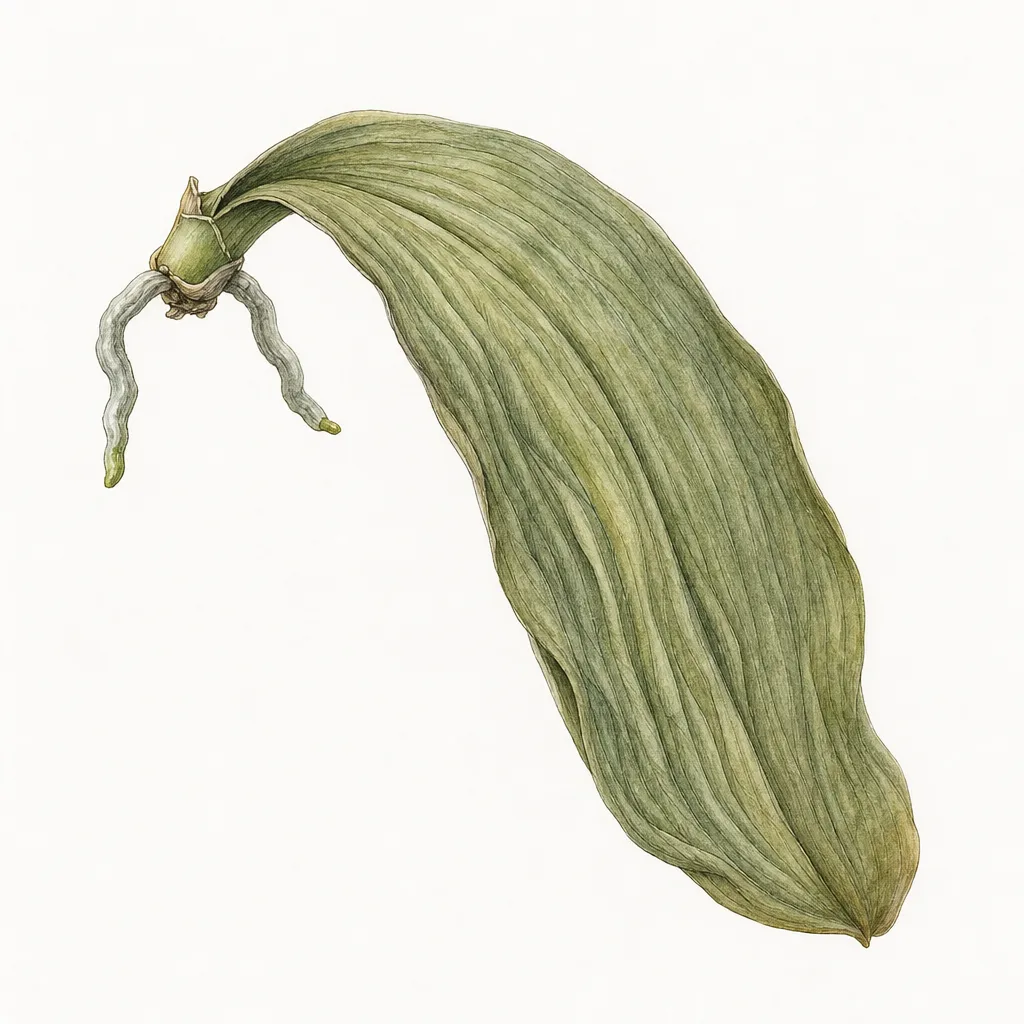
Wrinkled, limp orchid leaves most likely mean the leaves are short of water, either because watering is insufficient or damaged roots cannot absorb it—check the roots before adding more water. ([aos.org](https://www.aos.org/orchid-basics-lesson-4-water-requirements))
Not sure it's this? Scan your plant — free
What it is
Dehydration is a shortage of water within the plant’s tissues. Leaves lose firmness and develop wrinkles when water uptake cannot meet their needs; this can happen in dry potting mix or in wet mix when roots have deteriorated. ([aos.org](https://www.aos.org/orchid-basics-lesson-4-water-requirements))
Also called: Water stress, Limp, leathery orchid leaves
Plants affected: Orchids, especially moth orchids (Phalaenopsis)
Symptoms
- Leaves feel soft, limp or leathery rather than firm. ([yardandgarden.extension.iastate.edu](https://yardandgarden.extension.iastate.edu/how-to/diagnosing-issues-orchids-grown-indoors))
- Leaves develop wrinkles, folds or accordion-like pleats. ([yardandgarden.extension.iastate.edu](https://yardandgarden.extension.iastate.edu/how-to/diagnosing-issues-orchids-grown-indoors))
- On an underwatered moth orchid, leaves may flop onto the potting mix. ([libguides.nybg.org](https://libguides.nybg.org/phalaenopsis))
Causes
- Too little water or long dry spells between waterings. ([yardandgarden.extension.iastate.edu](https://yardandgarden.extension.iastate.edu/how-to/diagnosing-issues-orchids-grown-indoors))
- Overwatering, poor drainage or standing runoff that damages roots and limits water uptake. ([libguides.nybg.org](https://libguides.nybg.org/phalaenopsis))
- Old potting mix that has broken down, become compacted and stayed too wet. ([yardandgarden.extension.iastate.edu](https://yardandgarden.extension.iastate.edu/how-to/diagnosing-issues-orchids-grown-indoors))
- Low humidity, which can contribute to wrinkled leaves in moth orchids. ([extension.umd.edu](https://extension.umd.edu/resource/care-phalaenopsis-orchids-moth-orchids))
- Accumulated fertilizer salts that injure roots and produce similar symptoms. ([libguides.nybg.org](https://libguides.nybg.org/phalaenopsis))
How to tell it apart
Gently slide the orchid out of its pot and check the roots and mix. Firm, plump roots with dry mix point toward insufficient watering; black, mushy roots point toward rot, while dry roots that fall apart suggest severe underwatering. Healthy roots can be green, white or beige, so judge firmness as well as color. Leaves alone cannot distinguish these causes. ([aos.org](https://www.aos.org/orchid-basics-lesson-4-water-requirements))
- Normal older-leaf loss
- An occasional lowest leaf yellowing while healthy new leaves replace it can be normal. Several limp leaves or deteriorating roots suggest a wider problem. ([libguides.nybg.org](https://libguides.nybg.org/phalaenopsis))
- Crown rot
- Check the central growing point between the leaves, not just the roots. Rot there, especially after water has collected between leaves, suggests crown rot rather than simple underwatering. ([libguides.nybg.org](https://libguides.nybg.org/phalaenopsis))
- Mite damage
- Look for mottled foliage and, in heavy infestations, fine webbing rather than wrinkles alone. ([yardandgarden.extension.iastate.edu](https://yardandgarden.extension.iastate.edu/how-to/diagnosing-issues-orchids-grown-indoors))
- Fertilizer burn
- Brown root or leaf tips, yellowing and salt deposits on the pot suggest excess fertilizer. Root injury from salts can also cause dehydration. ([yardandgarden.extension.iastate.edu](https://yardandgarden.extension.iastate.edu/how-to/diagnosing-issues-orchids-grown-indoors))
Treatment
- 1. Check roots before changing watering Inspect the roots and mix today. Separate firm, living roots from mushy or crumbling dead ones; do not assume limp leaves automatically need more water. ([aos.org](https://www.aos.org/orchid-basics-lesson-4-water-requirements))
- 2. If roots are healthy and bark is dry, water thoroughly For a bark-grown moth orchid, give 3–4 gentle drenches of lukewarm water over about 10 minutes, letting water run through the drainage holes. Drain completely before returning it to its outer pot. This wets bark more effectively than misting. ([extension.umd.edu](https://extension.umd.edu/resource/care-phalaenopsis-orchids-moth-orchids))
- 3. If roots are rotten or the mix has collapsed, repot This week, remove old mix and cut away dead roots with a clean, new blade, keeping firm roots intact. Repot in fresh orchid bark mix and a new pot with excellent drainage. Do not try to compensate for rotten roots by keeping the pot constantly wet. ([aos.org](https://www.aos.org/orchid-basics-lesson-4-water-requirements))
- 4. Base the next watering on the mix For moth orchids, check the center of the mix before watering again and wait until it has nearly dried. Water in the morning, empty runoff and blot water trapped between leaves. Do not repeatedly drench an already-wet pot because the leaves remain wrinkled. ([libguides.nybg.org](https://libguides.nybg.org/phalaenopsis))
- 5. Keep green leaves and watch new growth Leave green, wrinkled leaves attached. Existing wrinkles may remain; healthier new leaves are a better recovery sign than expecting old leaves to become smooth this week. ([aos.org](https://www.aos.org/orchid-basics-lesson-4-water-requirements))
Prevention
- For moth orchids, replace deteriorating potting mix, generally every 1–2 years under indoor conditions. ([extension.umd.edu](https://extension.umd.edu/resource/care-phalaenopsis-orchids-moth-orchids))
- Use a draining orchid mix and never leave the pot standing in runoff. ([extension.umd.edu](https://extension.umd.edu/resource/care-phalaenopsis-orchids-moth-orchids))
- Flush the mix with plain water monthly to reduce accumulated mineral salts. ([libguides.nybg.org](https://libguides.nybg.org/phalaenopsis))
- Keep moth orchids in indirect light and check moisture rather than relying only on a calendar. ([extension.umd.edu](https://extension.umd.edu/resource/care-phalaenopsis-orchids-moth-orchids))
When to worry
Act promptly if most roots are mushy or dead, or the central growing point is rotting. Root damage may still be recoverable after removing dead roots and repotting, but crown rot can develop quickly. ([aos.org](https://www.aos.org/orchid-basics-lesson-4-water-requirements))
Safety
Moth orchids (Phalaenopsis) are listed as non-toxic to cats and dogs. ([aspca.org](https://www.aspca.org/pet-care/aspca-poison-control/toxic-and-non-toxic-plants/phalaenopsis-orchid?utm_source=openai)) For orchid potting mix, follow the label, open bags away from your face in a ventilated area, dampen dusty mix, wear gloves and a mask, and wash hands afterward. Store it securely away from children and pets. Keep cutting blades safely out of reach. ([betterhealth.vic.gov.au](https://www.betterhealth.vic.gov.au/health/healthyliving/gardening-safety?utm_source=openai))
Sharing your home with pets or small children? See which plants our sources call safe for cats, dogs and kids.
FAQ
Does a limp orchid need more water?
Not necessarily. Rotten roots can leave an orchid dehydrated even when its mix is wet; inspect the roots first. ([aos.org](https://www.aos.org/orchid-basics-lesson-4-water-requirements))
Will wrinkled orchid leaves become smooth again?
Do not count on it. Existing wrinkles may persist even after care improves; look for normal new leaves. ([aos.org](https://www.aos.org/orchid-basics-lesson-4-water-requirements))
Should I cut off limp green leaves?
Leave them attached. Even an aging leaf can supply materials the orchid reuses before shedding it. ([libguides.nybg.org](https://libguides.nybg.org/phalaenopsis))
How often should I water a moth orchid?
Water when the mix has nearly dried in the center, then drain thoroughly. The mix’s condition matters more than a fixed weekly schedule. ([libguides.nybg.org](https://libguides.nybg.org/phalaenopsis))
Will misting fix dehydration?
Misting alone usually does not supply enough moisture indoors. Healthy roots need thorough watering of the potting mix. ([extension.umd.edu](https://extension.umd.edu/resource/care-phalaenopsis-orchids-moth-orchids))
Sources
- Orchid basics lesson 4: Water requirements — American Orchid Society
- Diagnosing Issues with Orchids Grown Indoors — Iowa State University Extension and Outreach
- Care of Phalaenopsis Orchids (Moth Orchids) — University of Maryland Extension
- Phalaenopsis (moth orchid) — New York Botanical Garden
- Toxic and Non-toxic Plants: Phalaenopsis Orchid — ASPCA
- Gardening safety — Better Health Channel, Victoria Department of Health
- Toxic and Non-toxic Plants: Phalaenopsis Orchid | ASPCA
- Gardening safety | Better Health Channel