
Orchid bottom leaves turning yellow: causes and fixes
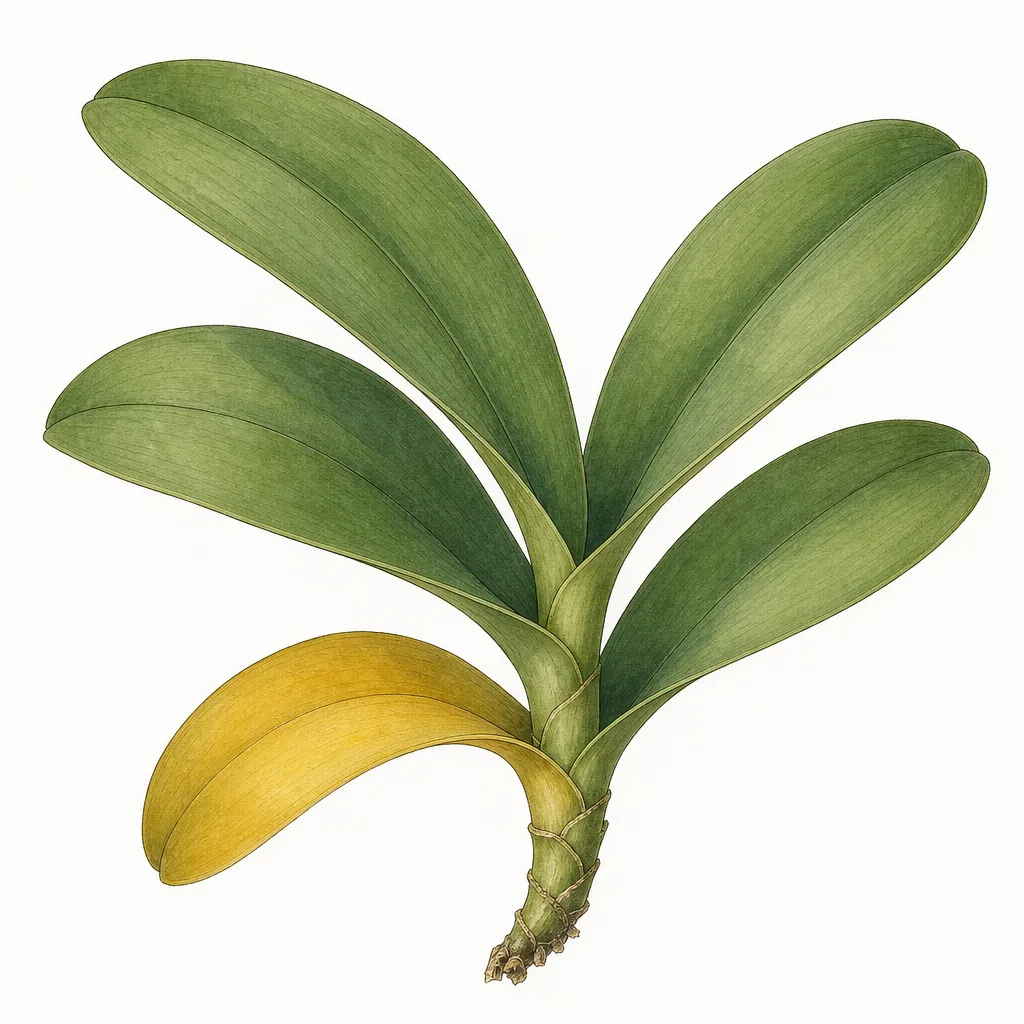
One bottom orchid leaf turning yellow is most likely normal aging if the rest of the plant looks healthy, but several yellowing leaves call for a watering and root check. ([aos.org](https://www.aos.org/orchids/articles/leaf-yellowing-in-orchids))
Not sure it's this? Scan your plant — free
What it is
Yellowing is the loss of a leaf's green color, not a diagnosis by itself. During normal leaf aging, called senescence, an orchid recovers nutrients from an older leaf before shedding it; premature yellowing can instead reflect stress or damaged roots. ([aos.org](https://www.aos.org/orchids/articles/leaf-yellowing-in-orchids))
Also called: Orchid basal leaf yellowing, Orchid leaf senescence
Plants affected: Phalaenopsis (moth orchids), the main focus of this guide, Other orchids, although normal leaf-shedding patterns vary
Symptoms
- With normal aging, an older bottom leaf gradually becomes a clear yellow before dropping. ([aos.org](https://www.aos.org/orchids/articles/leaf-yellowing-in-orchids))
- Wrinkled or leathery leaves suggest the plant is not getting enough water, although watering problems need further checking. ([yardandgarden.extension.iastate.edu](https://yardandgarden.extension.iastate.edu/how-to/diagnosing-issues-orchids-grown-indoors))
- Yellowing with brown root or leaf tips and crusty deposits on the pot suggests excess fertilizer salts. ([yardandgarden.extension.iastate.edu](https://yardandgarden.extension.iastate.edu/how-to/diagnosing-issues-orchids-grown-indoors))
Causes
- Natural aging of the oldest leaves, especially when the orchid otherwise looks healthy. ([aos.org](https://www.aos.org/orchids/articles/leaf-yellowing-in-orchids))
- Watering too often or using broken-down, compacted potting mix, which can damage roots and lead to yellowing. ([aos.org](https://www.aos.org/orchids/articles/leaf-yellowing-in-orchids))
- Too little water, insufficient light, or inadequate feeding can make older leaves shed earlier. ([ask.extension.org](https://ask.extension.org/kb/faq.php?id=865888))
- Excessive light or fertilizer can also cause yellowing, usually with additional clues rather than only one aging bottom leaf. ([yardandgarden.extension.iastate.edu](https://yardandgarden.extension.iastate.edu/how-to/diagnosing-issues-orchids-grown-indoors))
How to tell it apart
Start with the pattern: one oldest leaf slowly turning yellow, with otherwise healthy growth, fits normal aging. Several leaves changing together, persistent wrinkling, or potting mix that has become compacted and soil-like makes a care or root problem more likely. For moth orchids, check moisture inside the pot rather than judging only by the dry surface. ([aos.org](https://www.aos.org/orchids/articles/leaf-yellowing-in-orchids))
- Sun scorch
- Look for yellow-green foliage followed by white or brown dead patches after stronger light exposure, rather than one evenly yellowing oldest leaf. ([yardandgarden.extension.iastate.edu](https://yardandgarden.extension.iastate.edu/how-to/diagnosing-issues-orchids-grown-indoors))
- Fertilizer burn
- Brown root or leaf tips and mineral crust on the container point toward excess salts. ([yardandgarden.extension.iastate.edu](https://yardandgarden.extension.iastate.edu/how-to/diagnosing-issues-orchids-grown-indoors))
- Leaf-spot disease
- Distinct black or purple spots, sometimes with pale borders, differ from the clear yellow of a naturally aging leaf. ([yardandgarden.extension.iastate.edu](https://yardandgarden.extension.iastate.edu/how-to/diagnosing-issues-orchids-grown-indoors))
- Possible orchid virus
- Rings, streaks, or a yellow-and-green mosaic deserve investigation, but appearance alone cannot confirm a virus; testing is needed. ([yardandgarden.extension.iastate.edu](https://yardandgarden.extension.iastate.edu/how-to/diagnosing-issues-orchids-grown-indoors))
Treatment
- Check for trouble before changing care Today, inspect the other leaves, the center where leaves meet, and the potting mix. If several leaves are declining or the mix drains poorly, gently slide the plant from its pot to inspect the roots. Do not repot solely because one oldest leaf is yellow. ([aos.org](https://www.aos.org/orchids/articles/leaf-yellowing-in-orchids))
- Leave a normally aging leaf attached If only the oldest leaf is gradually yellowing and everything else looks healthy, leave it this week. The plant can still recover nutrients from it. Wait until it separates with a gentle tug; do not force it. ([aos.org](https://www.aos.org/orchids/articles/leaf-yellowing-in-orchids))
- Match watering to moisture For a moth orchid, wait until the mix is mostly dry; check about an inch down. When needed, drench thoroughly with room-temperature water and let excess drain freely. Do not add extra water just because a leaf is yellow. Dab out any water trapped in the leaf center immediately. ([ask.extension.org](https://ask.extension.org/kb/faq.php?id=865888))
- Replace failing mix if necessary This week, replace compacted, mulch-like mix that holds too much water with fresh orchid bark mix in a pot with excellent drainage. Remove dead or damaged roots with clean cutting tools, keep healthy aerial roots, and position the plant on top of—not buried beneath—the bark. ([extension.umd.edu](https://extension.umd.edu/resource/care-phalaenopsis-orchids-moth-orchids))
- Correct an obvious light problem If leaves started bleaching or developing pale patches after stronger sun, move the plant out of harsh direct light today. For moth orchids, use bright, indirect window light; a sheer curtain can soften a sunny window. ([yardandgarden.extension.iastate.edu](https://yardandgarden.extension.iastate.edu/how-to/diagnosing-issues-orchids-grown-indoors))
Prevention
- Let moth-orchid mix become mostly dry between thorough waterings, and empty collected drainage water. ([ask.extension.org](https://ask.extension.org/kb/faq.php?id=865888))
- Replace orchid potting mix about every one to two years, sooner if it breaks down or drains poorly. ([extension.umd.edu](https://extension.umd.edu/resource/care-phalaenopsis-orchids-moth-orchids))
- Keep water from sitting in the leaf center after watering. ([ask.extension.org](https://ask.extension.org/kb/faq.php?id=865888))
When to worry
Seek help from an extension service or orchid society promptly if yellowing comes with collapse at the plant's base, rapidly spreading black areas, or continuing loss of leaves. Those signs are not typical of simple old-leaf shedding. ([yardandgarden.extension.iastate.edu](https://yardandgarden.extension.iastate.edu/how-to/diagnosing-issues-orchids-grown-indoors))
Safety
Moth orchids are listed as non-toxic to cats and dogs; this does not identify the safety of every plant sold as an orchid. ([aspca.org](https://www.aspca.org/pet-care/aspca-poison-control/toxic-and-non-toxic-plants/phalaenopsis-orchid?utm_source=openai)) When repotting, handle dusty mix in a well-ventilated area and avoid breathing the dust; use the protective equipment specified on the package. Follow the mix label, close the bag after use, and store it away from pets and children. Keep cutting tools out of their reach. ([msu-prod.dotcmscloud.com](https://msu-prod.dotcmscloud.com/news/transplant_production_potting_mix))
Sharing your home with pets or small children? See which plants our sources call safe for cats, dogs and kids.
FAQ
Should I cut off the yellow bottom leaf?
For normal aging, waiting is reasonable. Sources differ: Maryland Extension says old yellow leaves can be cut off, while the American Orchid Society recommends leaving them until they release easily so nutrients can be recovered. ([extension.umd.edu](https://extension.umd.edu/resource/care-phalaenopsis-orchids-moth-orchids))
Does a yellow leaf mean I overwatered?
Not necessarily. An oldest leaf may be aging naturally; watering stress is more concerning when other leaves or roots also show problems. ([aos.org](https://www.aos.org/orchids/articles/leaf-yellowing-in-orchids))
How often should I water a moth orchid?
Water when the mix is mostly dry, not automatically on a fixed day. Moss retains moisture longer than bark, so the same schedule will not suit every pot. ([ask.extension.org](https://ask.extension.org/kb/faq.php?id=865888))
Should I fertilize to stop the yellowing?
Not as a first response. Too much fertilizer can itself cause yellowing and root-tip damage; check watering and root conditions first. ([yardandgarden.extension.iastate.edu](https://yardandgarden.extension.iastate.edu/how-to/diagnosing-issues-orchids-grown-indoors))
Sources
- Leaf Yellowing in Orchids — American Orchid Society
- Care of Phalaenopsis Orchids (Moth Orchids) — University of Maryland Extension
- Help for an ailing orchid — Ask Extension, University of Maryland response
- Diagnosing Issues with Orchids Grown Indoors — Iowa State University Extension and Outreach
- Phalaenopsis Orchid — ASPCA
- Transplant production: Potting mix — Michigan State University Extension
- Toxic and Non-toxic Plants: Phalaenopsis Orchid | ASPCA