
Orange dust on lawn grass: causes and fixes
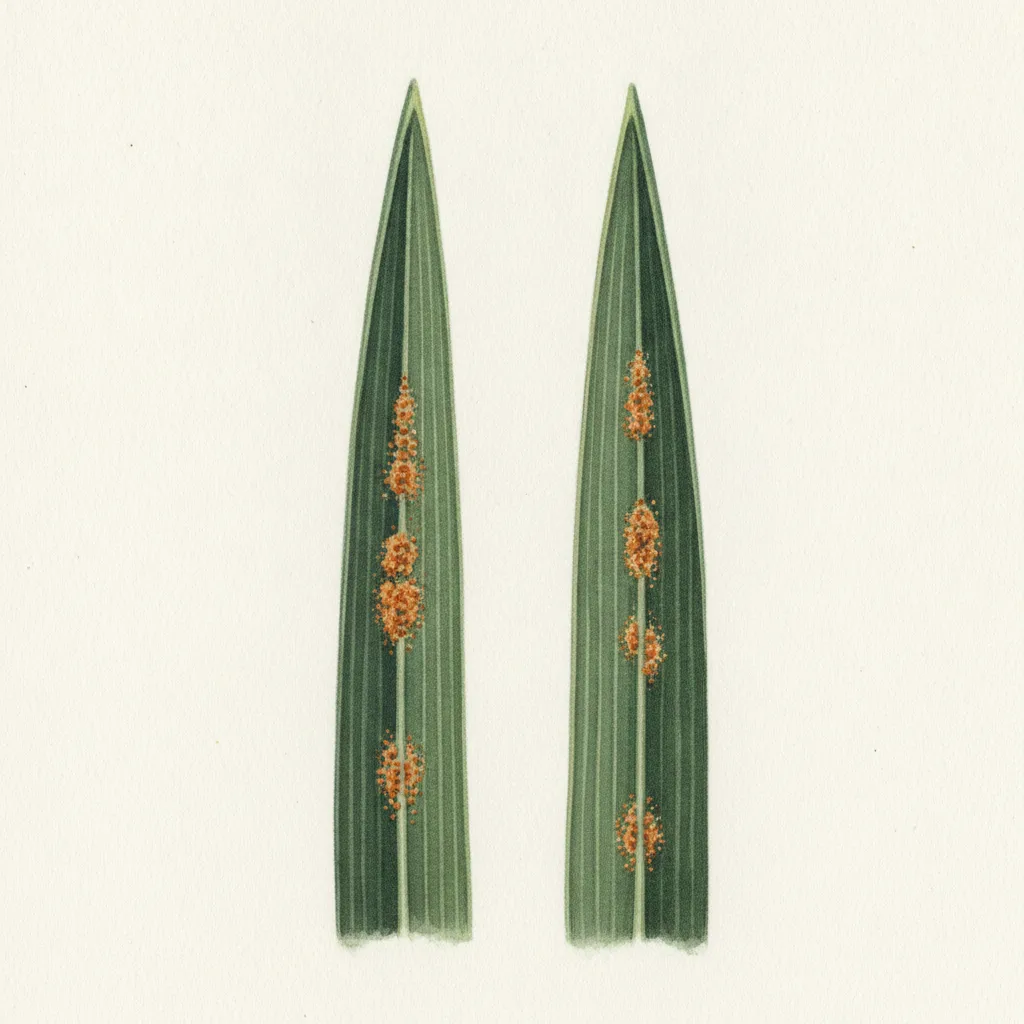
Orange dust on lawn grass is most likely lawn rust, a common fungal infection where grass blades erupt with powdery orange spores that easily rub off on shoes, mower decks, and pets.
Not sure it's this? Scan your plant — free
What it is
Lawn rust is a foliar disease caused by fungal pathogens in the genera Puccinia and Uromyces that targets stressed or slow-growing turfgrass. The fungus penetrates leaf blades, forming raised blisters that rupture to release millions of microscopic orange urediniospores. While rarely lethal to mature turf, the disease robs blades of nutrients, limits photosynthesis, and can leave the canopy thin and vulnerable to winter injury.
Also called: turf rust, leaf rust of turfgrass, stem rust of turf, grass rust
Plants affected: Kentucky bluegrass, Perennial ryegrass, Tall fescue, Fine fescues, Zoysiagrass
Symptoms
- Powdery orange, yellowish-orange, or rust-colored dust that rubs off onto shoes, clothes, mower decks, and pet fur
- Small, raised yellow or orange pimple-like bumps (pustules) that rupture along the leaf blades
- Overall yellow, orange-bronze, or brownish cast across patches or the entire lawn when viewed from a distance
- Yellow speckling on young blades that progresses to leaf chlorosis and dieback
- Pustules turning dark brown or black late in autumn as the fungus produces overwintering spores
Causes
- Slow turf growth caused by nitrogen deficiency, midsummer drought, or heat stress
- Extended leaf wetness, especially 10 or more continuous hours of evening dew, overnight mist, or late sprinkler cycles
- Moderate air temperatures (68°F to 85°F / 20°C to 29°C) paired with cloudy, humid weather followed by warm sun
- Restricted airflow and low light in shaded spots, such as around evergreen trees, dense hedges, or buildings
- Airborne spores carried on breezes or tracked in from adjacent infested turf
How to tell it apart
Walk across the dry lawn in light-colored sneakers or wipe a plain white tissue firmly across several discolored blades. If the tissue picks up a bright, chalky orange or yellow-brown powder and you can see raised, blister-like eruptions running parallel along the leaf veins, it is almost certainly lawn rust.
- Slime mold
- Slime mold can form yellowish, purplish, or gray powdery crusts across grass blades, but it wipes completely clean without rupturing the blade surface, does not cause underlying leaf tissue to yellow or die, and disappears naturally within a week.
- Red thread
- Red thread produces bright pink or red antler-like fungal strands extending from blade tips and gives the lawn a ragged, bleached-pink appearance, but it does not shed loose, powdery orange dust onto shoes.
- Dollar spot
- Dollar spot creates small, silver-dollar-sized circular patches of bleached straw-colored grass with bleached lesions bordered by reddish-brown bands, often accompanied by cobweb-like mycelium in the morning dew rather than powdery orange dust.
Treatment
- Apply a light feeding of nitrogen fertilizer this week Because rust attacks slow-growing, undernourished grass, kickstarting active growth allows the lawn to outgrow and shed the infection. Apply a balanced lawn fertilizer providing 0.2 to 0.5 pounds of actual nitrogen per 1,000 square feet. Water it into the root zone immediately with about 0.25 inches of water. Avoid heavy nitrogen doses if severe hot, dry weather is forecast.
- Mow frequently at your grass type's recommended height Mow every 4 to 5 days while the lawn is actively growing, removing no more than one-third of the blade length per session (maintaining cool-season lawns around 2.5 to 3.5 inches). Regular mowing cuts off infected leaf tips before pustules multiply. University experts note that while spores die once cut grass withers, collecting and bagging clippings for 1 to 2 cycles during severe outbreaks helps reduce the orange residue tracked into homes.
- Shift irrigation to the early morning Stop all evening or late-afternoon watering. Irrigate exclusively between 4:00 AM and 8:00 AM so the rising sun quickly dries the grass canopy, avoiding the 10+ hours of wet foliage that spores require to germinate. Water deeply once a week (delivering approximately 1 inch of water) if rainfall is scarce.
- Improve sunlight and air movement in sheltered spots Rust typically begins in still, damp corners. Prune lower tree branches, thin overhanging shrubs, and cut back dense vegetation around fence lines to allow morning sunlight and drying breezes to reach the turf canopy.
- Apply a lawn fungicide only if seedlings are collapsing Chemical fungicides are rarely necessary or recommended for mature home lawns, which outgrow rust with proper cultural care. If newly seeded grass is thinning rapidly, apply a registered broad-spectrum lawn fungicide containing propiconazole, myclobutanil, or azoxystrobin. Follow all product label rates and directions, and keep children and pets off treated areas until the spray has completely dried.
Prevention
- Overseed thin patches with a blend of improved, rust-resistant grass cultivars rather than a single variety.
- Maintain a regular autumn fertilization routine to keep turf vigorous going into cooler weather.
- Water only in the early morning to minimize the duration of leaf wetness.
- Core-aerate compacted lawn areas in early autumn to encourage deep root establishment and improved soil drainage.
- Prune trees and surrounding landscaping periodically to maintain good sun exposure and air circulation across the lawn.
When to worry
Lawn rust looks dramatic but is almost purely cosmetic on established turf, which typically recovers fully within two to three weeks once growth resumes. You only need to worry if rust takes hold on newly seeded or seedling grass under drought stress, or if thinning becomes so severe that soil is exposed to winter erosion and weed colonization.
Safety
Turf rust fungal spores are not toxic or harmful to dogs, cats, or humans, although inhaling heavy clouds of spores while mowing may irritate sensitive airways or trigger seasonal allergies. If using commercial fertilizers or turf fungicides, store them in their original sealed containers in a cool, dry area out of reach of children and animals. Wear protective gloves, eye protection, and long pants during application, strictly follow the product label instructions, and keep pets and people off the grass until granular products are watered in and sprays have dried completely. If accidental chemical ingestion or eye contact occurs, contact a doctor, veterinarian, or poison control helpline immediately.
Sharing your home with pets or small children? See which plants our sources call safe for cats, dogs and kids.
FAQ
Will lawn rust kill my grass?
It almost never kills an established lawn. Rust damages the leaf blades rather than the crown or root system, so vigorous turf will shed infected leaves as fresh, green blades emerge.
Is the orange powder harmful to dogs or pets?
No, rust spores are non-toxic to dogs, cats, and wildlife. The spores will leave bright orange stains on fur and paws, but they can be washed off with plain water or a damp towel.
Should I collect or mulch grass clippings when my lawn has rust?
Sources offer differing perspectives: plant pathologists note that spores die quickly once clippings dry, so mulching will not spread the disease any more than existing airborne spores. However, bagging clippings for one or two mowings during peak infection can temporarily keep footwear, pets, and lawn equipment cleaner.
Do I need to spray a fungicide to get rid of orange rust?
Fungicides are almost never recommended for residential lawns. Improving nitrogen levels, adjusting watering to the early morning, and regular mowing usually resolve the problem much faster and more cost-effectively than chemical sprays.