
Notches in rhododendron leaves: causes and fixes
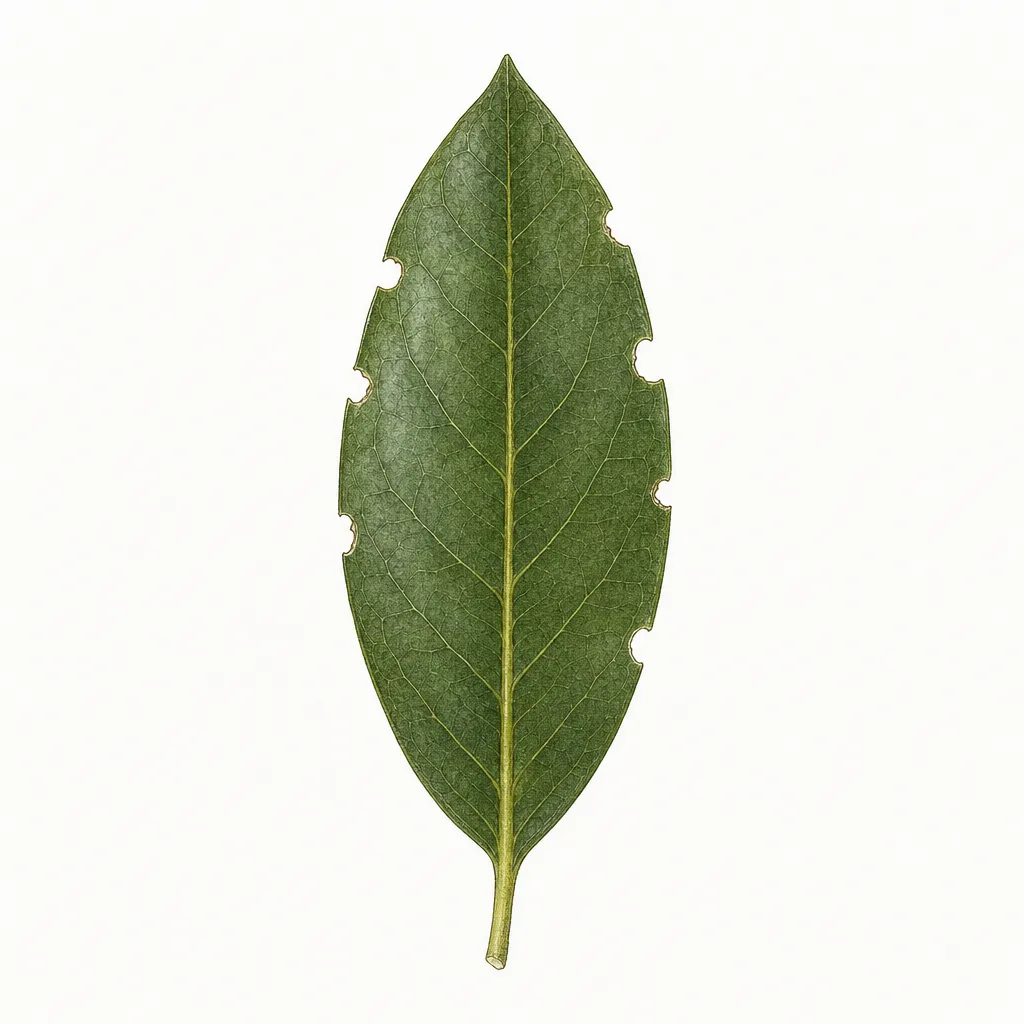
Notches along rhododendron leaf edges are most likely caused by adult root weevils; the leaf damage is usually cosmetic, but their grubs can damage roots. ([rhs.org.uk](https://www.rhs.org.uk/biodiversity/vine-weevil))
Not sure it's this? Scan your plant — free
What it is
Root weevils are snout-nosed beetles whose adults chew small pieces from leaf edges. Their immature stage consists of soil-dwelling grubs that eat roots and sometimes damage the stem base, interfering with the plant's water supply. ([rhs.org.uk](https://www.rhs.org.uk/biodiversity/vine-weevil))
Also called: Weevil leaf notching, Black vine weevil damage
Plants affected: Rhododendrons, Azaleas, Euonymus, Hydrangeas, Strawberries
Symptoms
- Small, repeated notches around leaf edges, sometimes concentrated on interior leaves. ([extension.umd.edu](https://extension.umd.edu/resource/azaleas-and-rhododendrons-identify-and-manage-problems))
- Adult beetles on foliage after dark; black vine weevils are about 3/8 inch long with faint yellowish flecks. ([extension.umd.edu](https://extension.umd.edu/resource/azaleas-and-rhododendrons-identify-and-manage-problems))
- With serious root feeding: wilting, stunting, or decline, especially in small shrubs. ([extension.umd.edu](https://extension.umd.edu/resource/azaleas-and-rhododendrons-identify-and-manage-problems))
Causes
- Adult root weevils climb onto foliage and chew the margins; several species can produce similar damage. ([rhs.org.uk](https://www.rhs.org.uk/biodiversity/vine-weevil))
- Grubs feeding below ground cause the more serious damage; container-grown plants are particularly vulnerable. ([rhs.org.uk](https://www.rhs.org.uk/biodiversity/vine-weevil))
How to tell it apart
Look for small bites beginning at the leaf edge, then check the undersides with a flashlight just after dark. Hold a pale sheet beneath the branches and tap them: disturbed weevils drop and can be hard to find on bare soil. Catching a beetle is more reliable than identifying the pest from notches alone. ([extension.umaine.edu](https://extension.umaine.edu/gardening/2022/05/12/treatment-for-weevils/))
- Other chewing pests
- Large, scooped-out bites are less typical of root weevils, which make small marginal notches. Find the feeding pest before choosing a treatment. ([seattle.gov](https://www.seattle.gov/documents/Departments/SPU/EnvironmentConservation/IPM/RootWeevilonRhododendronsIPMFactSheet.pdf))
- Rhododendron gall midge
- New leaves develop puckered, curled margins rather than having pieces neatly eaten away. Tiny white maggots may be inside the curls. ([extension.umd.edu](https://extension.umd.edu/resource/azaleas-and-rhododendrons-identify-and-manage-problems))
- Lace bugs
- These cause pale speckling on leaf surfaces and black droppings underneath, rather than missing pieces along the edges. ([extension.umd.edu](https://extension.umd.edu/resource/azaleas-and-rhododendrons-identify-and-manage-problems))
Treatment
- Check before treating Tonight, inspect damaged leaves just after dark. If the shrub otherwise looks healthy and you find only limited notching, tolerate the damage rather than spraying automatically. ([extension.umaine.edu](https://extension.umaine.edu/gardening/2022/05/12/treatment-for-weevils/))
- Collect feeding adults nightly for a week Place a pale sheet or tray under the branches, then tap or gently shake the foliage. Collect the fallen beetles immediately. Repeat every night for about a week while adults are present; collected weevils can be killed by freezing in a closed container. ([extension.umaine.edu](https://extension.umaine.edu/gardening/2022/05/12/treatment-for-weevils/))
- Check vulnerable container plants for grubs This week, inspect the root ball of a declining potted rhododendron for white, C-shaped, legless grubs with brown heads. If found, remove as many as possible while repotting. Do not assume leaf notching alone proves a damaging root infestation. ([rhs.org.uk](https://www.rhs.org.uk/biodiversity/vine-weevil))
- Use beneficial nematodes only when conditions fit If grubs are confirmed, check soil temperature this week against the label of a root-weevil nematode product. Temperature requirements differ by species and product, so there is no single reliable cutoff. If suitable, pull mulch aside, apply the labeled soil-drench rate out of direct sunlight, water in, and keep soil damp for the labeled period. If too cold, postpone application. Follow the label and keep the product away from pets and children. ([extension.umd.edu](https://extension.umd.edu/resource/azaleas-and-rhododendrons-identify-and-manage-problems))
Prevention
- Check susceptible plants regularly for fresh marginal notching so you can collect adults before numbers build. ([rhs.org.uk](https://www.rhs.org.uk/biodiversity/vine-weevil))
- When replacing a repeatedly damaged shrub, ask your local extension service about weevil-resistant rhododendron varieties. Resistant types are available. ([seattle.gov](https://www.seattle.gov/documents/Departments/SPU/EnvironmentConservation/IPM/RootWeevilonRhododendronsIPMFactSheet.pdf))
- Avoid unnecessary insecticides: ground beetles and other natural enemies help control weevils. ([seattle.gov](https://www.seattle.gov/documents/Departments/SPU/EnvironmentConservation/IPM/RootWeevilonRhododendronsIPMFactSheet.pdf))
When to worry
Seek help from your local extension service if the shrub wilts, declines rapidly, or loses substantial foliage, especially if it is young or container-grown. Grubs can damage roots and girdle the stem base; a few leaf notches alone are usually much less concerning. ([extension.umd.edu](https://extension.umd.edu/resource/azaleas-and-rhododendrons-identify-and-manage-problems))
Safety
Rhododendron leaves and flowers can poison people and pets if eaten. For human exposure, contact a doctor or US Poison Control at 1-800-222-1222. For suspected pet ingestion, contact a veterinarian promptly or ASPCA Poison Control at 888-426-4435; a fee may apply. Keep plant material away from children and pets. For beneficial nematodes or any other treatment product, follow the label for handling, protective equipment, storage, application, and disposal; keep it inaccessible to children and pets. Nematodes have a short shelf life: keep them out of high heat and use within the labeled storage period. ([poison.org](https://www.poison.org/articles/azaleas-and-rhododendrons))
Sharing your home with pets or small children? See which plants our sources call safe for cats, dogs and kids.
FAQ
Will the notches kill my rhododendron?
Usually not. Adult feeding rarely affects plant vigor; root-feeding grubs are the greater concern. ([rhs.org.uk](https://www.rhs.org.uk/biodiversity/vine-weevil))
Why can't I see any insects during the day?
Black vine weevils generally hide by day and feed after dark. Try a flashlight inspection just after sunset. ([extension.umaine.edu](https://extension.umaine.edu/gardening/2022/05/12/treatment-for-weevils/))
Should I remove the notched leaves?
Not just because of the notches. Limited adult feeding damage can be tolerated. ([rhs.org.uk](https://www.rhs.org.uk/biodiversity/vine-weevil))
Can I treat in November?
Check conditions rather than the calendar. Adults are generally less active in winter, and nematodes need the soil temperatures specified on their label. ([seattle.gov](https://www.seattle.gov/documents/Departments/SPU/EnvironmentConservation/IPM/RootWeevilonRhododendronsIPMFactSheet.pdf))
Sources
- Vine weevil — Royal Horticultural Society
- What are some effective treatments for weevils? — University of Maine Cooperative Extension
- Azaleas and Rhododendrons: Identify and Manage Problems — University of Maryland Extension
- Azaleas and rhododendrons: "Mad honey" and other surprising dangers — Poison Control
- Toxic and Non-toxic Plants: Rhododendron — ASPCA