
Mushrooms in lawn after rain: causes and what to do
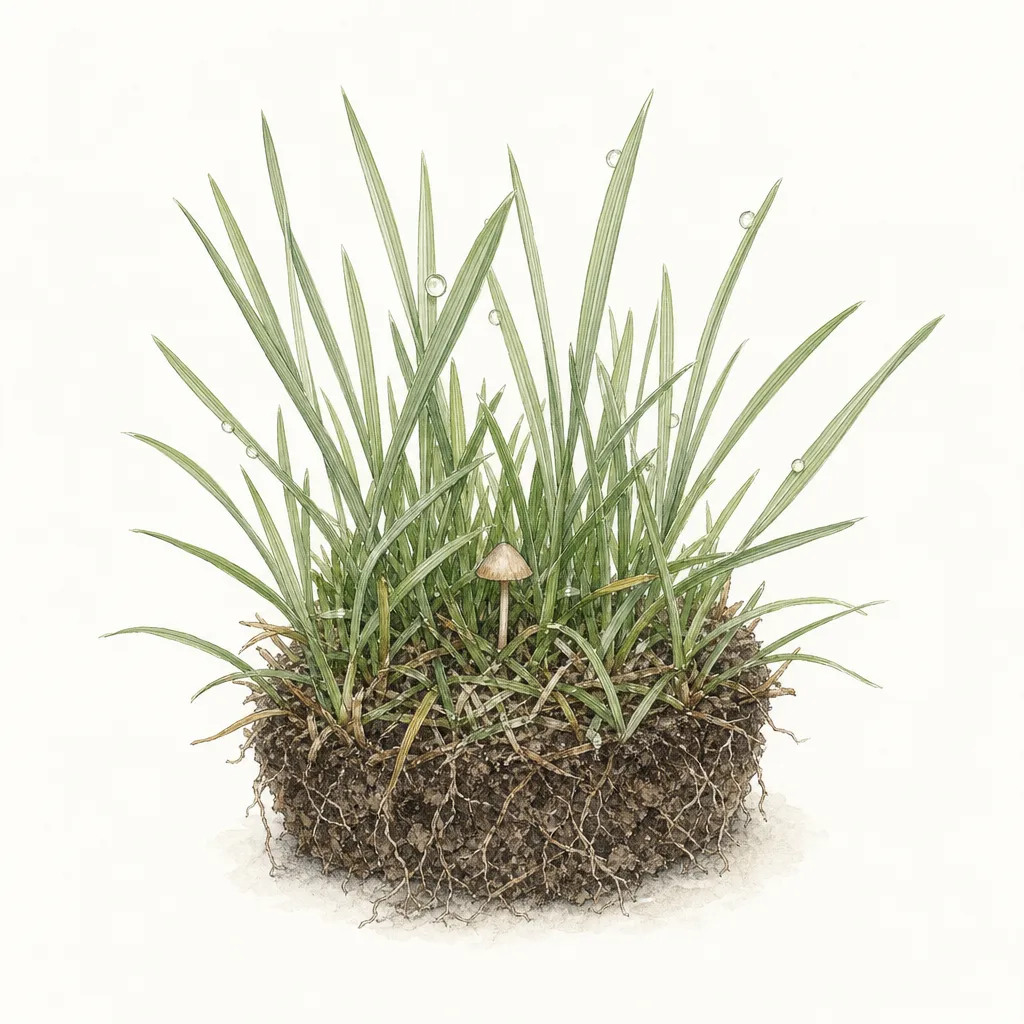
Mushrooms appearing in your lawn after rain are most likely fungi responding to wet conditions, not a sign that your grass is diseased.
Not sure it's this? Scan your plant — free
What it is
Lawn mushrooms are the spore-producing structures of fungi living in soil, thatch, or buried wood. Most break down dead material rather than infect grass; some fairy ring fungi can make soil repel water and indirectly damage turf.
Also called: Toadstools, Mushroom-producing lawn fungi
Plants affected: Lawn grasses
Symptoms
- Mushrooms emerge during damp weather, sometimes where an old stump or buried roots are decomposing.
- Grass often looks normal despite the mushrooms.
- Mushrooms may form an arc or circle, sometimes alongside darker green or dying grass.
Causes
- Rain or unnecessary irrigation provides moisture for mushroom growth.
- Dead roots, buried wood, and accumulated thatch provide food for decomposer fungi.
- Poor drainage and shade can keep conditions favorable for mushrooms.
How to tell it apart
Scattered mushrooms after wet weather, with otherwise healthy grass, usually fit ordinary lawn mushroom growth. Check whether they form a ring with damaged grass or emerge directly from a tree base; those patterns deserve closer attention. Appearance alone cannot establish whether a mushroom is safe to eat.
- Damaging fairy ring
- Look for an arc or ring of wilting or dead grass, sometimes bordered by lush green growth. A ring of mushrooms without grass damage does not necessarily need treatment.
- Slime mold
- Usually appears as tiny white, gray, or pinkish structures coating grass blades rather than separate mushrooms growing from soil. It does not infect grass.
- Armillaria root rot near a tree
- Clusters of honey-colored mushrooms at a tree base or stump can indicate Armillaria rather than ordinary thatch decomposition; color alone cannot confirm it.
Treatment
- Remove mushrooms where children or pets could eat them Check daily this week and collect new mushrooms before children or pets enter the lawn. Pick or rake them up and dispose of them out of reach. Removal does not eliminate the underground fungus.
- Skip unnecessary watering For an established lawn, check the irrigation schedule now and skip watering while rain is meeting the grass's needs. Reassess before each scheduled watering rather than adding water automatically.
- Clear loose organic debris and check drainage This week, rake up loose dead plant material and exposed wood chips in the affected area. After the next rain, check for persistent pooling and arrange drainage advice if needed rather than repeatedly treating the mushrooms.
- Watch the grass rather than treating healthy turf Check the affected patch this week for wilting or dead grass, especially in a ring. If grass remains healthy and ingestion is not a concern, mushrooms can usually be left alone. Drier weather often reduces mushroom production, but mushrooms may return while their food source remains.
Prevention
- Adjust irrigation around rainfall instead of keeping a fixed wet-weather schedule.
- Address persistent drainage problems and excessive thatch.
- Expect management to reduce mushroom appearances, not permanently eliminate soil fungi.
When to worry
Seek lawn-diagnostic help if an expanding ring contains wilting or dead grass. Arrange an arborist assessment for mushrooms growing directly from a living tree's base or roots, especially if the tree is declining. Suspected ingestion by a person or pet needs immediate medical or veterinary advice.
Safety
Some lawn mushrooms can poison people and pets. Do not eat them or assume they are safe based on appearance. If a person may have eaten one, contact a doctor or poison line immediately; for a pet, call your veterinarian or an animal poison line immediately. Do not wait for symptoms. Keep children and pets away from affected areas until mushrooms are collected, and put collected mushrooms somewhere they cannot reach.
Sharing your home with pets or small children? See which plants our sources call safe for cats, dogs and kids.
FAQ
Will the mushrooms kill my grass?
Usually not. Most lawn mushrooms do not harm grass, although some fairy ring fungi can interfere with water absorption.
Should I mow over them?
Extension advice differs: Iowa State lists mowing as an option, while UC recommends removal rather than mowing. Collecting mushrooms first is the safer practical choice where children or pets might eat them.
Do I need a fungicide?
Usually no. Routine lawn mushrooms generally do not need chemical treatment; a fairy ring with dying grass needs a separate assessment.
Why do they keep coming back?
The underground fungus remains after picking, and wet weather can trigger more mushrooms while its food source lasts.
Sources
- Mushrooms in Lawns — UC IPM
- Mushrooms and Slime Molds in Lawns — University of Maryland Extension
- Rains Bring Lawn Mushrooms — UC Agriculture and Natural Resources
- How do I get rid of mushrooms in my yard or garden bed? — Iowa State University Extension and Outreach
- The Fungus Among Us: Mushroom Toxicosis — ASPCA