
Large patch in zoysia lawn: signs and treatment
Expanding tan patches with yellow-orange edges in a zoysia lawn most likely indicate large patch, especially during cool, wet fall or spring weather.
Not sure it's this? Scan your plant — free
What it is
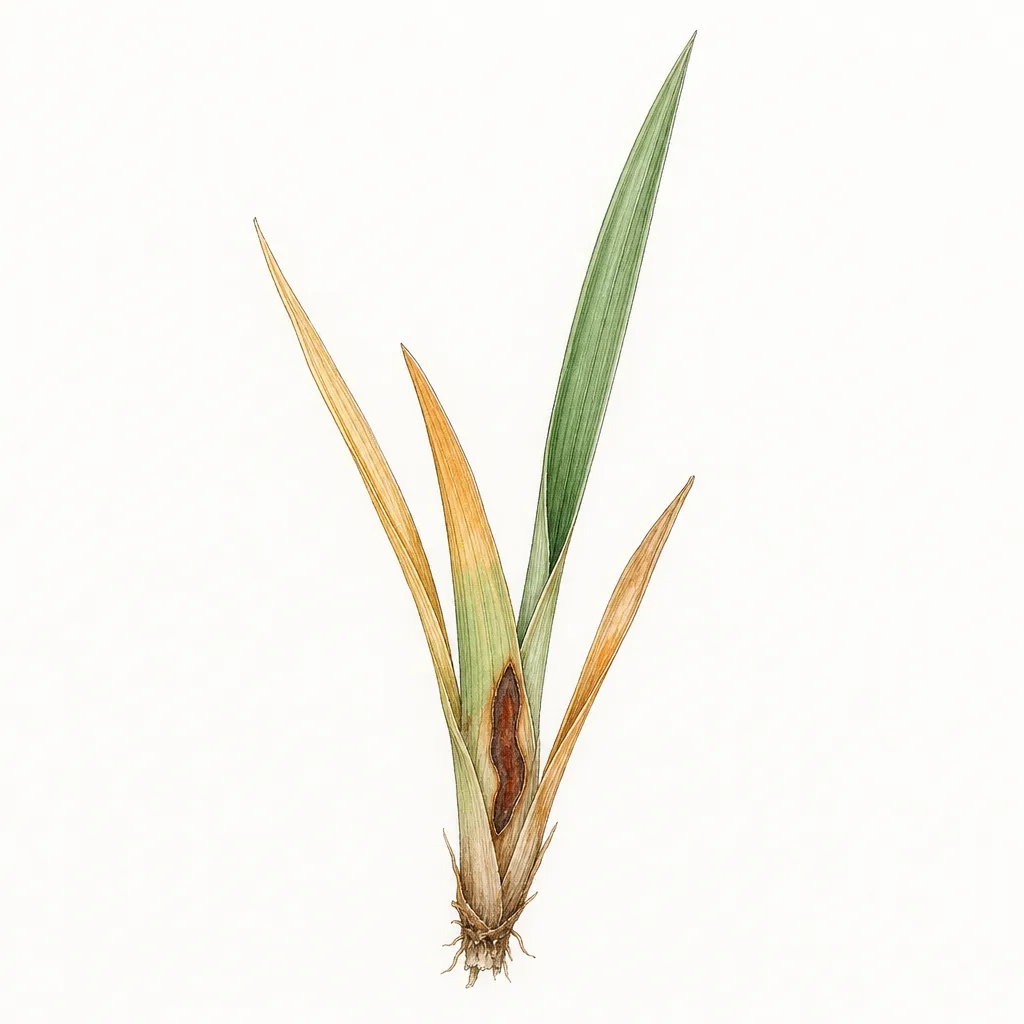
Large patch is a fungal disease caused by Rhizoctonia solani AG 2-2 LP, which survives in soil and thatch, the layer of dead grass near the soil surface. It attacks the leaf sheaths—the sleeves around the bases of grass leaves—causing leaves to die and affected turf to thin.
Also called: Zoysia patch, Rhizoctonia large patch
Plants affected: Zoysiagrass, St. Augustinegrass, Centipedegrass, Bermudagrass, Seashore paspalum
Symptoms
- Round patches or arcs of yellow, tan, or bleached grass that may grow several yards across.
- A yellow-orange or bronze border where the disease is actively spreading.
- Thin or sunken patch centers, with dark, rotten-looking areas at the bases of affected leaves.
- Patches that return in the same places and enlarge in later seasons.
Causes
- The fungus becomes active during cool to mild, wet weather while zoysia is growing slowly.
- Overwatering, poor drainage, shade, and limited airflow keep the lower grass canopy damp.
- Excessive thatch, mowing too low, and poorly timed nitrogen fertilization increase disease pressure.
How to tell it apart
Inspect the edge between healthy and damaged grass. Gently tug a discolored leaf: if it separates easily from its stem and has a dark, rotten-looking base, large patch is more likely. That sign alone does not confirm the disease; ask your county Extension office how to submit a sample before choosing a fungicide.
- Drought stress
- Check whether the soil is dry or persistently wet before changing irrigation. Dry soil suggests a water shortage; expanding orange-edged patches with rotting leaf bases during wet weather point more strongly toward large patch.
- Seasonal dormancy
- Zoysia naturally loses color as it goes dormant. Distinct expanding patches with orange borders and damaged leaf bases are more suspicious for large patch than a general seasonal loss of green color.
Treatment
- 1. Stop keeping the lawn constantly damp This week, skip irrigation while the soil remains wet. Water only when needed to prevent drought stress, in the early morning rather than evening; avoid daily light sprinkling. Check damaged areas after rain or irrigation for standing water or persistent saturation.
- 2. Pause nitrogen during the disease-prone transition Do not try to green up damaged fall turf with nitrogen fertilizer. NC State advises avoiding nitrogen within six weeks before winter dormancy and during the first three weeks after spring green-up begins. Check your local Extension schedule before the next application.
- 3. Protect the damaged grass Postpone dethatching and core aeration while disease is active; plan those jobs for active summer growth. If mowing is needed this week, use the recommended height for your zoysia type rather than cutting low, and avoid mowing wet turf.
- 4. Confirm spreading patches before choosing fungicide Contact Extension this week if patches are expanding or return each year. A lawn fungicide labeled for large patch on zoysiagrass may help, but preventive treatment generally works best. UF/IFAS describes treatment after symptoms appear as a way to stop fungal growth, while NC State emphasizes prevention. Follow the label for the rate, repeat interval, watering instructions, and protective equipment; keep the product away from pets and children and exclude them from treated areas until the label allows return.
- 5. Record affected areas and allow time for regrowth Photograph and map the patches this week so you can compare their edges and plan future preventive treatment. Fungicide will not turn dead leaves green; recovery depends on new growth and may be slow until warm-season grass is actively growing.
Prevention
- Water according to lawn need rather than a fixed daily schedule, mow at the recommended height for your zoysia type, and correct drainage problems that leave the soil saturated.
- Manage excessive thatch during active summer growth, not during an outbreak.
- Avoid nitrogen applications close to fall dormancy or too early during spring green-up; confirm the appropriate schedule with local Extension.
- For recurring disease, discuss preventive fall fungicide treatment with Extension. NC State's zoysia timing guidance uses fall soil temperatures declining to about 70°F for five consecutive days. Confirm local timing with Extension and follow the product label, including repeat applications and watering directions. Keep fungicides away from pets and children, and keep them off treated areas until the label allows return.
When to worry
Seek Extension help if patches keep expanding, return each year, or leave extensive thin areas. Recovery can be slow, so persistent brown grass alone does not mean the whole lawn is dead.
Safety
Follow every fungicide or fertilizer label for handling, application, protective equipment, and storage. Keep products tightly closed in their original labeled containers, out of reach of children and pets and away from food, pet food, and water bowls. Keep children and pets away during fungicide application and until the label permits return. If exposure occurs, follow the label's first-aid instructions and contact a doctor, veterinarian, or poison line as appropriate.
Sharing your home with pets or small children? See which plants our sources call safe for cats, dogs and kids.
FAQ
Is large patch the same as brown patch?
Large patch was formerly called brown patch, but the names now distinguish diseases caused by different groups of Rhizoctonia, typically affecting different types of turfgrass.
Will my zoysia recover?
Often, yes. Surviving grass can fill damaged areas as active warm-weather growth resumes, but recovery is not immediate.
Will fungicide turn brown grass green?
No. It can suppress the fungus, but damaged areas must recover through new grass growth.
Should I dethatch the patches now?
Not during active disease. Schedule thatch management for active summer growth rather than stressing the lawn during an outbreak.