
Holes in pansy leaves: likely causes and fixes
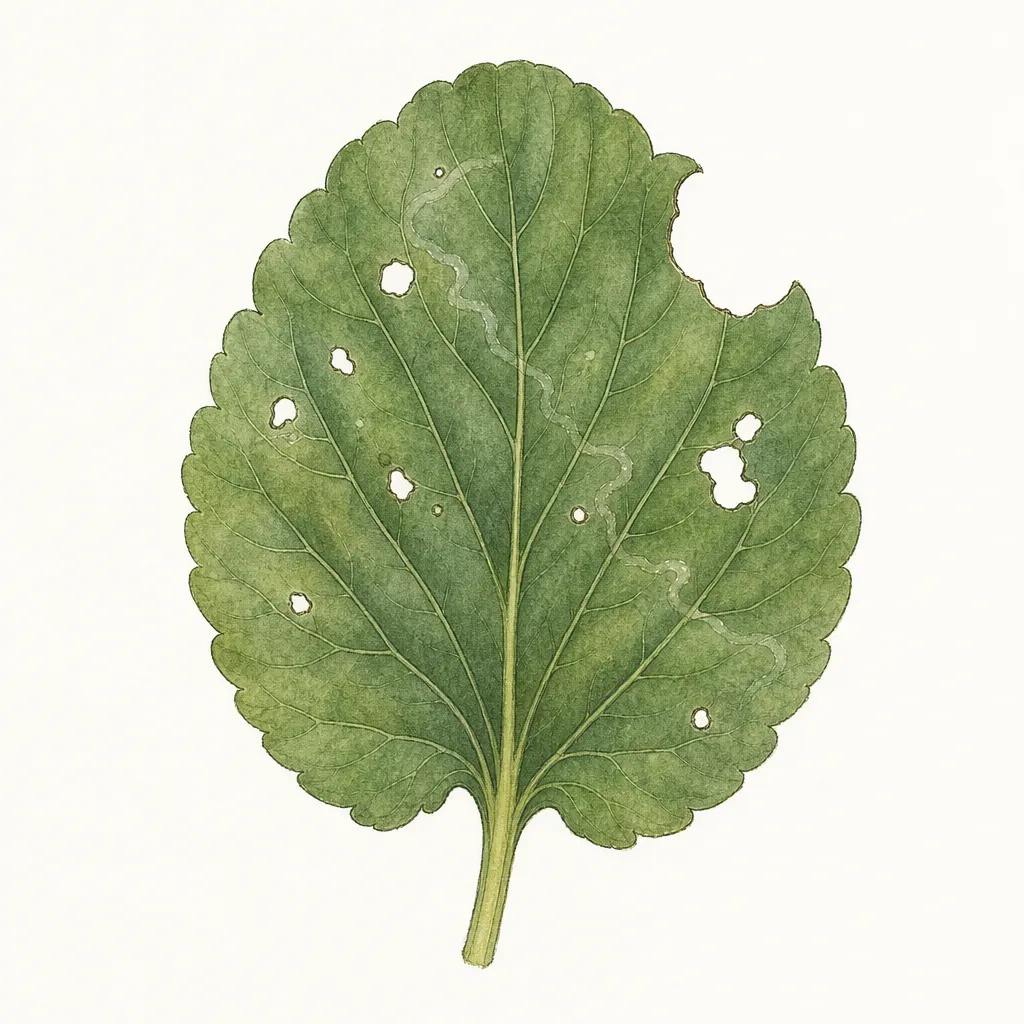
Holes in pansy leaves are most likely caused by slugs or snails, especially if you see silvery slime trails, but caterpillars can cause similar damage.
Not sure it's this? Scan your plant — free
What it is
Slugs and snails are soft-bodied mollusks; snails have an external shell, while slugs do not. They scrape away tender plant tissue with rasping mouthparts, leaving holes in leaves and flowers and sometimes consuming young seedlings.
Also called: Slug damage, Snail damage
Plants affected: Pansies, Violas
Symptoms
- Irregular holes through leaves, sometimes crossing veins, or missing sections along the edges.
- Shiny, silvery slime trails on leaves or the ground nearby.
- Chewed flowers or young seedlings eaten almost completely.
Causes
- Slugs or plant-feeding snails feeding mainly at night, after rain or during damp, overcast weather.
- Damp hiding places beneath leaf litter, boards, flowerpots or thick mulch near the plants.
- Caterpillars are another possible cause; pansy feeders include cutworms and variegated fritillary caterpillars.
How to tell it apart
Inspect with a flashlight after dark and look beneath nearby pots and debris during daylight. Finding a slug or snail feeding on the plant, especially alongside slime trails, strongly supports this diagnosis. Sources describe feeding holes as either ragged-edged or smooth-edged, so hole shape alone is not enough to identify the culprit.
- Variegated fritillary caterpillar feeding
- These caterpillars also chew holes or consume whole pansy leaves. Look for reddish-orange caterpillars with black spines and white stripes marked with black spots.
- Cutworm damage
- Seedling stems cut at or near soil level point toward cutworms. These caterpillars usually hide in soil by day and curl into a tight C when disturbed.
- Pansy scab
- This fungal disease starts with raised, yellow or cream-colored scabby spots. Infected tissue can fall out, leaving holes; spots on leaves and stems help distinguish it from simple chewing.
Treatment
- Confirm the feeder before choosing treatment Tonight, check the damaged pansies after dark with a flashlight. Examine leaves and nearby hiding places for slugs or snails, and check for caterpillars too. If identification is unclear, photograph the animal and damage rather than treating on hole shape alone.
- Handpick confirmed slugs and plant-feeding snails Check nightly at first. Wear gloves, collect the pests into a plastic bag, seal it and place it in the trash. Once numbers noticeably decline, reduce checks to weekly.
- Remove daytime shelters This week, clear fallen plant litter and unnecessary boards, stones and empty pots immediately around the pansies. Alternatively, leave one board as a deliberate trap: lift it every morning and remove any slugs or snails underneath.
- Move watering to the morning At each watering this week, direct water at the plant bases rather than over leaves and flowers. Avoid evening sprinkling; morning watering gives wet surfaces more time to dry and makes conditions less welcoming to slugs.
- Consider bait only if confirmed feeding continues An iron phosphate slug-and-snail bait can supplement handpicking and shelter removal. Choose one labeled for the planting site, scatter rather than pile it, and use only the amount and repeat interval on its label. Follow the label, keep the product away from pets and children, and restrict their access to treated areas as directed.
Prevention
- Keep the area around plant bases free of accumulated dead foliage and unnecessary hiding places.
- Continue watering in the morning at soil level instead of wetting leaves and flowers.
- Check known hiding places regularly, particularly during damp weather, and remove confirmed pests before damage builds.
When to worry
Act promptly if young plants are being eaten almost completely or seedlings are cut off at soil level. If holes develop from raised scabby spots, or stems are spotted and dying, ask your local Extension service to help identify the problem before choosing treatment.
Safety
Wear gloves when collecting slugs or snails. Slug bait is a pesticide: follow its label, including protective equipment and restrictions on access by pets and children. Store it locked away in its original labeled container, separate from food and animal feed; never reuse the container. Iron phosphate bait is not permission to let pets eat it. Slug-and-snail bait, including iron phosphate products, can cause poisoning if swallowed in sufficient amounts. If a person swallows bait, contact a poison control center or doctor promptly; if a pet swallows it, contact a veterinarian or animal poison control service promptly. Have the product container or label available.
Sharing your home with pets or small children? See which plants our sources call safe for cats, dogs and kids.
FAQ
Why can’t I find anything eating my pansies?
Slugs and snails usually feed at night and hide in damp, sheltered places during the day. Try checking after dark with a flashlight.
Do holes always mean slugs?
No. Caterpillars also chew pansies, and scab disease can leave holes when infected leaf tissue falls out.
Can I manage slugs without pesticides?
Yes. Regular handpicking, removing shelters, morning watering and daily checks beneath a board trap are non-pesticide options.
Why do holes appear after rain?
Slugs and snails need moisture and may come out to feed after rain or watering.