
Holes in kale leaves: causes and fixes
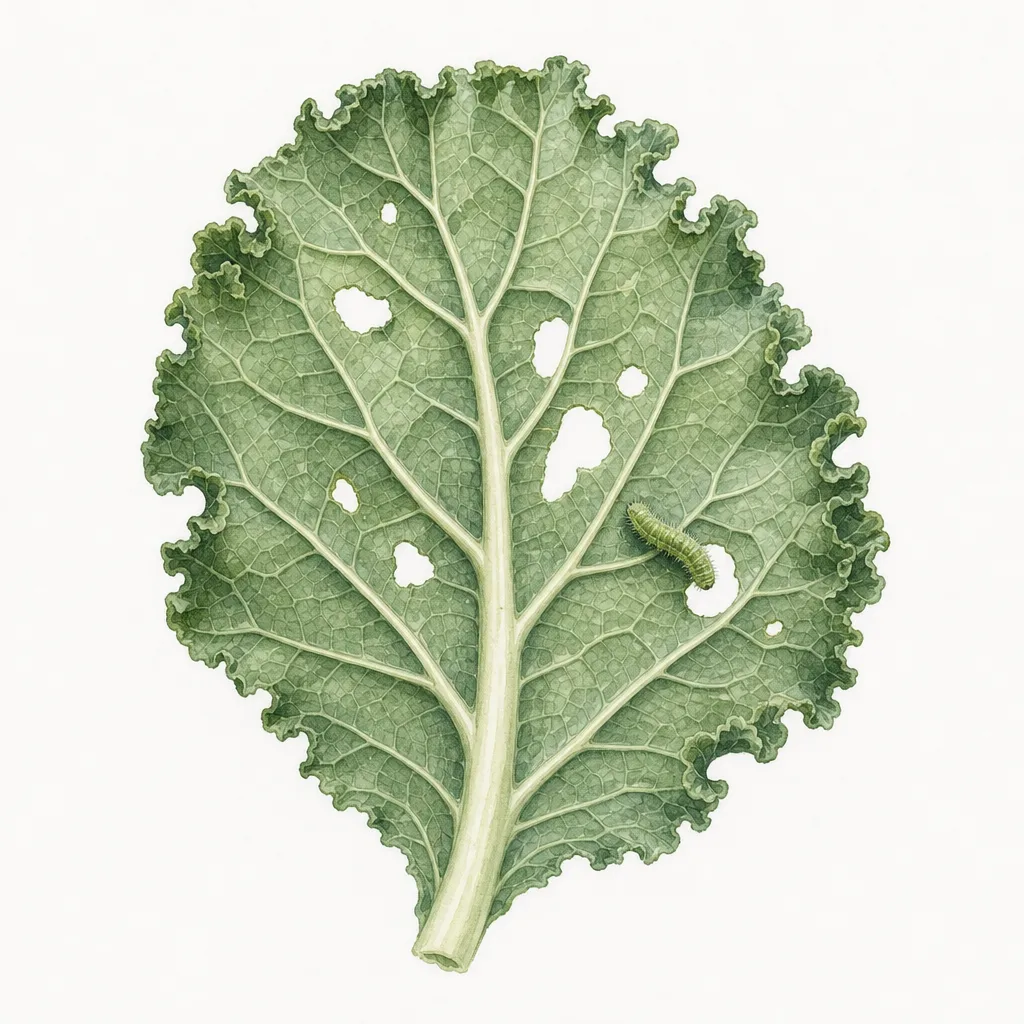
Holes in kale leaves are most likely caused by chewing pests—especially cabbage caterpillars, flea beetles or slugs—and checking the leaf undersides is the best first step. ([extension.umn.edu](https://extension.umn.edu/garden-and-home/yard-and-garden/yard-and-garden-insects/caterpillars-on-cole-crops?utm_source=openai))
Not sure it's this? Scan your plant — free
What it is
Chewing damage happens when a pest eats away leaf tissue, leaving holes or ragged edges. Cabbage caterpillars are butterfly or moth larvae that feed between the larger veins; adult flea beetles chew tiny holes, while slugs rasp away irregular patches. ([extension.umn.edu](https://extension.umn.edu/garden-and-home/yard-and-garden/yard-and-garden-insects/caterpillars-on-cole-crops?utm_source=openai))
Also called: Kale leaf feeding damage, Cabbage caterpillar damage
Plants affected: Kale, Cabbage, Broccoli, Cauliflower, Brussels sprouts, Collards
Symptoms
- Large, ragged holes or leaves reduced mostly to veins, sometimes with caterpillar droppings. ([extension.umn.edu](https://extension.umn.edu/garden-and-home/yard-and-garden/yard-and-garden-insects/caterpillars-on-cole-crops?utm_source=openai))
- Many tiny holes that give leaves a peppered, shot-hole appearance. ([extension.umd.edu](https://www.extension.umd.edu/resource/flea-beetles-vegetables))
- Irregular holes accompanied by dried, shiny slime trails. ([extension.umn.edu](https://extension.umn.edu/garden-and-home/yard-and-garden/yard-and-garden-insects/slugs))
Causes
- Imported cabbageworms, cabbage loopers and diamondback moth caterpillars feeding on leaves. ([extension.umn.edu](https://extension.umn.edu/garden-and-home/yard-and-garden/yard-and-garden-insects/caterpillars-on-cole-crops?utm_source=openai))
- Adult flea beetles chewing the foliage, particularly on vulnerable seedlings. ([extension.umd.edu](https://www.extension.umd.edu/resource/flea-beetles-vegetables))
- Slugs feeding in cool, damp conditions, usually at night. ([extension.umn.edu](https://extension.umn.edu/garden-and-home/yard-and-garden/yard-and-garden-insects/slugs))
How to tell it apart
Turn leaves over and inspect stems for green caterpillars and droppings. A velvety green caterpillar suggests imported cabbageworm; one that arches its body as it walks suggests cabbage looper. Tiny beetles that jump when disturbed point to flea beetles. If daytime checks find nothing, look after dark for slugs and slime trails. Hole shape alone is not enough to identify the pest. ([extension.umn.edu](https://extension.umn.edu/garden-and-home/yard-and-garden/yard-and-garden-insects/caterpillars-on-cole-crops?utm_source=openai))
- Flea beetle damage
- Usually many tiny shot holes rather than large missing patches; look for small, shiny beetles that jump away. ([extension.umd.edu](https://www.extension.umd.edu/resource/flea-beetles-vegetables))
- Slug damage
- Can resemble caterpillar chewing, but slime trails and soft-bodied pests found at night favor slugs. ([extension.umn.edu](https://extension.umn.edu/garden-and-home/yard-and-garden/yard-and-garden-insects/slugs))
- Diamondback moth caterpillar damage
- Young larvae leave thin, pale leaf windows that later become holes; small holes do not always mean flea beetles. ([extension.umn.edu](https://extension.umn.edu/garden-and-home/yard-and-garden/yard-and-garden-insects/caterpillars-on-cole-crops?utm_source=openai))
Treatment
- Find and remove the pest first Inspect every plant today, including leaf undersides and stems. Handpick and destroy caterpillars you find; repeat the inspection every few days this week. Identifying the pest first helps you avoid an unnecessary spray. ([extension.unr.edu](https://extension.unr.edu/publication.aspx?PubID=4647))
- If slugs are present, remove their hiding places Move nearby boards, pots and excess mulch that provide damp shelter. Water at the soil surface in the morning rather than wetting leaves in the evening. You can set down a board as a trap, collect slugs underneath each morning and repeat nightly until damage stops. ([extension.umn.edu](https://extension.umn.edu/garden-and-home/yard-and-garden/yard-and-garden-insects/slugs))
- Cover vulnerable plants After removing visible pests, fit a floating row cover over the kale and secure every edge to the ground. This helps exclude incoming cabbage butterflies, moths and flea beetles; it does not remove pests already underneath. ([extension.umn.edu](https://extension.umn.edu/garden-and-home/yard-and-garden/yard-and-garden-insects/caterpillars-on-cole-crops?utm_source=openai))
- Use a caterpillar treatment only if needed If caterpillars remain and feeding continues, choose a Bacillus thuringiensis (Bt) caterpillar insecticide labeled for kale. Treat while larvae are small and cover feeding surfaces thoroughly: caterpillars must eat it. Follow the label for dose, repeat interval and days before harvest; keep it away from pets and children. ([extension.umn.edu](https://extension.umn.edu/garden-and-home/yard-and-garden/yard-and-garden-insects/caterpillars-on-cole-crops?utm_source=openai))
Prevention
- Install row covers at sowing or transplanting rather than waiting for damage. ([extension.umn.edu](https://extension.umn.edu/garden-and-home/yard-and-garden/yard-and-garden-insects/caterpillars-on-cole-crops?utm_source=openai))
- Check leaf undersides every few days so you catch caterpillars while they are small. ([extension.unr.edu](https://extension.unr.edu/publication.aspx?PubID=4647))
- Remove spent crop remains and nearby weedy mustards that can shelter cabbage pests. ([extension.unr.edu](https://extension.unr.edu/publication.aspx?PubID=4647))
When to worry
Act promptly if seedlings are losing leaves or feeding is rapidly stripping plants down to their veins. Extensive caterpillar feeding can severely defoliate plants, and heavy slug feeding can weaken or kill seedlings; a few holes alone do not necessarily call for pesticide treatment. ([extension.umn.edu](https://extension.umn.edu/garden-and-home/yard-and-garden/yard-and-garden-insects/caterpillars-on-cole-crops?utm_source=openai))
Safety
Even biological insecticides need careful handling. Follow the label, including protective clothing, application, harvest and re-entry instructions. Keep products and treated areas away from pets and children as directed. Store products tightly closed in their original labeled containers, preferably locked away, separate from food and animal feed. For suspected exposure, follow label first aid and contact a doctor, poison line or veterinarian; keep the label available. ([extension.umn.edu](https://extension.umn.edu/garden-and-home/yard-and-garden/yard-and-garden-insects/caterpillars-on-cole-crops?utm_source=openai))
Sharing your home with pets or small children? See which plants our sources call safe for cats, dogs and kids.
FAQ
Are green caterpillars eating my kale?
They are a likely cause of ragged holes, especially if you also find droppings. Check underneath leaves before choosing treatment. ([extension.unr.edu](https://extension.unr.edu/publication.aspx?PubID=4647))
Why are there tiny holes all over the leaves?
Flea beetles are a likely cause if you see tiny jumping beetles, although young caterpillars can also make small holes. ([extension.umd.edu](https://www.extension.umd.edu/resource/flea-beetles-vegetables))
Why can't I find anything eating the kale?
Caterpillars can hide under leaves or near the plant base. Slugs usually feed at night, so try checking after dark. ([extension.unr.edu](https://extension.unr.edu/publication.aspx?PubID=4647))
Do I need to spray immediately?
Not necessarily. Handpicking can manage caterpillars in a small planting, and low to moderate slug feeding usually does not threaten plant health. ([extension.unr.edu](https://extension.unr.edu/publication.aspx?PubID=4647))
Sources
- Caterpillars on cole crops — University of Minnesota Extension
- A Northern Nevada Homeowner's Guide to Identifying and Managing Cabbage Caterpillars — University of Nevada, Reno Extension
- Flea Beetles on Vegetables — University of Maryland Extension
- Slugs in home gardens — University of Minnesota Extension
- Storing Pesticides Safely — US EPA
- Read the Label First: Protect Your Pets — US EPA
- Caterpillars on cole crops | UMN Extension