
Gray mold on begonia leaves: causes and fixes
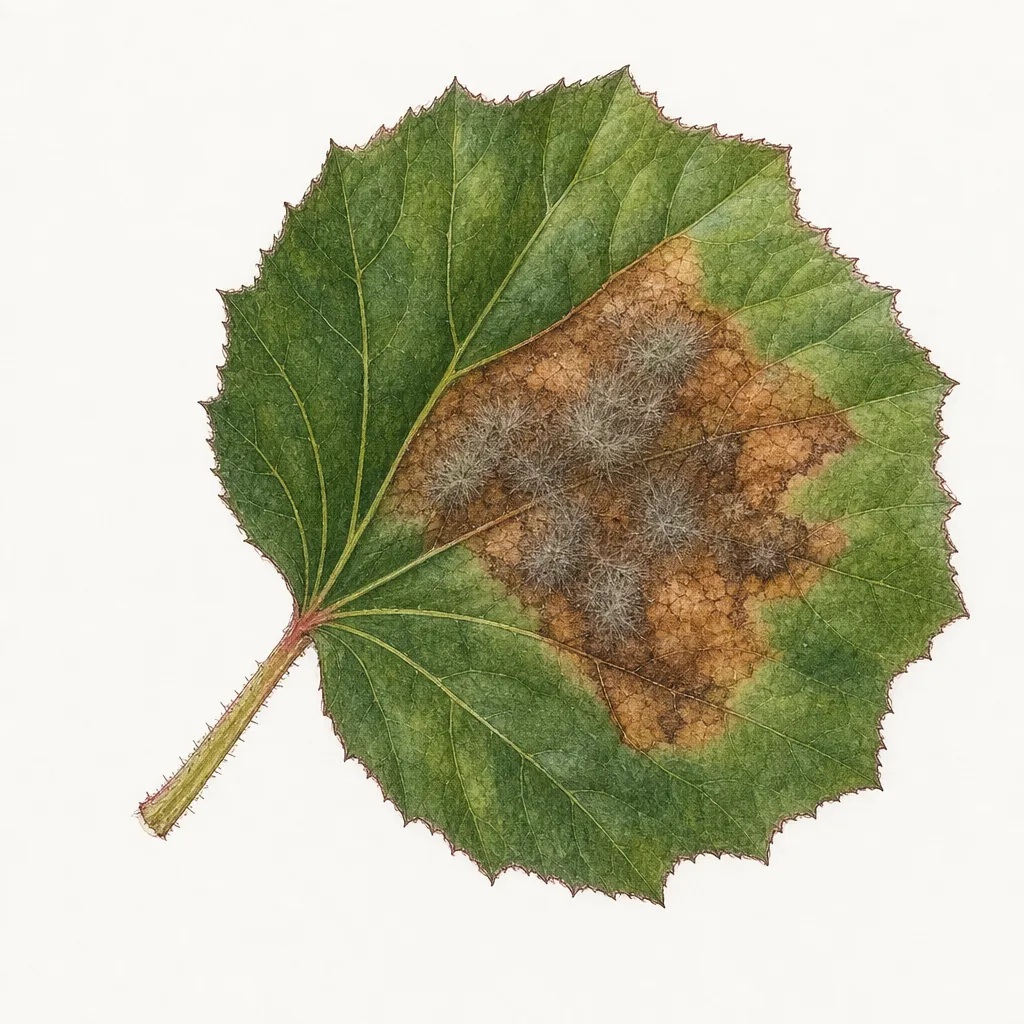
Gray, fuzzy growth over brown or rotting begonia leaves is most likely gray mold (Botrytis blight), usually managed by removing affected tissue and keeping leaves drier. ([University of Maryland Extension](https://extension.umd.edu/resource/gray-mold-or-botrytis-blight-indoor-plants))
Not sure it's this? Scan your plant — free
What it is
Gray mold is a fungal disease caused by Botrytis cinerea. It attacks leaves, flowers and stems, causing brown decay and producing fuzzy gray spores on damaged tissue; weakened or injured tissue is especially vulnerable. ([UC IPM](https://ipm.ucanr.edu/agriculture/floriculture-and-ornamental-nurseries/begonia/))
Also called: Botrytis blight, Botrytis leaf spot, Grey mould
Plants affected: Begonias, including rex, cane, wax and tuberous types
Symptoms
- Large grayish or tan patches, often on older leaves or fading flowers. ([University of Maryland Extension](https://extension.umd.edu/resource/gray-mold-or-botrytis-blight-indoor-plants))
- Dusty, fuzzy gray growth on brown, decaying tissue. ([UC IPM](https://ipm.ucanr.edu/agriculture/floriculture-and-ornamental-nurseries/begonia/))
- Patches that enlarge quickly, with soft rot or collapse of affected tissue. ([University of Maryland Extension](https://extension.umd.edu/resource/gray-mold-or-botrytis-blight-indoor-plants))
Causes
- Botrytis fungus growing on susceptible tissue or moist plant debris. ([UC IPM](https://ipm.ucanr.edu/agriculture/floriculture-and-ornamental-nurseries/begonia/))
- Prolonged high humidity, particularly with cool conditions and leaves or flowers staying wet. ([UC IPM](https://ipm.ucanr.edu/home-and-landscape/houseplant-problems/))
- Crowded foliage that dries slowly, plus dead flowers, aging leaves or injuries that provide infection sites. ([University of Maryland Extension](https://extension.umd.edu/resource/gray-mold-or-botrytis-blight-indoor-plants))
How to tell it apart
Look for gray fuzz specifically over tan or brown, dying areas—not just a pale coating on otherwise firm leaves. This combination strongly suggests Botrytis, but appearance alone cannot confirm it; other damage can also become colonized by this fungus. ([University of Maryland Extension](https://extension.umd.edu/resource/gray-mold-or-botrytis-blight-indoor-plants))
- Powdery mildew
- Usually makes white, powdery patches on leaf surfaces rather than gray fuzz over soft brown decay. Begonia leaves may also have small greasy-looking spots underneath. ([UC IPM](https://ipm.ucanr.edu/agriculture/floriculture-and-ornamental-nurseries/begonia/))
- Bacterial leaf spot
- Starts as small, water-soaked, blisterlike spots that become brown and dead; dusty gray fungal growth is not its defining symptom. ([UC IPM](https://ipm.ucanr.edu/agriculture/floriculture-and-ornamental-nurseries/begonia/))
- Natural leaf hairs or silver coloring
- Some begonias naturally have hairy or silver leaves. Compare with healthy leaves: normal coloring or hairs are not patches of soft, brown decay. ([North Carolina Extension](https://plants.ces.ncsu.edu/plants/begonia/))
Treatment
- Remove affected leaves and fading flowers Today, cut off visibly infected leaves and flowers and pick up fallen material from the pot surface. Remove affected tissue rather than only wiping away the fuzz. Clean debris from cutting blades, then wipe them with 70% isopropyl alcohol before using them on another plant. Follow the alcohol label and keep it away from pets, children, heat and flames. ([University of Maryland Extension](https://extension.umd.edu/resource/gray-mold-or-botrytis-blight-indoor-plants); [University of Minnesota Extension](https://extension.umn.edu/garden-and-home/yard-and-garden/gardening-in-minnesota/how-to-clean-and-disinfect-gardening-tools-and-containers))
- Give the foliage room to dry Move neighboring pots apart until their foliage no longer touches and air can circulate between plants. Reduce excessive humidity around the begonia; stop misting its leaves while managing the outbreak. Drying foliage and better airflow are the main home-management measures. ([University of Maryland Extension](https://extension.umd.edu/resource/gray-mold-or-botrytis-blight-indoor-plants))
- Keep water off leaves and flowers At each watering, direct water onto the potting mix at the base, not over the foliage. Water early in the day so any accidental splashes can dry quickly; do not keep the soil constantly saturated. ([UC IPM](https://ipm.ucanr.edu/home-and-landscape/houseplant-problems/))
- Check for continued spread During this week's routine checks, look for fresh gray fuzz, enlarging brown areas or stem collapse, and remove newly affected material. If damage keeps spreading despite drier foliage and cleanup, ask your local Extension service for diagnosis before choosing a fungicide. Home outbreaks often respond to these care changes without one. ([University of Maryland Extension](https://extension.umd.edu/resource/gray-mold-or-botrytis-blight-indoor-plants))
Prevention
- Remove spent flowers and dead leaves promptly, including debris resting on the potting mix. ([UC IPM](https://ipm.ucanr.edu/agriculture/floriculture-and-ornamental-nurseries/begonia/))
- Maintain space between plants and water at the base early in the day. ([University of Maryland Extension](https://extension.umd.edu/resource/gray-mold-or-botrytis-blight-indoor-plants))
- Clean and disinfect cutting tools after working on a diseased plant, before moving to another. ([University of Minnesota Extension](https://extension.umn.edu/garden-and-home/yard-and-garden/gardening-in-minnesota/how-to-clean-and-disinfect-gardening-tools-and-containers))
When to worry
Act promptly if brown decay reaches stems, tissue collapses, or new patches keep appearing. These signs deserve a closer diagnosis because Botrytis and other begonia rots can overlap; a few affected older leaves do not automatically mean the plant is lost. ([University of Maryland Extension](https://extension.umd.edu/resource/gray-mold-or-botrytis-blight-indoor-plants))
Safety
Begonias are toxic to cats and dogs if eaten, especially underground parts; vomiting and drooling can occur. Contact a veterinarian or animal poison line promptly after suspected ingestion. Begonia sap can irritate skin, and roots have poison characteristics: wear gloves when pruning and contact a doctor or poison line after human ingestion or a concerning reaction. Store rubbing alcohol tightly closed in its original labeled container, away from children, pets, heat and flames; follow its label, avoid skin and eye exposure, and never mix disinfectants. If a fungicide is later recommended, use only one labeled for the plant, disease and intended indoor setting; follow all handling, application and storage directions and keep it away from pets and children. ([ASPCA](https://www.aspca.org/pet-care/aspca-poison-control/toxic-and-non-toxic-plants/begonia); [North Carolina Extension](https://plants.ces.ncsu.edu/plants/begonia/); [University of Minnesota Extension](https://extension.umn.edu/garden-and-home/yard-and-garden/gardening-in-minnesota/how-to-clean-and-disinfect-gardening-tools-and-containers))
Sharing your home with pets or small children? See which plants our sources call safe for cats, dogs and kids.
FAQ
Can my begonia recover?
Often, a limited outbreak can be managed by removing infected tissue and correcting damp conditions; stem rot or widespread collapse is more concerning. ([University of Maryland Extension](https://extension.umd.edu/resource/gray-mold-or-botrytis-blight-indoor-plants))
Does gray mold mean I watered too much?
Not necessarily. Wet foliage and prolonged high humidity are key factors; the fungus can also start on aging, injured or already damaged tissue. ([UC IPM](https://ipm.ucanr.edu/home-and-landscape/houseplant-problems/))
Do I need a fungicide?
Usually not as the first step indoors. Maryland Extension says cleanup and drier conditions often suffice at home, while UC's commercial begonia guidance includes protective fungicides—a different growing context. If one is recommended, follow the label and keep it away from pets and children. ([University of Maryland Extension](https://extension.umd.edu/resource/gray-mold-or-botrytis-blight-indoor-plants); [UC IPM](https://ipm.ucanr.edu/agriculture/floriculture-and-ornamental-nurseries/begonia/))
Can it affect my other houseplants?
Yes. Botrytis affects many plants, so improve spacing and check nearby plants for grayish or tan patches with dusty gray growth. ([UC IPM](https://ipm.ucanr.edu/home-and-landscape/houseplant-problems/))
Sources
- Gray Mold or Botrytis Blight on Indoor Plants — University of Maryland Extension
- Begonia — UC IPM Pest Management Guidelines
- Houseplant Problems — UC IPM
- Clean and disinfect gardening tools and containers — University of Minnesota Extension
- Begonia — North Carolina Extension Gardener Plant Toolbox
- Toxic and Non-toxic Plants: Begonia — ASPCA