
Geranium leaves turning yellow indoors: causes and fixes
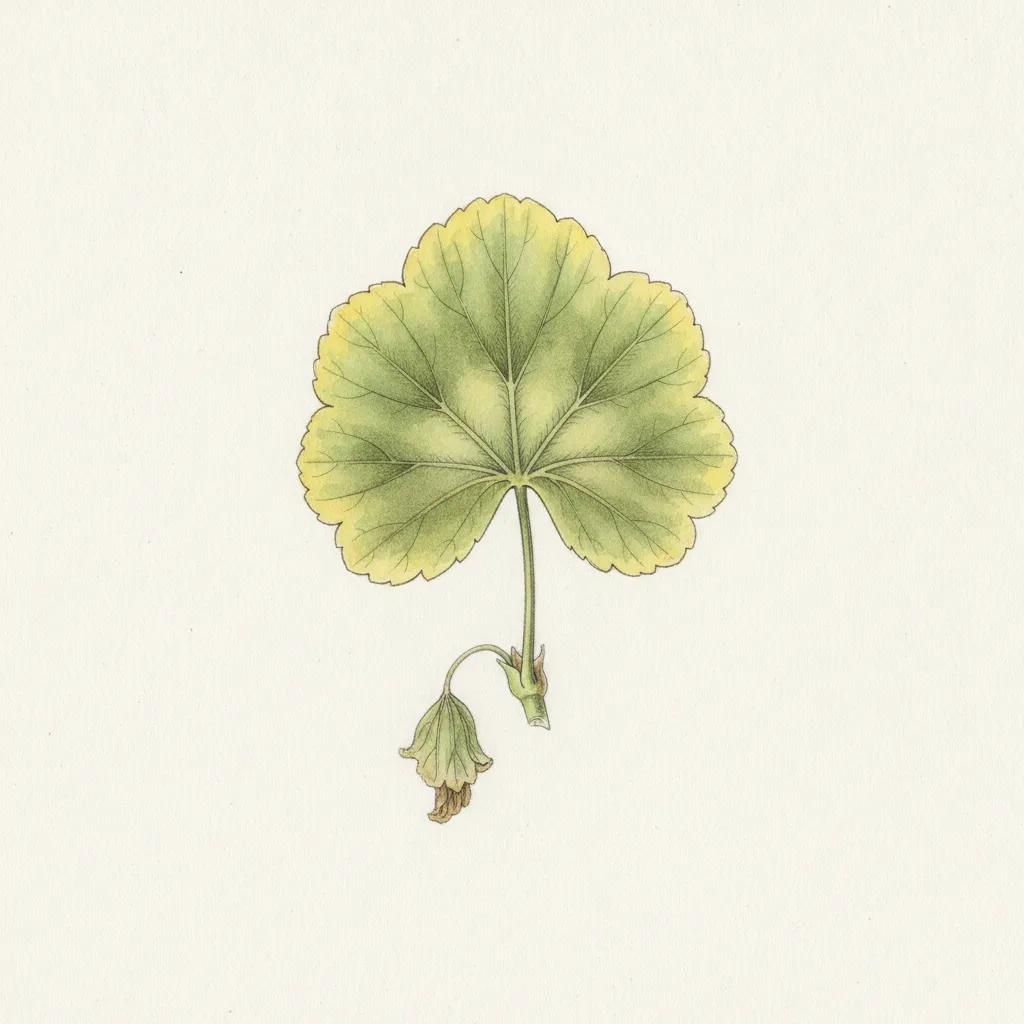
Indoor geranium leaves turn yellow most often from overwatering in low-drainage pots or from the sudden shock of lower light levels after being brought inside from the garden.
Not sure it's this? Scan your plant — free
What it is
Indoor geranium leaf yellowing is a physiological disorder known as chlorosis, where foliage loses chlorophyll pigments due to environmental stress, root asphyxiation, or light deprivation. When confined indoors with reduced airflow and weak sun, the plant sheds its older lower leaves to conserve nutrients and water. If moisture imbalances or poor light persist, root rot fungi can invade, ultimately killing the root system and causing stem collapse.
Also called: Pelargonium chlorosis, Overwintering geranium leaf drop, Geranium lower leaf senescence
Plants affected: Zonal geranium (Pelargonium × hortorum), Ivy geranium (Pelargonium peltatum), Scented geranium (Pelargonium graveolens and hybrids), Regal geranium (Pelargonium domesticum)
Symptoms
- Lower and older leaves turning evenly pale yellow before browning and falling off
- Soft, limp foliage sitting in persistently damp or soggy potting mix
- Crisp, brittle yellow leaf margins curling inward under dry soil conditions
- Stretched, pale green stems leaning aggressively toward the nearest window
- Buds turning yellow and dropping before opening into blooms
Causes
- Overwatering and lack of container drainage suffocating the root zone
- Acclimation shock and insufficient light after moving inside from outdoor sun
- Severe underwatering that prompts the plant to sacrifice mature leaves
- Nitrogen or magnesium nutrient depletion in aged potting soil
- Cold window drafts or parching hot-air blasts from heating vents
- Fungal root rot or bacterial leaf blight pathogens
How to tell it apart
Begin by feeling the soil 2 inches beneath the surface and observing the yellowing pattern. If the lowest leaves turn soft, pale yellow and the soil feels damp or heavy, overwatering is the most likely cause. If the leaves are papery, brittle, and curling along the edges while the root ball has pulled away from the pot, underwatering is to blame. If you recently brought the plant inside for winter and several mature leaves turn yellow while the stems remain sturdy and green, it is most likely routine acclimation to reduced light. If yellowing forms distinct V-shaped wedges between veins, suspect a bacterial infection.
- Bacterial leaf blight (Xanthomonas hortorum pv. pelargonii)
- Bacterial blight produces distinct water-soaked spots that expand into brown, V-shaped dead wedges bordered by yellow margins, often with blackened inner stem tissue, whereas simple environmental yellowing tints entire leaves without wedge-shaped dead patches.
- Pelargonium rust (Puccinia pelargonii-zonalis)
- Rust exhibits small chlorotic yellow specks on the leaf surface paired with distinct reddish-brown, powdery spore blisters formed in concentric rings underneath, unlike smooth, uniform environmental yellowing.
- Edema (Oedema)
- Edema causes watery blisters on the underside of foliage that later turn into rough, corky brown bumps, which occur when roots take in water faster than indoor leaves can transpire it.
- Spider mites (Tetranychidae)
- Spider mite feeding causes a fine, speckled, bleached yellow stippling across the leaf blades along with delicate silken webbing on leaf undersides, rather than broad, whole-leaf yellowing.
Treatment
- Adjust watering and check drainage Insert a wooden skewer or your finger 2 inches into the potting mix. Water only when the top 2 inches feel completely dry to the touch. Pour room-temperature water evenly until it runs out the bottom drainage holes, and empty the drip saucer after 15 minutes so the pot never sits in standing water.
- Relocate to maximum direct indoor sunlight Place the pot directly in your brightest south- or west-facing window sill where it receives at least 4 to 6 hours of direct sunlight every day. If winter light is dim, suspend a full-spectrum LED grow light 6 to 10 inches above the plant for 12 to 14 hours daily.
- Prune away damaged and yellowed leaves Using clean hands or sterilized shears, gently snap or snip off every leaf that is more than half yellow directly where its stem meets the main stalk. Removing decaying tissue stops gray mold fungus from moving into healthy foliage.
- Inspect roots and repot if soil is waterlogged If the soil remains muddy after 7 to 10 days, gently lift the root ball from its pot. Trim off any dark, slimy, or foul-smelling roots with sterilized snips. Repot into a clean container with drainage holes using a fresh potting mix blended with 25% perlite or coarse sand for aeration.
- Withhold fertilizer until early spring Do not feed stressed indoor geraniums through late autumn and winter. Wait until vibrant new leaf shoots emerge in early spring, then feed once every 4 weeks using a balanced water-soluble houseplant fertilizer diluted to half label strength.
Prevention
- Always plant geraniums in containers with open bottom drainage holes using a light, porous potting mix.
- Acclimate outdoor plants gradually over 7 to 10 days in partial shade before moving them indoors for winter.
- Allow the top 1 to 2 inches of soil to dry out between waterings throughout the cooler indoor months.
- Maintain cool indoor room temperatures between 60°F and 65°F during the day and around 55°F at night.
- Position plants well away from forced-air heat registers, radiators, and drafty exterior doorways.
- Water directly onto the potting mix to keep leaves completely dry.
When to worry
Worry if the plant's main stems turn black, soft, or shriveled near the soil line (blackleg stem rot), if the entire plant wilts despite moist soil, or if new tip growth turns brown and rots before maturing.
Safety
Pelargonium species contain the organic compounds geraniol and linalool, which are mildly toxic to cats and dogs; ingestion may cause vomiting, reduced appetite, and skin irritation, so contact a veterinarian or animal poison control center if consumed. When using any fertilizer or sulfur-based soil treatment, keep containers sealed away from children and pets, wear gloves, and follow all package label instructions.
Sharing your home with pets or small children? See which plants our sources call safe for cats, dogs and kids.
FAQ
Should I cut off yellow geranium leaves?
Yes. Yellow leaves cannot regain their green color, and leaving them attached indoors invites gray mold (Botrytis) to colonize the dying plant tissue. Snap them off gently at the main stem.
How often should I water my geranium indoors during winter?
Most indoor geraniums need water once every 7 to 14 days, but you should always check the soil rather than sticking to a set schedule. Only water when the top 2 inches of potting mix feel dry.
Is leaf drop normal after bringing geraniums indoors for winter?
Yes. Moving from intense outdoor sunlight into home lighting is a major transition. Geraniums commonly shed their oldest lower leaves over the first 2 to 3 weeks indoors to match lower light availability.
Can yellowed indoor geraniums recover?
Yes, provided the primary stems remain firm, plump, and green. Once watering is balanced and bright light is restored, the plant will produce healthy green leaves from its growth tips within a few weeks.
Sources
- Annual Geranium (Pelargonium) | Home & Garden Information Center - Clemson HGIC
- How to Overwinter Geraniums | Yard and Garden - Iowa State University Extension and Outreach
- Geranium > Leaves > Discolored leaves - University of Minnesota Extension
- Geranium (Pelargonium hortorum) - Greenhouse Horticulture - Cornell University
- Geranium / Home and Landscape / UC Statewide IPM Program (UC IPM)
- How can I overwinter my geranium plants? - Missouri Botanical Garden FAQs
- myproductivebackyard.com
- extension.org