
Garlic cloves rotting in ground: causes and fixes
Garlic cloves rotting in the ground are most likely breaking down from soil-borne fungal infections such as Fusarium basal rot or white rot, commonly triggered or worsened by waterlogged soil.
Not sure it's this? Scan your plant — free
What it is
Garlic clove rot is an underground breakdown of the planted clove or developing bulb caused primarily by soil-dwelling fungal pathogens like Fusarium species or Stromatinia cepivora. These fungi invade the clove tissues through root scars, natural openings, or mechanical wounds, degrading cell walls and turning firm flesh into watery or spongy decay. As the infection severs root attachments and vascular connections, the plant loses the ability to take up water and nutrients, resulting in total collapse.
Also called: Garlic basal rot, Garlic white rot, Fusarium bulb rot, Blue mold decay
Plants affected: Garlic, Elephant garlic, Onion, Shallot, Leek
Symptoms
- Foliage yellowing, wilting, and dying back from the tips downward during the growing season
- Cloves turning soft, sunken, or watery with a decomposing or sour smell
- Roots rotting away or detaching, allowing the plant to pull easily from the ground without resistance
- Watery brown, pinkish, or reddish discoloration at the basal plate
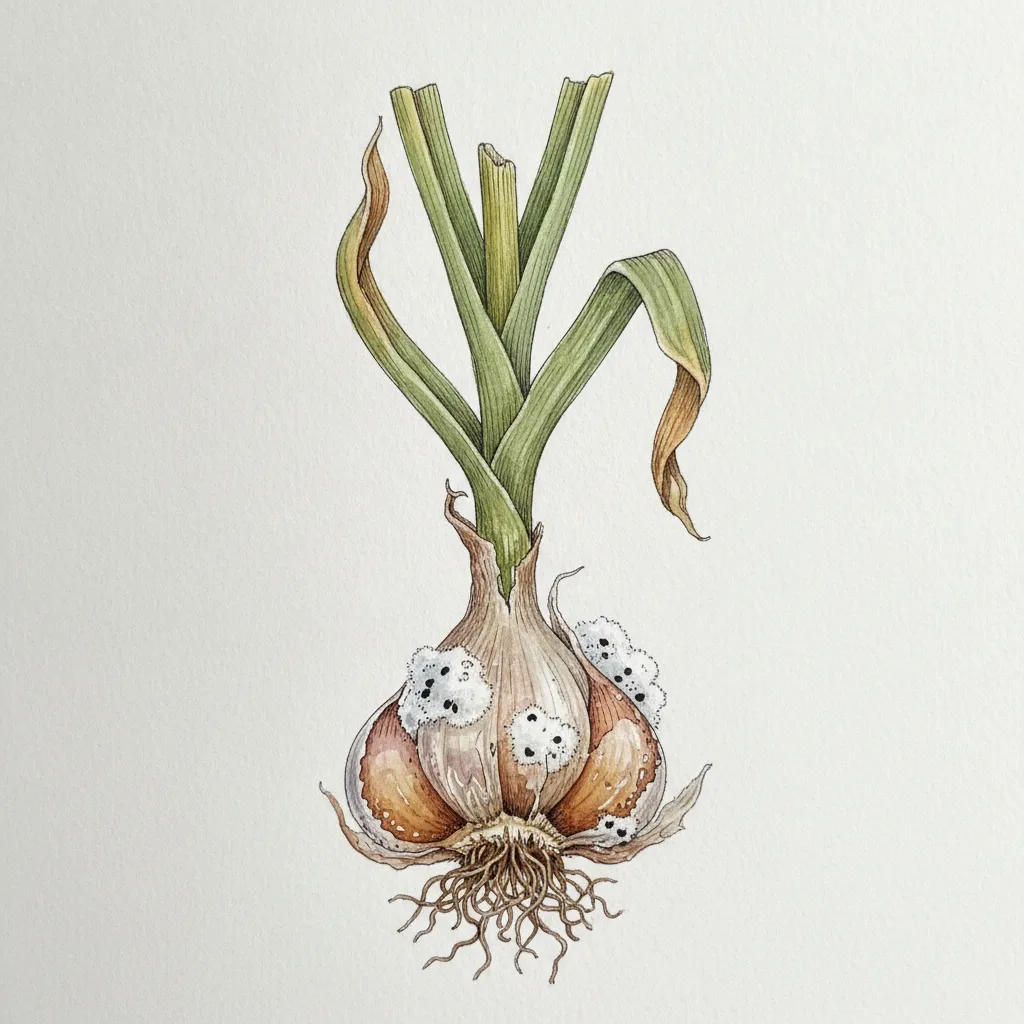
- White fluffy mycelium or bluish-green powdery mold coating the clove base
- Small, hard, black structures the size of poppy seeds (sclerotia) dotting the rotting bulb
Causes
- Soil-borne fungal infections, especially Fusarium oxysporum, Fusarium proliferatum, or Stromatinia cepivora
- Poorly draining, heavy clay, or waterlogged soils that suffocate roots and promote decay organisms
- Planting infected seed cloves that introduce latent fungal pathogens into the bed
- Feeding injury from bulb mites or stem and bulb nematodes that puncture protective clove scales
- Excessive early spring moisture combined with deep planting in cool, anaerobic ground
How to tell it apart
Carefully dig up a struggling plant. If the roots are decayed, the base of the clove feels mushy rather than crisp when gently squeezed, and the clove tissue displays watery browning, white fluff, or dark speckling, clove rot is confirmed. By contrast, healthy dormant cloves remain firm, bright, and solidly anchored in the soil.
- White rot vs. Fusarium basal rot
- White rot forms dense, fluffy white fungal mats embedded with tiny, hard, poppy-seed-like black sclerotia and thrives in cool spring soils (50–70°F). Fusarium basal rot shows watery brown to reddish decay with faint white-pink fuzz, lacks hard black seed-like dots, and accelerates in warmer soil (above 75°F).
- Natural leaf senescence at harvest
- As garlic matures, bottom leaves naturally brown and dry, but the bulb underground remains firm, tightly wrapped in papery skins, and free of watery decay or mold.
- Stem and bulb nematode damage
- Nematodes cause stunted, bloated leaves and cracked, lightweight bulbs, but the cloves stay dry and spongy rather than turning into wet, moldy rot unless secondary fungi take over.
Treatment
- Cull and bag infected plants immediately Gently dig up any yellowing or rotting garlic plants along with a 4- to 6-inch scoop of adjacent soil. Seal them in a plastic trash bag and discard them with household refuse; never compost diseased alliums, as fungal resting spores survive compost temperatures.
- Stop watering and verify soil moisture Withhold all supplemental watering for 7 to 10 days to let the top 2 to 3 inches of soil dry. If the bed remains muddy or pooled, cut shallow 2-inch drainage trenches along bed edges to channel standing water away from the root zone.
- Check adjacent garlic plants Gently brush away topsoil around the necks of neighboring plants within 12 inches of diseased specimens. If any feel soft or show white threads, remove them this week to prevent underground fungal spread.
- Pull back heavy mulch Rake thick, wet winter mulch 2 to 3 inches away from the base of healthy garlic stems. Exposing the bare surface soil to sunlight and air circulation helps evaporate excess moisture around the bulbs.
- Disinfect tools and footwear Wash spades, trowels, and boots with a 10% household bleach solution (1 part bleach to 9 parts water) or spray with 70% isopropyl alcohol for 10 minutes before working in other parts of the garden to stop transporting fungal sclerotia.
Prevention
- Source only certified disease-free seed garlic from reputable growers, avoiding supermarket bulbs which frequently harbor latent pathogens.
- Plant garlic in raised beds 8 to 12 inches high or in loose, well-amended sandy loam to ensure rapid drainage away from the cloves.
- Rotate beds so no alliums (garlic, onions, shallots, leeks) are planted in the same spot for at least 4 years; if white rot is confirmed, avoid planting alliums there for 15 to 20 years.
- Inspect individual cloves prior to fall planting, discarding any with soft tips, sunken brown scars, or mold.
- Plant cloves upright (blunt basal plate down, pointed tip up) 2 inches deep, spaced 6 inches apart to optimize air movement.
- Stop irrigating 2 to 3 weeks before expected harvest in summer so bulb wrappers cure properly in dry soil.
When to worry
Worry if yellowing and wilting spread quickly down a row or across an entire bed. If you pull up bulbs coated in fluffy white mold and hard, pinhead-sized black dots, white rot is present; this pathogen permanently infests garden soil for decades, meaning allium crops must be discontinued in that location.
Safety
Garlic (Allium sativum) contains organosulfur compounds toxic to dogs and cats that cause hemolytic anemia; keep excavated bulbs and trimmings away from pets and contact a veterinarian or pet poison line if consumed. When using sanitizing products or any biological soil fungicides, follow label instructions carefully, wear protective gloves, and store products securely out of reach of children and pets.
Sharing your home with pets or small children? See which plants our sources call safe for cats, dogs and kids.
FAQ
Can I eat garlic cloves that have started rotting in the garden?
No. Rotting cloves often harbor mycotoxins from fungal invaders and secondary soft-rot bacteria, making them unsafe to eat. Discard all decomposing bulbs.
Can I save healthy cloves from an infected bulb to plant next autumn?
No. Seemingly healthy cloves from an infected bulb or contaminated bed frequently carry dormant fungal spores that will spoil the next crop and contaminate new garden beds.
Why did my garlic cloves turn to mush over the winter?
Cloves planted in heavy, saturated soil or planted upside down often drown from lack of oxygen and fall prey to cold-season decay fungi like blue mold or water molds before roots can anchor.
Will applying a fungicide spray cure garlic rotting underground?
No. Foliar and soil fungicides cannot penetrate or reverse established rot inside underground clove tissue. Rogueing diseased plants and improving cultural practices are the only effective solutions.
Sources
- Garlic > Root > Discolored rotten roots - What's wrong with my plant? : Garden : University of Minnesota Extension
- Alliums, Fusarium Basal Rot : Vegetable : Center for Agriculture, Food, and the Environment (CAFE) at UMass Amherst
- Fusarium Basal Rot / Onion and Garlic / Agriculture - UC IPM
- Bulletin #2062, White Rot of Garlic and Onions - Cooperative Extension Publications
- psu.edu
- udel.edu
- oregonstate.edu
- perennia.ca