
Dahlia tubers rotting in storage: causes and fixes
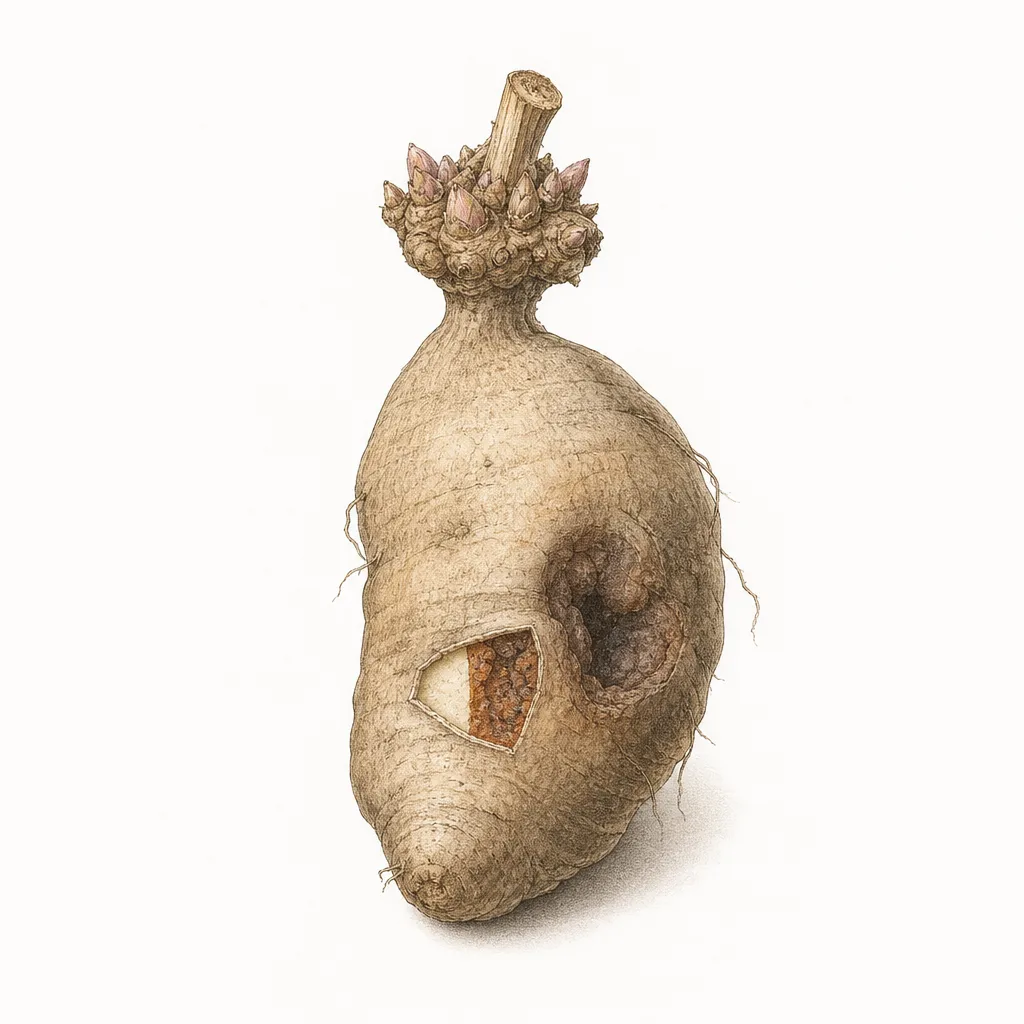
Dahlia tubers rotting in storage most likely have fungal or bacterial decay encouraged by excess moisture, warmth or injury; remove affected tubers first, then correct storage conditions. ([ipm.ucanr.edu](https://ipm.ucanr.edu/agriculture/floriculture-and-ornamental-nurseries/dahlia/))
Not sure it's this? Scan your plant — free
What it is
Storage rot is decay of dormant dahlia tubers caused by fungi or bacteria, including Fusarium, Botrytis and Pectobacterium. These organisms break down tuber tissue and can destroy the stored planting material before spring. ([ipm.ucanr.edu](https://ipm.ucanr.edu/agriculture/floriculture-and-ornamental-nurseries/dahlia/))
Also called: Dahlia storage rot, Tuber rot
Plants affected: Dahlias
Symptoms
- Soft or collapsing areas where the tuber is breaking down. ([hort.extension.wisc.edu](https://hort.extension.wisc.edu/articles/storing-tender-bulbs-for-winter/))
- Brown or rusty discoloration inside a cut tuber or crown. ([dahlia.org](https://www.dahlia.org/docsinfo/articles/digging-dividing-and-storing-tubers/))
- A white-to-pink fungal coating on decaying tubers, which can occur with Fusarium storage rot. ([pnwhandbooks.org](https://pnwhandbooks.org/plantdisease/host-disease/dahlia-tuber-storage-rot?utm_source=openai))
Causes
- Excess moisture in the packing material or container. ([hort.extension.wisc.edu](https://hort.extension.wisc.edu/articles/storing-tender-bulbs-for-winter/))
- Warm, humid storage conditions that favor decay organisms. ([ipm.ucanr.edu](https://ipm.ucanr.edu/agriculture/floriculture-and-ornamental-nurseries/dahlia/))
- Cuts, bruises or scraped skin that let disease organisms enter. ([hort.extension.wisc.edu](https://hort.extension.wisc.edu/articles/storing-tender-bulbs-for-winter/))
How to tell it apart
Gently inspect each tuber for localized soft spots or collapse. Wrinkles alone suggest moisture loss rather than proving rot; brown or rusty tissue inside an affected area supports decay. Appearance alone cannot reliably identify which organism is responsible. ([hort.extension.wisc.edu](https://hort.extension.wisc.edu/articles/storing-tender-bulbs-for-winter/))
- Dehydration
- Dry storage causes shrunken, wrinkled tubers. Look for localized breakdown or discolored internal tissue before assuming every wrinkled tuber is rotting. ([hort.extension.wisc.edu](https://hort.extension.wisc.edu/articles/storing-tender-bulbs-for-winter/))
- Freeze injury
- Check whether the storage space dropped below freezing. Freezing ruins dahlia tubers, so cold exposure may explain losses even when storage was not especially warm or damp. ([dahlia.org](https://www.dahlia.org/docsinfo/articles/digging-dividing-and-storing-tubers/))
- Early sprouting
- New shoots or feeder roots are growth, not themselves rot. Warm storage can trigger them, although it also encourages decay organisms. ([dahlia.org](https://www.dahlia.org/docsinfo/articles/digging-dividing-and-storing-tubers/))
Treatment
- Separate affected tubers now Inspect the whole batch this week. Remove visibly infected or collapsing tubers from healthy ones; discard tubers with a white-to-pink fungal coating rather than returning them to storage. ([hort.extension.wisc.edu](https://hort.extension.wisc.edu/articles/storing-tender-bulbs-for-winter/))
- Consider saving only a small, localized patch Guidance differs: extension storage advice allows cutting damaged tissue from larger tubers, while disease-specific Fusarium guidance recommends destroying infected tubers. For a small isolated spot without fungal coating, cut away discolored tissue with a clean knife. Keep it only if sound tissue remains connected to a healthy crown with a bud; otherwise discard it. ([hort.extension.wisc.edu](https://hort.extension.wisc.edu/articles/storing-tender-bulbs-for-winter/))
- Dry salvageable tubers before repacking After trimming, allow roughly 24–36 hours in an open container for cut surfaces to dry; humidity affects the time needed. Keep suspect tubers separate from the healthy batch. ([dahlia.org](https://www.dahlia.org/docsinfo/articles/digging-dividing-and-storing-tubers/))
- Replace wet packing and allow airflow Repack sound tubers in fresh, dry material such as coarse vermiculite. A ventilated cardboard box is a practical option: use 2–3-inch layers of packing and keep tubers from touching. Container advice varies among growers, but moisture buildup must be avoided. ([hort.extension.wisc.edu](https://hort.extension.wisc.edu/articles/storing-tender-bulbs-for-winter/))
- Move the box somewhere steadily cool Aim for 40–45°F (4–7°C), safely above freezing. Check the storage temperature this week, then inspect tubers monthly and remove new decay. If tubers become wrinkled rather than rotten, lightly mist the packing material instead of making it wet. ([dahlia.org](https://www.dahlia.org/docsinfo/articles/digging-dividing-and-storing-tubers/))
Prevention
- Handle tubers gently when lifting and packing; avoid bruising them or rubbing off their skin. ([hort.extension.wisc.edu](https://hort.extension.wisc.edu/articles/storing-tender-bulbs-for-winter/))
- Consider leaving healthy clumps undivided until spring to reduce storage wounds; some experienced growers successfully divide in fall instead. ([hort.extension.wisc.edu](https://hort.extension.wisc.edu/articles/storing-tender-bulbs-for-winter/))
- Check stored tubers monthly rather than leaving the box untouched until planting time. ([dahlia.org](https://www.dahlia.org/docsinfo/articles/digging-dividing-and-storing-tubers/))
When to worry
A rotten crown or discoloration that leaves no sound section attached to the crown makes a tuber unlikely to keep. Remove it rather than risking the healthy batch; losing one tuber does not mean the rest are lost. ([dahlia.org](https://www.dahlia.org/docsinfo/articles/digging-dividing-and-storing-tubers/))
Safety
Dahlias can irritate human skin, and foliage can cause stomach symptoms if eaten in large quantities. Wear gloves when handling tubers; contact a doctor or poison line after ingestion or a concerning reaction. Dahlias are toxic to dogs, cats and horses; contact a veterinarian or animal poison line after suspected ingestion. Keep tubers and supplies away from children and pets. Follow packing-material labels for handling and storage, and avoid breathing vermiculite dust. ([plants.ces.ncsu.edu](https://plants.ces.ncsu.edu/plants/dahlia/))
Sharing your home with pets or small children? See which plants our sources call safe for cats, dogs and kids.
FAQ
Can a partly rotten tuber be saved?
Sometimes, if all damaged tissue can be removed while retaining sound tissue and a healthy crown with a bud. Discard visibly fungus-infected tubers. ([dahlia.org](https://www.dahlia.org/docsinfo/articles/digging-dividing-and-storing-tubers/))
Should I water stored tubers?
Do not keep the packing wet. If tubers shrivel from dehydration, lightly mist the packing material and repack them. ([hort.extension.wisc.edu](https://hort.extension.wisc.edu/articles/storing-tender-bulbs-for-winter/))
What temperature should I use?
About 40–45°F (4–7°C) is a useful target; never let the tubers freeze. ([dahlia.org](https://www.dahlia.org/docsinfo/articles/digging-dividing-and-storing-tubers/))
Can rot spread through the box?
Yes. Remove rotting tubers promptly and pack healthy tubers without touching one another. ([hort.extension.wisc.edu](https://hort.extension.wisc.edu/articles/storing-tender-bulbs-for-winter/))
Sources
- Dahlia — UC IPM Pest Management Guidelines
- Storing Tender “Bulbs” for Winter — Wisconsin Horticulture
- Digging, Dividing, and Storing Tubers — The American Dahlia Society
- Dahlia-Tuber Storage Rot — Pacific Northwest Pest Management Handbooks
- Dahlia — North Carolina Extension Gardener Plant Toolbox
- Toxic and Non-toxic Plants: Dahlia — ASPCA
- Dahlia-Tuber Storage Rot | Pacific Northwest Pest Management Handbooks