
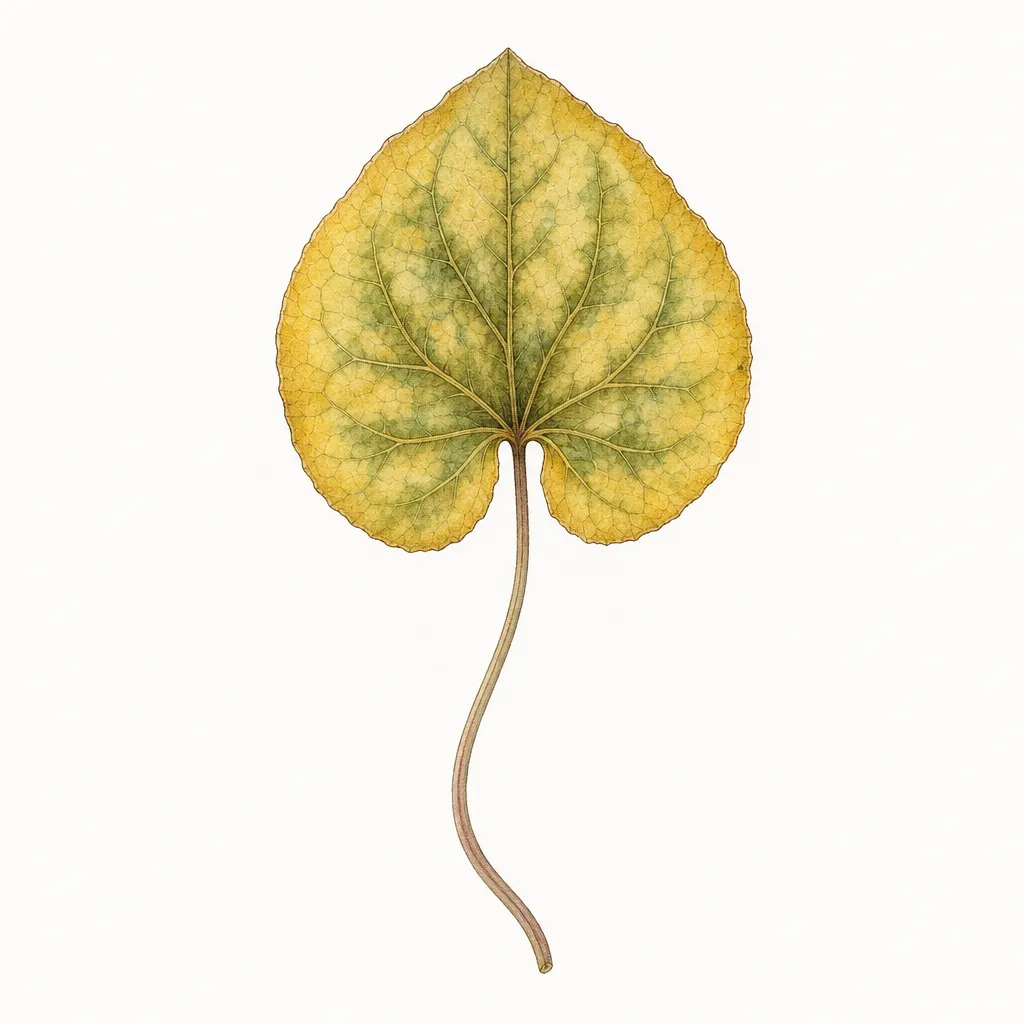
Cyclamen leaves turning yellow and drooping
Cyclamen leaves turning yellow and drooping most often point to watering trouble or too much warmth, though seasonal dormancy and disease can look similar.
Not sure it's this? Scan your plant — free
What it is
Yellowing is the loss of green leaf pigment, while drooping means leaves or stalks are no longer holding their normal position. Affected leaves contribute less photosynthesis, reducing the plant’s ability to make food. Outside normal seasonal dormancy, these symptoms can indicate impaired water uptake or other stress that may progress to leaf loss or plant collapse.
Also called: Cyclamen leaf yellowing, Cyclamen wilt
Plants affected: Florist’s cyclamen (Cyclamen persicum cultivars)
Symptoms
- Leaves turn yellow and their stalks flop instead of holding their usual position.
- During normal dormancy, leaves gradually fade, wither and die back as the growth and flowering cycle ends.
- Rot may cause discolored roots or sudden collapse with a mushy tuber—the swollen storage organ beneath the leaves.
Causes
- Watering too often or leaving the pot standing in water keeps the growing mix excessively wet.
- Letting an actively growing plant become too dry can also cause yellowing and limp foliage.
- A warm room or hot windowsill can shorten the flowering season and encourage early dormancy.
- Normal seasonal dormancy commonly occurs as conditions warm in late spring or summer, although timing varies with growing conditions.
- Insufficient light can contribute to yellowing.
- Root and tuber diseases can interfere with water uptake; overly wet conditions favor some rots.
How to tell it apart
Check the soil before adding water: wet soil with floppy stalks points toward excess moisture or root trouble; dry soil supports thirst. Sources emphasize different clues: NYBG associates flopping with excessive wetness, while Wisconsin notes that soft foliage may need water—drooping alone cannot decide it. During the plant’s usual cool-season growth and flowering period, check moisture, drainage, and temperature before assuming dormancy; seasonal timing varies with climate and growing conditions. A firm tuber does not rule out disease or prove dormancy.
- Normal seasonal dormancy
- Consider it when leaf decline follows the plant’s normal growth and flowering cycle, commonly as conditions warm in late spring or summer. Finished flowering and gradual yellowing alone are not enough: check moisture, drainage, temperature and disease signs first.
- Gray mold
- Look for spotted flowers, decaying stalks beneath the leaves and fuzzy gray growth on rotting tissue.
- Fusarium wilt
- Yellowing and wilting may progress from older leaves; affected tubers can have brown internal tissue while remaining firm. Ask a plant clinic to distinguish it from watering stress rather than cutting into the tuber yourself.
Treatment
- 1. Check moisture and drainage before watering again Today, feel the soil surface and empty any water in the saucer or outer pot. Make sure the inner pot has drainage holes. If the surface is still damp, do not add more water; check daily this week rather than watering simply because leaves droop. Persistent wetness with worsening wilt needs a disease check, not continued waiting.
- 2. Water an actively growing plant if the soil is dry If the surface is dry and the plant is actively growing, stand its drainage-holed pot in a shallow bowl of water for up to 15 minutes. Remove it sooner if the surface begins to moisten, then let excess water drain completely before returning it to its saucer. Keep water away from the tuber and crowded center. Repeat only when the surface dries again, not on a fixed weekly schedule.
- 3. Move it somewhere cooler and bright This week, choose bright, indirect light away from heating vents and hot sun. Aim for about 60–65°F (16–18°C) during the day and 50–55°F (10–13°C) at night if practical. Protect this florist’s cyclamen from frost.
- 4. Remove dead growth and check for disease This week, carefully remove dead leaves and spent flowers without damaging the tuber. Check beneath the foliage for decaying stalks or gray fuzz. If the plant collapses and its tuber is mushy, discard it rather than continuing to water it. If yellowing progresses despite suitable moisture and temperature, contact a university extension plant clinic; not all diseases make the tuber soft.
- 5. Allow a genuine seasonal rest Consider seasonal dormancy when leaf decline follows the normal growth and flowering cycle, commonly as conditions warm in late spring or summer. First check moisture, drainage, temperature, and signs of disease. For a plant genuinely entering dormancy, reduce watering as foliage dies back; stop regular watering once it is leafless, and resume cautiously as growth restarts.
Prevention
- Check moisture rather than watering on a fixed weekly schedule; never leave the pot standing in runoff.
- Keep water out of the crowded center of the plant by watering from below or carefully around the pot’s rim.
- Provide cool conditions and bright, indirect light during active growth.
- Adjust watering to the growth cycle, but do not withhold water from an actively growing, dry plant just because its leaves are yellowing.
- Remove dead foliage and spent flowers promptly to limit decaying material around the plant.
When to worry
Act promptly if the tuber is mushy, the plant collapses suddenly, roots are rotten, or gray fuzz appears. Progressive yellowing and wilting despite suitable moisture and temperature warrants help from a university extension plant clinic because disease can resemble care problems, even when the tuber remains firm.
Safety
Cyclamen is poisonous if eaten, especially its tuber, and handling may irritate skin. Keep the plant and discarded pieces away from children and pets; wear gloves when removing foliage and wash your hands afterward. If a person eats any part, contact a doctor or poison line. For suspected pet ingestion, contact a veterinarian or ASPCA Animal Poison Control at 888-426-4435 promptly; a consultation fee may apply.
Sharing your home with pets or small children? See which plants our sources call safe for cats, dogs and kids.
FAQ
Should I water a drooping cyclamen?
Check the soil first. If it is damp, do not add water. If the surface is dry and the plant is actively growing, water and let the pot drain thoroughly.
Will yellow leaves turn green again?
Do not expect dying yellow leaves to recover their green color. Look for healthy new growth after correcting the cause.
Is my cyclamen dead if it loses every leaf?
Not necessarily: cyclamen can become leafless during seasonal dormancy. Check its growth cycle and care conditions; a mushy tuber suggests rot, but a firm one alone does not prove the plant is healthy or dormant.
How often should I water it?
There is no reliable weekly interval. During active growth, water when the soil surface dries and drain thoroughly. Reduce watering only when genuine dormancy begins.