
Croton dropping leaves: causes and fixes
Your croton is most likely dropping leaves because of watering stress or a sudden change in its surroundings, so check soil moisture, warmth and light first. ([hort.extension.wisc.edu](https://hort.extension.wisc.edu/articles/croton-codiaeum-variegatum/))
Not sure it's this? Scan your plant — free
What it is
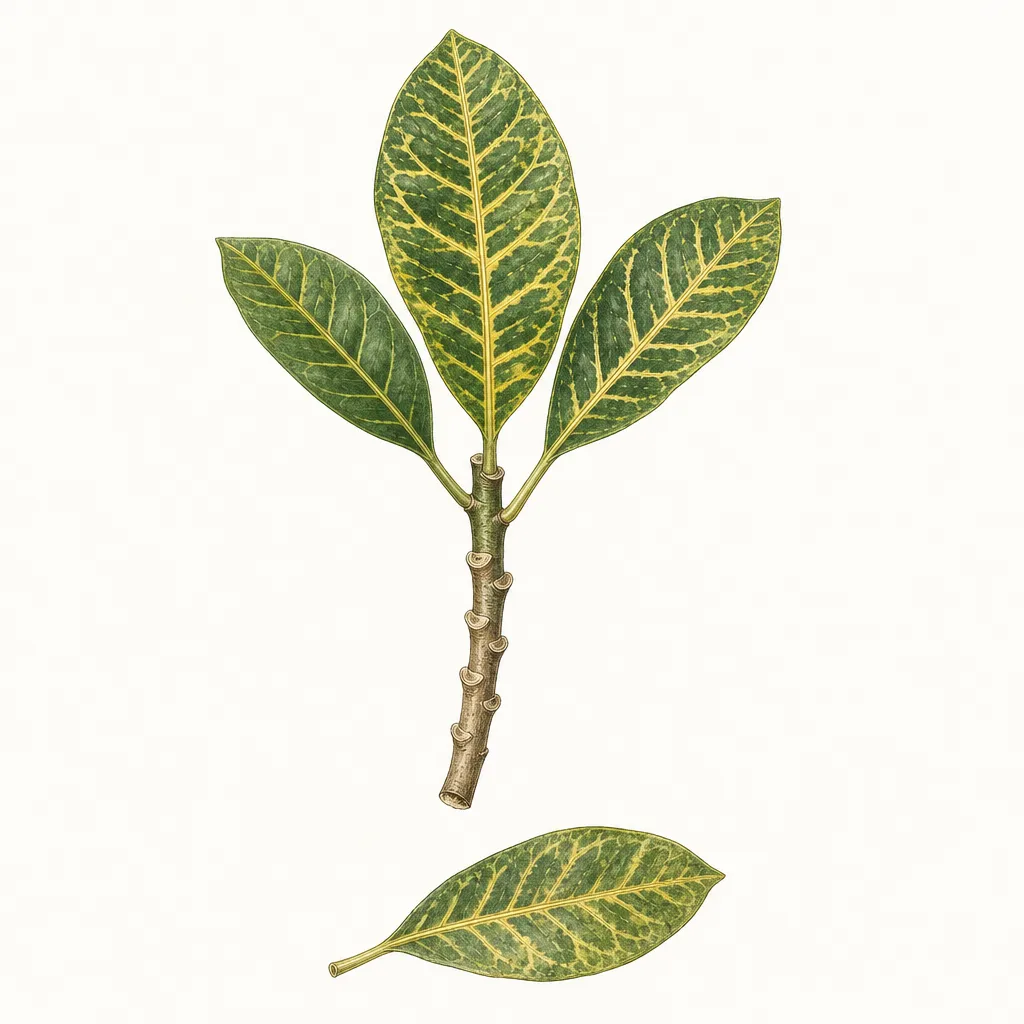
Leaf drop is the shedding of leaves from their attachment points on the stem, leaving bare sections behind. It is a symptom rather than one particular disease: unsuitable growing conditions, damaged roots or feeding pests can trigger it and reduce the plant's leafy canopy. ([plants.ces.ncsu.edu](https://plants.ces.ncsu.edu/plants/codiaeum-variegatum/))
Also called: Leaf shedding, Defoliation
Plants affected: Croton (Codiaeum variegatum), including Petra, Mammy and Gold Dust
Symptoms
- Leaves detach and fall, leaving increasingly bare stems. ([plants.ces.ncsu.edu](https://plants.ces.ncsu.edu/plants/codiaeum-variegatum/))
- Yellowing or wilting may accompany leaf loss, especially with watering or root problems. ([ipm.ucanr.edu](https://ipm.ucanr.edu/home-and-landscape/houseplant-problems/))
- Lower leaves may disappear when the plant receives too little light. ([plants.ces.ncsu.edu](https://plants.ces.ncsu.edu/plants/codiaeum-variegatum/))
Causes
- Potting mix staying too wet or becoming too dry for extended periods. ([hort.extension.wisc.edu](https://hort.extension.wisc.edu/articles/croton-codiaeum-variegatum/))
- A sudden change of environment, cold drafts or fluctuating temperatures. ([hort.extension.wisc.edu](https://hort.extension.wisc.edu/articles/croton-codiaeum-variegatum/))
- Insufficient light or very dry air. ([rhs.org.uk](https://www.rhs.org.uk/plants/codiaeum/growing-guide))
- Root rot associated with overwatering or poor drainage, or feeding damage from pests such as spider mites and scale. ([ipm.ucanr.edu](https://ipm.ucanr.edu/home-and-landscape/houseplant-problems/))
How to tell it apart
Start with the potting mix and recent changes: prolonged wetness or dryness, a move, or a draft makes care-related stress more likely. Inspect leaf undersides and stems for pests. Leaf drop alone cannot distinguish underwatering from root trouble; if the plant wilts despite wet soil, inspect the roots. ([hort.extension.wisc.edu](https://hort.extension.wisc.edu/articles/croton-codiaeum-variegatum/))
- Normal croton coloring
- Yellow, orange and red patches can be normal variegation, not illness. Color alone is not evidence of leaf-drop stress; look for actual shedding, wilting or other damage. ([plants.ces.ncsu.edu](https://plants.ces.ncsu.edu/plants/codiaeum-variegatum/))
- Spider mite damage
- Look for tiny pale feeding specks and fine webbing, especially under leaves. Severe infestations can dry leaves and make them fall. ([ipm.ucanr.edu](https://ipm.ucanr.edu/home-and-landscape/houseplant-problems/))
- Root rot
- Wilting despite wet soil is a warning. Brownish-to-black root tips support suspicion of rot; healthy roots should be white, at least beneath their outer covering. ([ipm.ucanr.edu](https://ipm.ucanr.edu/home-and-landscape/houseplant-problems/))
- Scale or mealybugs
- Scale looks like attached shell-like bumps; mealybugs look white and waxy. Sticky residue is another clue, although armored scale does not produce it. ([extension.umn.edu](https://extension.umn.edu/garden-and-home/yard-and-garden/yard-and-garden-insects/insects-on-indoor-plants))
Treatment
- 1. Correct watering before adding anything Today, feel the top ½–1 inch of potting mix. Water only once that layer dries; if it is still damp, wait and check again tomorrow. Empty collected drainage water after watering, and make sure the pot has drainage holes. Use soil moisture rather than a fixed weekly schedule. ([hort.extension.wisc.edu](https://hort.extension.wisc.edu/articles/croton-codiaeum-variegatum/))
- 2. Choose one warm, bright location This week, settle the plant in bright, indirect light away from cold drafts and direct heater airflow. A practical temperature target is 65–85°F. Avoid repeatedly moving it or suddenly exposing it to strong sun through glass. ([hort.extension.wisc.edu](https://hort.extension.wisc.edu/articles/croton-codiaeum-variegatum/))
- 3. Investigate wet-soil wilting If it is wilting while the mix remains wet, gently slide the root ball out this week and inspect the roots. Darkened root tips or a soft stem base warrant help from your local extension service rather than more water. Do not apply a fungicide without identifying the problem. ([ipm.ucanr.edu](https://ipm.ucanr.edu/home-and-landscape/houseplant-problems/))
- 4. Check for pests and wash only if needed Inspect leaf undersides and stem joints now and whenever you water. If you find pests, separate the croton from other plants and rinse affected leaves in the sink, including their undersides. Wipe remaining pests with a damp paper towel, changing towels often. Start with water rather than a pesticide. ([ipm.ucanr.edu](https://ipm.ucanr.edu/home-and-landscape/houseplant-problems/))
- 5. Tidy up without forcing growth Collect fallen leaves this week and keep the soil surface clear. If the plant is not actively growing, hold off on fertilizer; it is not a substitute for correcting water, light or temperature. Save reshaping cuts for spring rather than pruning bare stems immediately. ([extension.umn.edu](https://extension.umn.edu/garden-and-home/yard-and-garden/yard-and-garden-insects/insects-on-indoor-plants))
Prevention
- Let the top ½–1 inch of mix dry before watering, and reduce watering as growth slows in winter. ([hort.extension.wisc.edu](https://hort.extension.wisc.edu/articles/croton-codiaeum-variegatum/))
- Keep conditions steady and acclimate the plant gradually when moving it between indoors and outdoors. ([hort.extension.wisc.edu](https://hort.extension.wisc.edu/articles/croton-codiaeum-variegatum/))
- Inspect plants before bringing them home and isolate new arrivals for one to two weeks. ([extension.umn.edu](https://extension.umn.edu/garden-and-home/yard-and-garden/yard-and-garden-insects/insects-on-indoor-plants))
When to worry
Act promptly if shedding comes with wilting in wet soil, a soft stem base, dark root tips or extensive pest damage. These signs suggest more than adjustment stress, and severe root disease or infestation may make recovery impractical. ([ipm.ucanr.edu](https://ipm.ucanr.edu/home-and-landscape/houseplant-problems/))
Safety
Croton can harm people and pets if eaten, and its sap can irritate skin and eyes. Wear gloves when handling damaged leaves, and keep the plant and fallen leaves away from children and pets. Contact a doctor or poison line after human ingestion or concerning exposure; contact a veterinarian or animal poison line if a pet chews it. No treatment product is needed for the initial steps above. ([rhs.org.uk](https://www.rhs.org.uk/plants/codiaeum/growing-guide))
Sharing your home with pets or small children? See which plants our sources call safe for cats, dogs and kids.
FAQ
Why did my croton drop leaves after I brought it home?
A sudden environmental change can trigger shedding. Check moisture and drafts, then keep its new growing conditions steady. ([hort.extension.wisc.edu](https://hort.extension.wisc.edu/articles/croton-codiaeum-variegatum/))
Should I water it more when leaves fall?
Not automatically. Both prolonged wetness and dryness can cause leaf drop; feel the mix before watering. ([hort.extension.wisc.edu](https://hort.extension.wisc.edu/articles/croton-codiaeum-variegatum/))
How much sun does a croton need?
Sources differ: NC State allows some direct sun, while RHS favors bright indirect summer light. For a stressed indoor plant, start with bright indirect light and avoid abrupt exposure to strong sun. ([plants.ces.ncsu.edu](https://plants.ces.ncsu.edu/plants/codiaeum-variegatum/))
Can a bare croton become bushy again?
Pruning can encourage leafy side shoots, but it does not fix the underlying stress. Correct its care first and plan reshaping for spring. ([rhs.org.uk](https://www.rhs.org.uk/plants/codiaeum/growing-guide))
Sources
- Croton, Codiaeum variegatum — Wisconsin Horticulture
- How to grow codiaeum — Royal Horticultural Society
- Codiaeum variegatum — NC State Extension Plant Toolbox
- Managing insects on indoor plants — University of Minnesota Extension
- Houseplant Problems — UC Statewide IPM Program
- Apple Leaf Croton — Pet Poison Helpline