Christmas cactus leaves turning red: causes and fixes
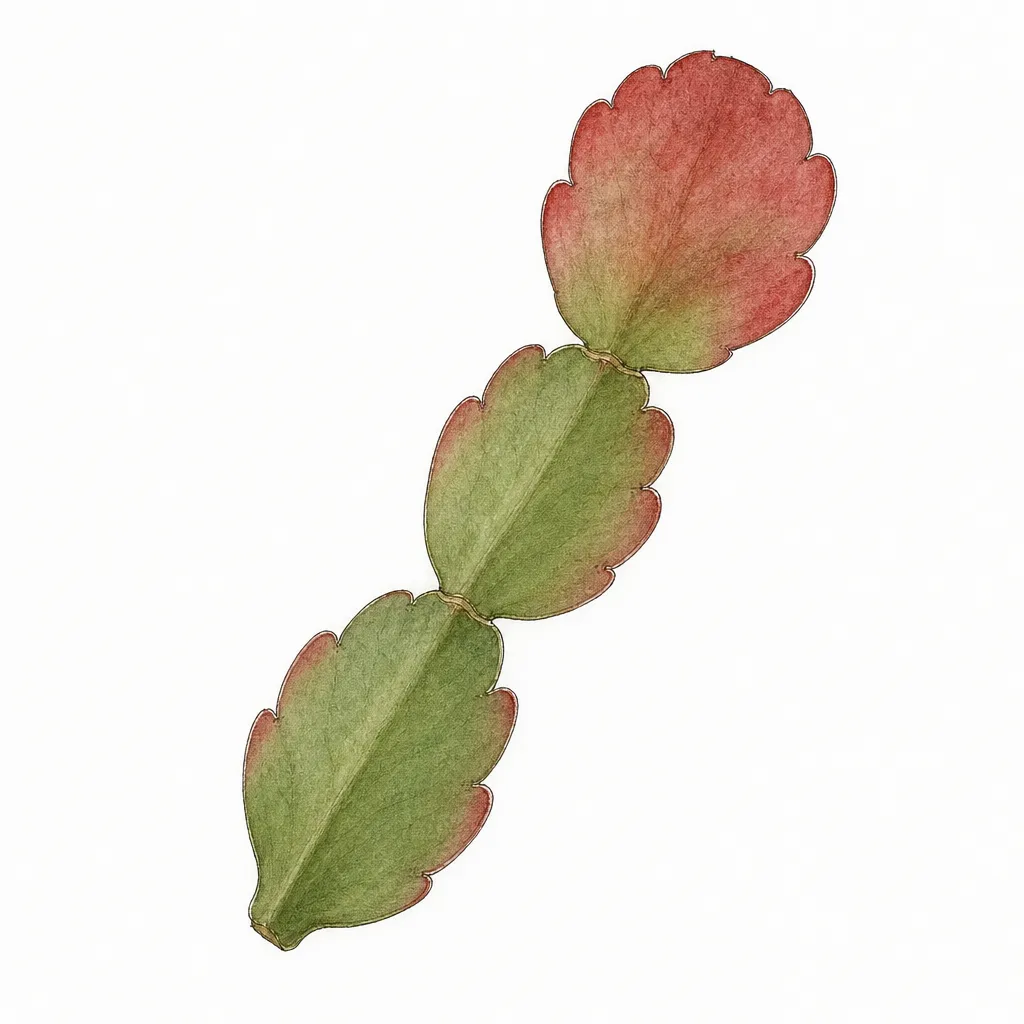
Christmas cactus leaves turning red may indicate excessive light, especially after increased sun exposure, but cool temperatures and normal reddish new growth are other possibilities, so redness alone does not establish light stress.
Not sure it's this? Scan your plant — free
What it is
Stem reddening is a color change in the flattened, jointed stems commonly called leaves, not a diagnosis by itself. Light stress is one possible cause: light that is too intense can produce red or purple coloration and, with stronger exposure, bleach or scorch tissue. Reddish new growth or coloration associated with cool conditions does not necessarily mean the plant has sun damage.
Also called: Red Christmas cactus leaves, Red or purple holiday cactus stems
Plants affected: Christmas cactus, Thanksgiving cactus sold as Christmas cactus
Symptoms
- Normally green, flattened stem segments develop a red or purple tint.
- With excessive light, pale or bleached patches may develop and later turn brown and brittle.
- Shriveling may accompany poor growing conditions, but it can also indicate watering or root trouble.
- A reddish tint limited to firm, otherwise healthy new tips may be normal new growth rather than damage.
Causes
- Excessive light, particularly after a move to a sunnier window or strong outdoor sunshine.
- Cool-temperature exposure, which can also be associated with reddish or purplish coloration.
- Normal reddish coloration in developing stem tips.
- Water shortage can contribute to stress; prolonged wetness can damage roots and cause shriveling, so accompanying symptoms need a moisture check rather than an automatic increase in watering.
How to tell it apart
Start with what changed: did the redness follow stronger sunlight, a move outdoors, or exposure to a cool window or chilly nights? Increased sun exposure together with bleaching or brown, brittle areas supports light stress; redness alone does not. Check whether only the newest tips are reddish and remain firm and healthy, which can be normal growth. If segments are shriveling, feel the mix: dry mix suggests water shortage, while shriveling despite wet mix raises concern about root trouble. These checks help distinguish a harmless color change from reddening accompanied by tissue damage.
- Normal reddish new growth
- The reddish color is concentrated in developing tips that remain firm and otherwise healthy, without bleaching, shriveling or dead patches.
- Cool-temperature coloration
- Check for recent chilly nights or a position close to cold glass. Cool exposure is another possible explanation for red or purple stems, so do not diagnose sun damage from color alone.
- Flower buds
- A flower bud is a separate structure developing at a stem tip, rather than the flattened stem segment itself changing color.
- Underwatering
- Dry potting mix with shriveled or drooping segments points toward water shortage rather than light stress alone.
- Overwatering and root deterioration
- A plant can shrivel even while its mix is wet because damaged roots cannot supply water properly. Do not automatically add more water.
- Edema
- Edema produces raised blisters that can become corky, rather than just a flat reddish tint. It is associated with excess water uptake, often under cool, low-light conditions.
Treatment
- Check exposure and filter excessive sunlight Today, check whether the color change followed increased sun exposure. If it did, or if bleaching is appearing, move the plant out of strong midday and afternoon sun or add a sheer curtain. Keep it in bright, filtered light throughout this week, not a dark corner. If only firm new tips are reddish and there is no damaging exposure, avoid a drastic move based on color alone.
- Check moisture before watering Feel the mix today and before each watering. If the top third is dry, water until excess runs through the drainage holes, then empty the saucer after 10–15 minutes. If the mix is still moist, wait; do not water on a fixed schedule or add water simply because the stems are red.
- Remove trapped water Check the saucer or decorative outer pot today and after every watering. Empty standing water and make sure the inner pot has drainage holes. If the plant is shriveling despite wet mix, do not keep topping it up.
- Check for cold exposure and nearby heat This week, check the plant's position at night as well as during the day. Keep stems away from cold window glass, cold drafts and radiators, and keep the plant above 50°F (10°C). Moderately cool conditions can help flower buds form; a cool rest period is not itself evidence of injury or a reason to apply intense heat.
- Hold off on fertilizer as a quick fix Do not fertilize simply to correct red coloration. Correct light and watering first, and resume routine feeding when active new growth begins, following the cited seasonal care guidance.
Prevention
- Provide bright, filtered light rather than treating this rainforest cactus like a desert cactus.
- Avoid moving a plant straight from indoor light into strong outdoor sun; use a sheltered, shaded location outdoors.
- Check moisture before watering and let excess water drain away.
- Avoid cold drafts, contact with cold window glass and nearby heat sources.
- Judge reddish new tips by their firmness and overall health, not color alone.
When to worry
Seek help from your local extension service if the plant keeps shriveling despite moist mix, drops stem segments, or develops extensive bleached, brown or brittle patches. These signs deserve a closer check for root trouble or substantial scorch rather than treatment of the red color alone.
Safety
Christmas cactus is generally considered non-toxic to people and pets, but it is not intended for eating. If ingestion causes symptoms or you are unsure of the plant's identity, contact a doctor, veterinarian or poison information service. If you resume feeding, follow the fertilizer label, avoid contact with eyes and skin, and store it in its original labeled container away from children and pets.
Sharing your home with pets or small children? See which plants our sources call safe for cats, dogs and kids.
FAQ
Are those really leaves?
No. The flat, green parts are jointed stem segments, although they are commonly called leaves.
Can red tips be normal?
Yes. Developing tips can be reddish. Firm, healthy new growth without bleaching, shriveling or tissue damage is less concerning than reddening accompanied by those symptoms.
Should I water more when it turns red?
Only if the mix needs water. Both dry conditions and damaged roots in wet mix can cause shriveling, so check moisture first.
Should I cut off the red segments?
Not just because they are red. Check growing conditions first; routine pruning is generally done after flowering.
Do all sources recommend avoiding direct sun?
No. Some guidance allows direct winter sun, while other guidance emphasizes indirect or filtered light. Light intensity and exposure matter; for a plant reddening after stronger sun, bright filtered light is a cautious starting point.
Sources
- How to care for and get your holiday cactus to rebloom — Michigan State University Extension
- Holiday Cacti — University of Connecticut
- How to grow Christmas cactus — Royal Horticultural Society
- Excess Light on Indoor Plants — University of Maryland Extension
- How To Care For a Christmas Cactus, Thanksgiving Cactus, or Easter Cactus — The Old Farmer's Almanac
- Schlumbergera x buckleyi — North Carolina Extension Gardener Plant Toolbox