
Christmas cactus leaves limp and wrinkled: causes and fixes
Limp, wrinkled Christmas cactus stem segments signal water stress: the mix may be too dry, or damaged roots may be unable to absorb water. Check moisture throughout the root ball and inspect suspect roots before deciding whether to water.
Not sure it's this? Scan your plant — free
What it is
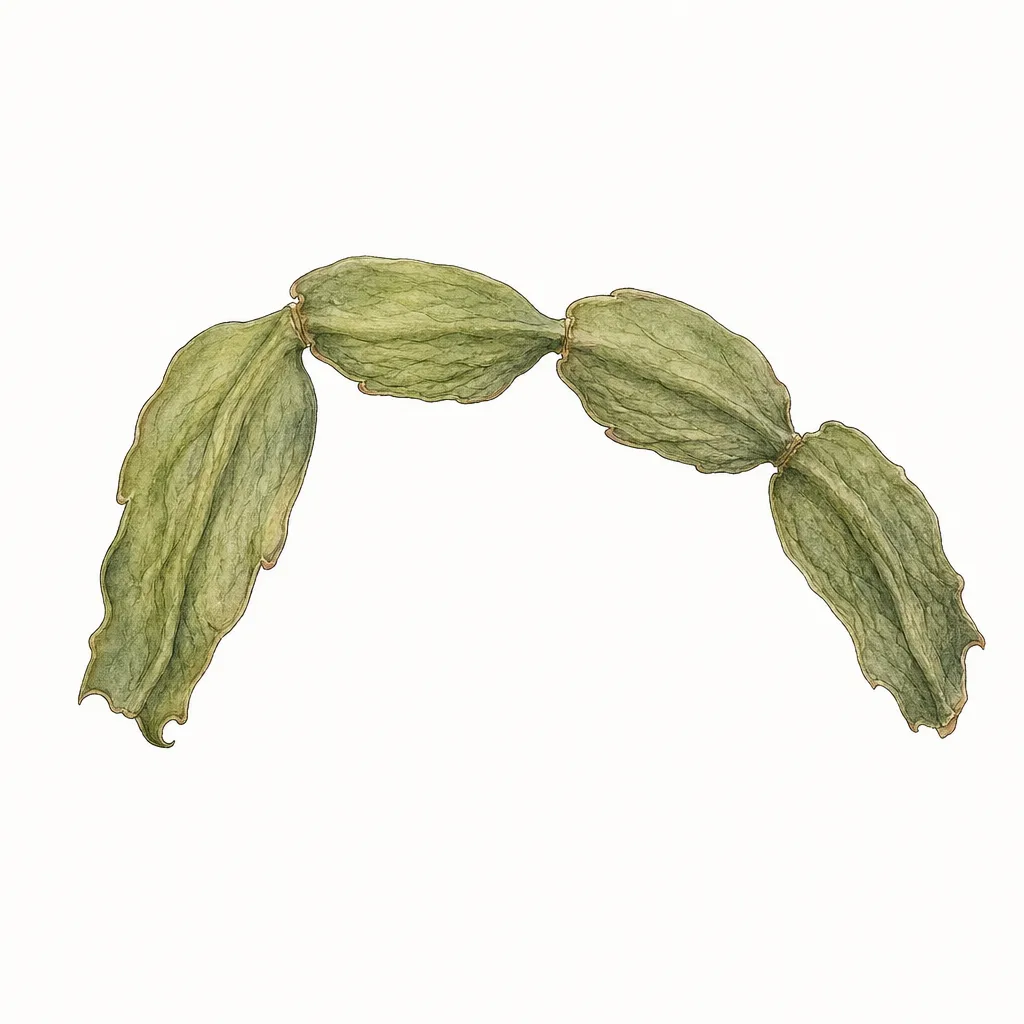
Water-stress wilting is a loss of water pressure in the plant’s tissues, making its flattened stem segments—the parts commonly called leaves—lose firmness. A shortage of water in the potting mix or damage to the roots can interrupt the water supply to those tissues.
Also called: Christmas cactus wilting, Shriveled holiday cactus stems
Plants affected: Christmas cactus, Thanksgiving cactus, Holiday cactus hybrids
Symptoms
- Flattened stem segments look wrinkled, shriveled or unusually limp.
- Growth may become dull gray-green rather than its usual green.
- With root or stem rot, roots may become soft, brown patches may develop at the base, and branches may collapse.
Causes
- Insufficient watering can leave the potting mix too dry to supply the stems.
- Frequent watering, poor drainage or standing water can keep the root zone excessively wet and favor root decay.
- Damaged or decaying roots may be unable to supply water even when the surrounding mix is moist.
- Continuing the same watering routine during cooler, lower-light rest periods can leave the mix wet longer than the plant needs.
How to tell it apart
Wrinkles alone cannot distinguish thirst from root trouble. Check below the surface and toward the center and bottom of the root ball; if needed, gently slide it out of the pot to assess moisture. Dry mix throughout makes underwatering more likely. Moist mix alone does not prove root rot. If the mix remains persistently wet, the base is discolored, or wilting is worsening, inspect the roots promptly. Healthy roots are firm; soft, mushy roots or roots whose outer tissue slips off indicate decay. Remove only clearly deteriorated roots, using clean tools.
- Normal arching growth
- Christmas cactus naturally develops arching branches. An arching shape with firm, plump segments is different from newly wrinkled or shriveled growth.
- Too much direct light
- Excessive light more typically causes pale or sunburned tissue. Check light exposure as well as moisture; discoloration alone does not establish a watering problem.
- Scale insects
- Look for small brown, shell-like bumps attached to stems and sticky material on or below the plant, rather than wrinkles alone.
Treatment
- 1. Check the whole root zone and empty standing water today Before adding water, check moisture below the surface and deeper in the root ball. Empty the saucer or decorative outer pot. A dry surface is not enough reason to water if the root zone is still wet. If the mix is normally moist and there are no warning signs of rot, monitor it rather than automatically watering or disturbing the roots.
- 2. If the root ball is dry, water thoroughly once Water slowly until excess water flows from the drainage holes, let the pot drain, and empty the saucer. Check moisture again before any repeat watering; do not keep adding water to chase away wrinkles. If the root zone is already wet, skip this step.
- 3. Inspect suspect roots promptly and remove only decay Moist mix alone does not prove root rot. If the mix remains persistently wet, the base is discolored, or wilting is worsening, inspect the roots promptly. Healthy roots are firm; soft, mushy roots or roots whose outer tissue slips off indicate decay. Remove only clearly deteriorated roots, using clean tools. If decay is present, try repotting in fresh, well-draining potting mix in a clean container with drainage holes. Use a smaller container if substantial root loss would leave a large volume of unrooted mix. Repotting may help an affected plant, but it is not a guaranteed cure.
- 4. Provide bright, indirect light while it recovers Move it out of strong direct sun if necessary, then keep its location stable, especially if it has buds. An indoor location around 60–70°F suits holiday cacti. Continue checking moisture before watering rather than following a fixed weekly schedule.
- 5. Start healthy cuttings if the base is failing If healthy tips remain, take a cutting of 2–5 firm, unaffected segments at a joint. Let the cut end callus overnight, then insert it about 1 inch into moist perlite or coarse sand. Keep it in bright, indirect light and water when the medium begins to dry. Rooting usually takes 6–8 weeks; this is a backup you can start now, not an immediate fix. Discard a badly rotted, collapsing parent plant.
Prevention
- Use well-draining potting mix and a container with drainage holes. Never leave the pot standing in drainage water.
- Adjust watering to growth stage and conditions, not a calendar. During active growth, allow some drying between waterings. During flowering, maintain more even moisture without saturation. Reduce watering during cooler rest periods, checking the root zone before watering again.
- Extension guidance differs on how far to let a healthy, nonflowering plant dry: Illinois recommends slight drying during active growth, while Iowa State allows more complete drying outside flowering. For an already-shriveled plant, do not deliberately dry the entire root ball, and do not water again while its root zone remains wet. Let the moisture check and root condition guide the next step.
- For routine repotting of a healthy plant, wait until spring or early summer. Suspected root decay is a separate reason to inspect promptly rather than wait for the usual repotting season.
When to worry
Act promptly if the base develops brown lesions, roots become soft or lose their outer tissue, or whole branches collapse. These signs suggest more than ordinary thirst. Extensive root or basal rot can kill the plant; save healthy cuttings if possible and seek help from your local extension service if the cause remains unclear.
Safety
Christmas cactus is considered non-toxic to people, cats and dogs, but it is not intended to be eaten. If a person becomes unwell after eating it, contact a doctor or poison line; in the U.S., call Poison Control at 1-800-222-1222. Contact a veterinarian if a pet becomes unwell after chewing it. Follow label directions for potting mix, perlite and other growing media; avoid breathing dust, wash hands after handling, and store closed bags away from children and pets. Handle cutting tools carefully and keep them out of reach.
Sharing your home with pets or small children? See which plants our sources call safe for cats, dogs and kids.
FAQ
Does wrinkling always mean my Christmas cactus needs water?
No. Dry mix and damaged roots can both cause wrinkling. Check moisture throughout the root ball before watering.
Should I let a wilted Christmas cactus dry out completely?
Do not deliberately dry an already-shriveled plant’s entire root ball. If it is dry, water thoroughly and drain; if it remains wet, withhold more water and check for root trouble when warning signs are present.
Can a Christmas cactus with root rot recover?
Limited damage may be salvageable, but severe rot can kill the plant. Removing decayed roots and repotting is an attempt, not a promise; healthy cuttings offer a backup.
Are those really leaves?
They are flattened stem segments that perform photosynthesis. Calling them leaves is common, but botanically they are stems.
Should I care for it like a desert cactus?
No. Holiday cacti come from forest habitats. They need well-drained mix and watering adjusted to growth and flowering, not prolonged drought.
Sources
- How to identify and care for holiday cacti and get them to rebloom — Illinois Extension
- All About Holiday Cacti — Iowa State University Extension
- Christmas Cactus (Schlumbergera spp.)-Stem and Root Rots — Pacific Northwest Pest Management Handbooks
- Sad Looking Christmas Cactus — Ask Extension
- Holiday Plant Safety — California Poison Control System
- Toxic and Non-toxic Plants: Christmas Cactus — ASPCA