
Camellia leaves yellow with green veins: causes and fixes
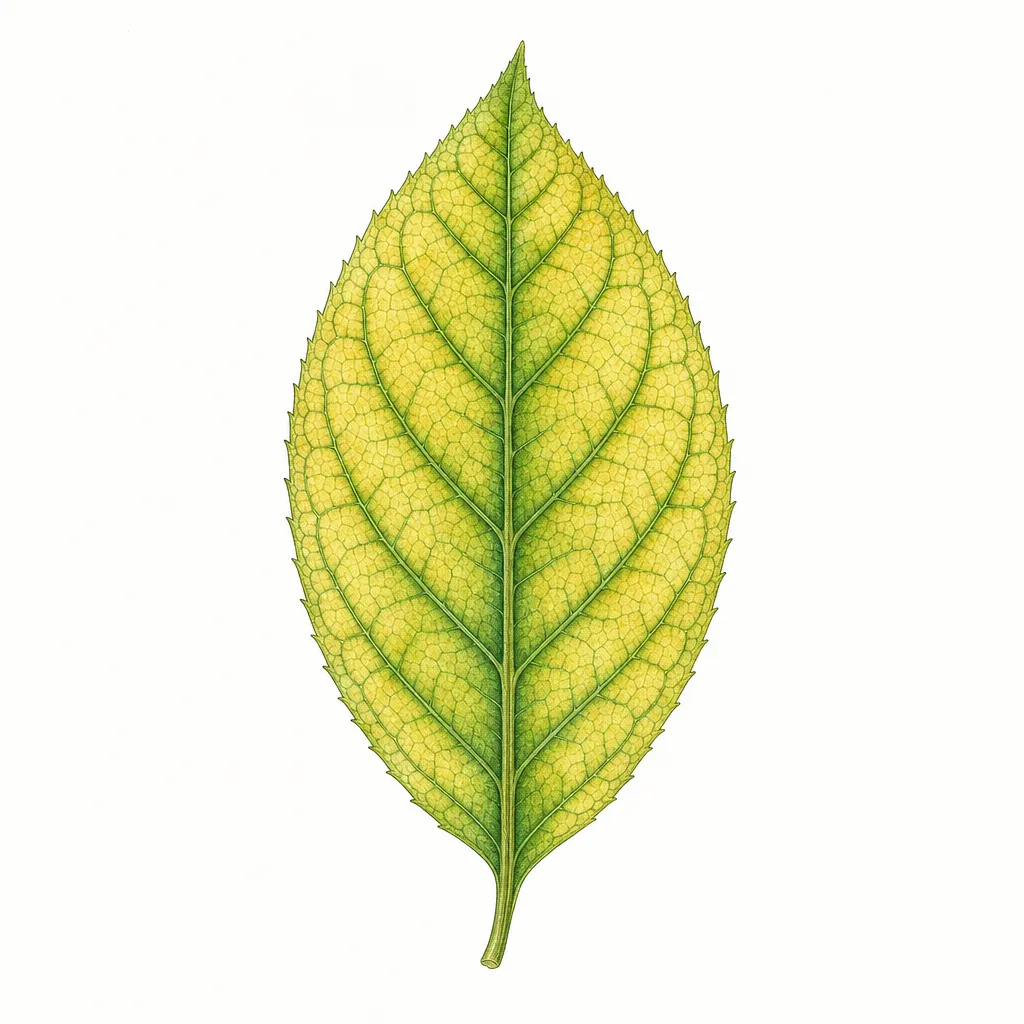
Camellia leaves turning yellow between green veins most likely have nutrient chlorosis, often from iron becoming unavailable in alkaline soil, especially when young leaves are affected.
Not sure it's this? Scan your plant — free
What it is
Iron chlorosis is a nutritional disorder in which a plant cannot obtain enough usable iron to maintain normal green leaf tissue, even when iron is present in the soil. Interveinal chlorosis means yellowing between green veins: it describes a symptom, not a diagnosis, because magnesium and manganese deficiencies can cause it too. ([University of Maryland Extension](https://extension.umd.edu/resource/nutrient-deficiency-trees-and-shrubs))
Also called: Iron deficiency chlorosis, Lime-induced chlorosis
Plants affected: Japanese camellia (Camellia japonica), Sasanqua camellia (Camellia sasanqua), Garden camellia hybrids
Symptoms
- Pale-green or yellow tissue between a contrasting network of green veins.
- Young leaves at shoot tips affected first when iron deficiency is responsible.
- Very pale foliage, brown leaf edges or dying shoot tips in severe cases. ([University of Maryland Extension](https://extension.umd.edu/resource/nutrient-deficiency-trees-and-shrubs))
Causes
- Soil that is too alkaline makes iron and manganese difficult for camellias to absorb. ([RHS](https://www.rhs.org.uk/plants/camellia/frequently-asked-questions))
- Poor drainage or damaged roots can interfere with nutrient uptake, producing deficiency symptoms even when nutrients are present. ([University of Maryland Extension](https://extension.umd.edu/resource/nutrient-deficiency-trees-and-shrubs))
- Repeated watering with hard tap water can contribute to unsuitable conditions for acid-loving camellias. ([RHS](https://www.rhs.org.uk/plants/camellia/frequently-asked-questions))
How to tell it apart
Compare young leaves at shoot tips with older leaves farther down the stems. Young leaves with yellow tissue between narrow green veins suggest iron deficiency; older leaves affected first suggest magnesium deficiency. Check leaf undersides for scale insects, then check drainage and arrange a soil test before choosing a supplement: appearance alone cannot reliably separate every nutrient problem. ([University of Maryland Extension](https://extension.umd.edu/resource/nutrient-deficiency-trees-and-shrubs); [Clemson Extension](https://hgic.clemson.edu/factsheet/camellia-diseases-insect-pests/))
- Magnesium deficiency
- Yellowing between veins usually begins on older leaves rather than the youngest foliage. Confirm the deficiency before adding magnesium. ([University of Maryland Extension](https://extension.umd.edu/resource/nutrient-deficiency-trees-and-shrubs))
- Manganese deficiency
- Can also affect young leaves, often leaving broader green bands along the veins. It may be difficult to distinguish from iron deficiency without testing. ([University of Maryland Extension](https://extension.umd.edu/resource/nutrient-deficiency-trees-and-shrubs))
- Tea scale
- Look for yellow splotches on upper leaf surfaces and small brown or white scale coverings underneath; heavy infestations can look cottony underneath. ([Clemson Extension](https://hgic.clemson.edu/factsheet/camellia-diseases-insect-pests/))
- Root rot
- More often causes overall yellowing, poor growth and wilting, with brown, damaged roots instead of healthy white feeder roots. ([Clemson Extension](https://hgic.clemson.edu/factsheet/camellia-diseases-insect-pests/))
- Virus-related mottling or normal leaf shedding
- Virus-related symptoms can form irregular yellow or creamy blotches rather than a consistent green-vein pattern. Normal shedding affects older leaves, usually in spring or summer. ([RHS](https://www.rhs.org.uk/plants/camellia/frequently-asked-questions))
Treatment
- 1. Check drainage before adding nutrients This week, check whether the root area remains waterlogged. Pause unnecessary irrigation while it is wet, and clear blocked drainage holes on container plants. Do not try to correct yellowing by watering already-soggy soil more often: wet conditions encourage root rot. ([Clemson Extension](https://hgic.clemson.edu/factsheet/camellia-diseases-insect-pests/))
- 2. Arrange a soil pH and nutrient test Collect a sample this week using your soil-testing laboratory's instructions, and identify the plant as a camellia. Request recommendations for an acid-loving shrub, including whether iron or magnesium treatment is justified. Do not guess an acidifier dose from leaf color alone. ([University of Maryland Extension](https://extension.umd.edu/resource/nutrient-deficiency-trees-and-shrubs))
- 3. Match any iron treatment to the measured pH If young-leaf symptoms and test results support iron chlorosis, choose an iron chelate labeled for camellias or ornamental shrubs and suitable for your measured soil pH; iron EDDHA is generally more effective than iron EDTA in strongly alkaline soil. Follow the product label for application method, rate and repeat interval. For foliar treatment, follow label directions and local guidance on growth stage and weather; treatment of young, expanding foliage may provide temporary relief. If results are not back this week, wait rather than applying a supplement blindly. ([UC IPM](https://ipm.ucanr.edu/home-and-landscape/nutrient-deficiencies-nitrogen-zinc-iron/))
- 4. Plan a lasting correction This week, ask your testing service or local extension adviser whether soil acidification is practical. Once results arrive, apply a soil acidifier such as elemental sulfur only at the recommended rate and according to its label. If your garden soil remains unsuitable, consider a container with potting mix for acid-loving plants instead; iron treatment alone does not fix alkaline growing conditions. ([University of Maryland Extension](https://extension.umd.edu/resource/nutrient-deficiency-trees-and-shrubs); [RHS](https://www.rhs.org.uk/plants/camellia/frequently-asked-questions))
- 5. Skip the blanket fertilizer boost Hold off on extra general fertilizer while you investigate this week. More fertilizer is not a substitute for correcting pH or root problems, and excessive fertilizer salts can damage plants. Use test results and label directions to decide whether feeding is needed. ([UC IPM](https://ipm.ucanr.edu/home-and-landscape/nutrient-deficiencies-nitrogen-zinc-iron/))
Prevention
- Maintain well-drained, acidic growing conditions and base soil amendments on test recommendations. ([RHS](https://www.rhs.org.uk/plants/camellia/frequently-asked-questions); [University of Maryland Extension](https://extension.umd.edu/resource/nutrient-deficiency-trees-and-shrubs))
- Where hard tap water is a problem, use collected rainwater when available. ([RHS](https://www.rhs.org.uk/plants/camellia/frequently-asked-questions))
- Avoid unnecessary fertilizer and nutrient supplements; use the amount recommended for the diagnosed problem. ([UC IPM](https://ipm.ucanr.edu/home-and-landscape/nutrient-deficiencies-nitrogen-zinc-iron/))
When to worry
Seek help from your local extension service if the shrub wilts, branches die or yellowing accompanies widespread decline. Root rot and canker can be more serious than a straightforward nutrient shortage. ([Clemson Extension](https://hgic.clemson.edu/factsheet/camellia-diseases-insect-pests/))
Safety
Follow the label for every iron supplement, fertilizer, magnesium supplement and soil acidifier, including application rates and required protective equipment. Keep products tightly closed in their original labeled containers, secured away from children, pets, food and animal feed; never transfer them into food or drink containers. Avoid skin and eye contact, and wear label-required gloves and eye protection when handling or mixing. If exposure or ingestion occurs, follow the label's first-aid directions and contact a doctor, vet or local poison line as appropriate. ([UMASH](https://umash.umn.edu/farm-safety-check-chemical-storage-area/))
Sharing your home with pets or small children? See which plants our sources call safe for cats, dogs and kids.
FAQ
Does this mean my soil has no iron?
Not necessarily. Alkaline soil can contain iron that roots cannot readily use, and damaged roots can also struggle to absorb nutrients. ([University of Maryland Extension](https://extension.umd.edu/resource/nutrient-deficiency-trees-and-shrubs))
Should I use Epsom salts?
Not automatically. Epsom salts supply magnesium, not iron; magnesium deficiency usually affects older leaves first. Supplement only after a confirmed magnesium deficiency, following soil-test or local extension recommendations and the product label. ([RHS](https://www.rhs.org.uk/plants/camellia/frequently-asked-questions); [University of Maryland Extension](https://extension.umd.edu/resource/nutrient-deficiency-trees-and-shrubs))
Will an iron spray fix it permanently?
Usually not if soil or root conditions remain unsuitable. Foliar iron can provide temporary relief, particularly on young, expanding foliage; follow the label for application and repeat intervals. ([UC IPM](https://ipm.ucanr.edu/home-and-landscape/nutrient-deficiencies-nitrogen-zinc-iron/))
Is it contagious?
Iron chlorosis is a nutritional disorder, not an infection. Irregular blotches rather than a clear green-vein pattern may have another cause, including a virus. ([RHS](https://www.rhs.org.uk/plants/camellia/frequently-asked-questions))
Sources
- RHS: Camellia problems—frequently asked questions
- University of Maryland Extension: Nutrient Deficiency of Trees and Shrubs
- Clemson Extension: Camellia Diseases and Insect Pests in South Carolina
- UC IPM: Nutrient Deficiencies (Nitrogen, Zinc, Iron)
- University of Minnesota UMASH: Farm Safety Check—Chemical Storage Area