
Calathea leaves curling and crispy edges: causes and fixes
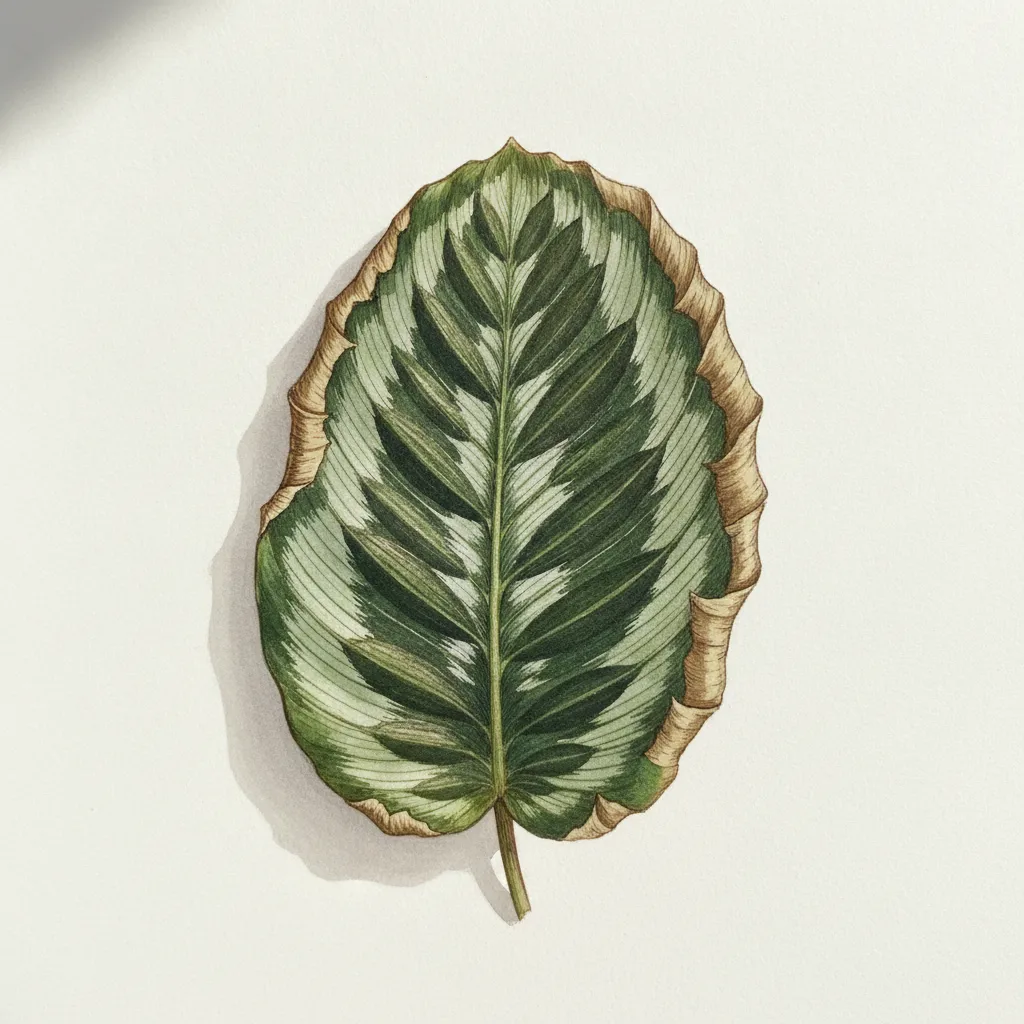
Your calathea’s leaves are likely curling and turning crispy along the margins because the surrounding air is too dry, the potting mix has dried out, or minerals and fluoride from tap water have accumulated in the leaf tissue.
Not sure it's this? Scan your plant — free
What it is
Marginal leaf scorch and curling in calatheas is an environmental disorder caused by severe transpiration stress and cell dehydration. When ambient humidity plummets or roots absorb concentrated mineral salts, leaf margins lose water faster than the plant's vascular channels can supply it, causing localized tissue death. The plant rolls its leaf blades inward along the central vein as an involuntary defense to decrease exposed surface area and conserve remaining internal moisture.
Also called: Calathea leaf roll, Calathea crispy leaf syndrome, Houseplant marginal scorch, Prayer plant tip burn
Plants affected: Calathea (Goeppertia species), Prayer plant (Maranta leuconeura), Stromanthe (Stromanthe thalia), Ctenanthe species
Symptoms
- Leaf edges curling tightly inward toward the central midrib
- Dry, papery, brittle brown margins along the outer perimeter of the foliage
- Crisp, scorched leaf tips that snap when gently bent
- Foliage feeling thin and papery rather than supple and leathery
- Soil pulling away from the inside walls of the pot, creating gaps
Causes
- Low ambient humidity falling below the 50 to 60 percent threshold required by rainforest understory species
- Underwatering or inconsistent watering routines that allow the root zone to dry out completely
- Sensitivity to chemicals and dissolved minerals in municipal tap water, notably fluoride, chlorine, chloramines, and hard salts
- Accumulation of excess fertilizer salts in the potting medium, which draws moisture away from root hairs
- Exposure to heat sources, dry air conditioning streams, or drafty exterior doorways
- Root impairment from chronic overwatering, which rots root tips and prevents the plant from taking up water
How to tell it apart
Check the soil moisture first by pressing a finger 1 to 2 inches into the potting mix. If the soil is dry and light, underwatering is the most probable trigger, and curled leaves will usually begin relaxing within 24 hours of a deep soak. If the soil feels evenly damp yet the leaf margins remain curled and crispy, measure your room's relative humidity: levels below 50 percent point to dry air as the primary factor. If humidity is adequate and the soil is consistently moist, examine the pattern of browning: continuous, thin, crunchy halos around every leaf edge almost always indicate fluoride or mineral toxicity from hard tap water or fertilizer salts.
- Spider mite infestation
- Spider mites cause fine, stippled yellow speckling, dull leaf coloration, and delicate silken webbing under the leaf joints, whereas moisture stress causes broad inward rolling and uniform papery borders without stippling.
- Direct sun scorch
- Sunburn creates bleached, washed-out, or irregular dead brown patches across the broad center of the leaf facing the window, unlike marginal scorch, which follows the natural outer contour and tips of the leaf blade.
- Natural nyctinastic movement (prayer behavior)
- Healthy calatheas lift their stems and fold their leaves upward at dusk and lower them during daylight; this diurnal rhythm maintains soft, flexible, green leaves, whereas distress curling rolls the leaf blade into a tight tube with dry, crispy edges.
Treatment
- Rehydrate thoroughly if the potting mix is dry If the soil feels dry beneath the surface, set the pot in a sink and pour room-temperature water slowly over the entire surface until it drains freely from the bottom holes. Allow the pot to drain completely for 15 to 20 minutes before returning it to its decorative saucer; never leave standing water in the tray.
- Switch your water source immediately Cease using tap water, which contains fluorides and minerals that calatheas cannot process. Switch to watering exclusively with distilled water, reverse-osmosis filtered water, or clean rainwater. Maintain this permanently to prevent recurring leaf burn.
- Elevate local humidity to at least 55 to 60 percent Place a dedicated cool-mist room humidifier 3 to 4 feet away from the plant, running continuously or set to maintain 55 to 65 percent relative humidity. Alternatively, rest the pot above a broad tray filled with pebbles and water, ensuring the bottom of the pot stays above the water line. Note that hand misting provides only minutes of moisture and does not resolve marginal crisping.
- Leach accumulated mineral and fertilizer salts from the container If you have used tap water or heavy fertilizer, take the plant to a sink and slowly pour distilled water through the soil equal to twice the pot's volume. Let the water flush dissolved salts out through the drainage holes, let it drain for 30 minutes, and repeat this flush once every 4 to 6 months.
- Neatly trim away permanent brown edges Dead, crispy brown tissue cannot turn green again. Use clean, sharp household scissors to snip away the brown margins, following the natural curve of the leaf and leaving a tiny sliver of dry brown tissue to avoid cutting directly into healthy live green veins.
Prevention
- Keep ambient relative humidity between 55% and 65% year-round using a digital hygrometer to monitor room air.
- Water only with distilled, reverse-osmosis, or collected rainwater at room temperature.
- Check the soil every 4 to 6 days; water thoroughly when the top half-inch to 1 inch of mix feels barely dry, keeping the root ball evenly moist but never swampy.
- Position the plant in medium to bright indirect light, completely shielded from harsh direct sunbeams, heating radiators, and air conditioning vents.
- Dilute standard balanced houseplant fertilizer to one-quarter strength, applying it only once a month during active spring and summer growth and pausing entirely through late autumn and winter.
When to worry
Worry if all stems suddenly collapse flat against the rim of the pot, the soil emits a sour or rotting odor, or yellowing spreads rapidly across moist stems. These symptoms indicate root rot rather than simple dry air, requiring immediate unpotting to trim mushy, dark roots and replanting into a fresh, porous, airy potting mix.
FAQ
Will curled calathea leaves uncurl once watered?
Yes, if the curling was caused by thirst, the leaves usually relax and flatten out within 12 to 24 hours after a thorough watering. However, any leaf areas that turned completely brown, dry, and brittle are dead and will remain crispy.
Should I cut off the crispy brown edges of my calathea?
You can safely trim dead brown margins to improve your plant's appearance. Use clean, sharp scissors and cut along the natural curve of the leaf, leaving a paper-thin sliver of brown edge to avoid wounding living green tissue.
Does misting my calathea prevent leaf crisping?
No, misting only raises humidity for a few minutes before the water evaporates, which is not long enough to prevent crisping. Prolonged wet foliage indoors can also encourage bacterial or fungal leaf spotting; a cool-mist humidifier is far more effective.
Why does tap water cause calathea leaves to turn brown?
Calatheas are highly sensitive to minerals, chlorine, and especially fluoride found in municipal tap water. Because plants cannot excrete these chemicals, they travel to the outermost tips and edges of the leaves through transpiration, where they build up to toxic levels and scorch the margins.
Sources
- Why does my houseplant have brown leaf tips and edges? | Yard and Garden
- Goeppertia veitchiana (Calathea Medallion, Medallion Prayer Plant) | North Carolina Extension Gardener Plant Toolbox
- Goeppertia orbifolia | North Carolina Extension Gardener Plant Toolbox
- iastate.edu
- unl.edu
- plantdoctor.app
- epicgardening.com
- extension.org