
Broccoli head turning brown and mushy: causes and fixes
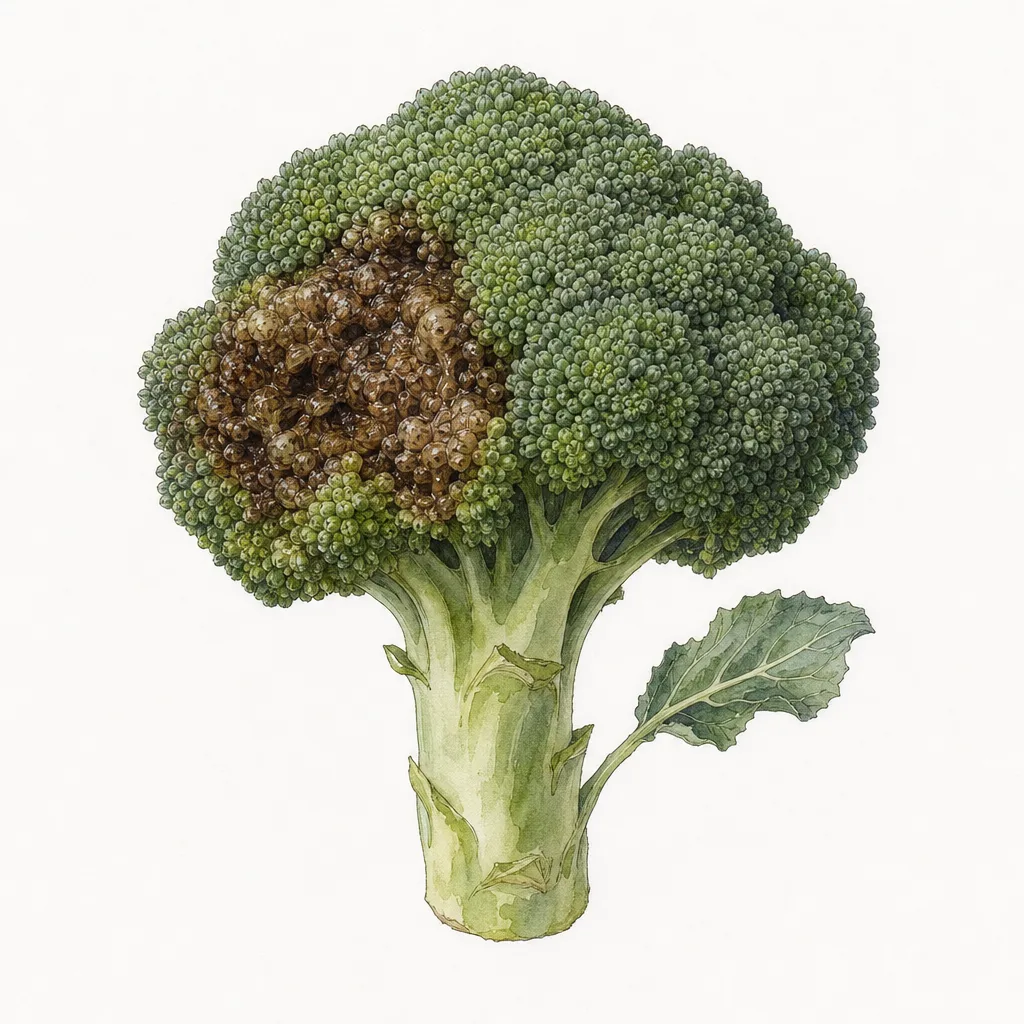
A broccoli head turning brown and mushy most likely has bacterial head rot, also called soft rot; remove affected plants promptly because rotten tissue cannot recover. ([extension.umd.edu](https://extension.umd.edu/resource/soft-rot-cabbage?utm_source=openai))
Not sure it's this? Scan your plant — free
What it is
Bacterial soft rot is a group of diseases caused by bacteria that break down fleshy plant tissue. In broccoli, infected flower buds and supporting tissue become wet, discolored and soft, eventually collapsing into sunken rotten patches. ([hort.extension.wisc.edu](https://hort.extension.wisc.edu/articles/bacterial-soft-rot/?utm_source=openai))
Also called: Bacterial soft rot, Broccoli head rot
Plants affected: Broccoli, Cauliflower, Cabbage and other brassicas
Symptoms
- Small patches of flower buds look water-soaked or greasy before turning brown or black. ([ipm.ucanr.edu](https://ipm.ucanr.edu/PMG/C108/m108hpquality.html?utm_source=openai))
- Affected areas become soft, mushy and sunken rather than simply changing color. ([extension.umd.edu](https://extension.umd.edu/resource/soft-rot-cabbage?utm_source=openai))
- Rotten tissue may develop an unpleasant smell. ([ipm.ucanr.edu](https://ipm.ucanr.edu/PMG/C108/m108hpquality.html?utm_source=openai))
Causes
- Prolonged wetness, including waterlogged soil and irrigation that keeps heads wet, encourages infection and spread. ([extension.umd.edu](https://extension.umd.edu/resource/soft-rot-cabbage?utm_source=openai))
- Bacteria spread through contaminated water, tools, insects and infected plant debris. ([hort.extension.wisc.edu](https://hort.extension.wisc.edu/articles/bacterial-soft-rot/?utm_source=openai))
- Injuries during cultivation or harvesting increase the risk; careful handling helps prevent infection. ([extension.umd.edu](https://extension.umd.edu/resource/soft-rot-cabbage?utm_source=openai))
- Temperature guidance differs: Maryland Extension emphasizes warm, wet conditions, while UC IPM describes head rot under cool, persistently wet conditions. Wetness is the shared warning sign. ([extension.umd.edu](https://extension.umd.edu/resource/soft-rot-cabbage?utm_source=openai))
How to tell it apart
Look for wet or greasy patches that turn brown, sink and soften, sometimes with a bad smell. Brown color alone is not enough: heat-related brown bead can look similar, and it can later develop secondary soft rot. These clues suggest a diagnosis rather than proving it. ([ipm.ucanr.edu](https://ipm.ucanr.edu/PMG/C108/m108hpquality.html?utm_source=openai))
- Brown bead
- Individual flower buds turn tan or brown near maturity and detach easily, often after hot weather followed by heavy rain. Wet, mushy decay suggests soft rot has developed as well. ([umass.edu](https://www.umass.edu/agriculture-food-environment/vegetable/fact-sheets/brassicas-fall-insects-diseases?utm_source=openai))
- Downy mildew
- Check for gray-white fluffy growth beneath leaves, angular yellow-brown leaf patches, and dark streaks inside head stalks. Secondary soft rot can follow this disease. ([umass.edu](https://www.umass.edu/agriculture-food-environment/vegetable/fact-sheets/brassicas-fall-insects-diseases?utm_source=openai))
- Heat injury
- An uneven crown, uneven bud sizes and a small head point toward heat injury rather than mushy bacterial decay. ([umass.edu](https://www.umass.edu/agriculture-food-environment/vegetable/fact-sheets/brassicas-fall-insects-diseases?utm_source=openai))
Treatment
- Remove affected plants now Discard plants showing soft rot, handling them as little as possible. Do not bury or home-compost infected material. There is no treatment that restores already infected tissue. ([hort.extension.wisc.edu](https://hort.extension.wisc.edu/articles/bacterial-soft-rot/?utm_source=openai))
- Discard the rotten head Do not try to salvage a mushy head by trimming away the visible patch. FDA guidance is to throw away produce that looks rotten. ([fda.gov](https://www.fda.gov/food/buy-store-serve-safe-food/selecting-and-serving-produce-safely?source=govdelivery&utm_source=openai))
- Clean hands and disinfect tools Wash your hands after handling diseased plants. Remove dirt and plant residue from tools, then treat blades with 70% rubbing alcohol for at least 30 seconds before using them on another plant; follow the product label. ([hort.extension.wisc.edu](https://hort.extension.wisc.edu/articles/bacterial-soft-rot/?utm_source=openai))
- Keep remaining heads dry For the rest of this week, replace overhead watering with a soaker hose or drip irrigation at soil level. Avoid waterlogging the bed; adjust watering to rainfall rather than adding water on a fixed schedule. ([extension.umd.edu](https://extension.umd.edu/resource/soft-rot-cabbage?utm_source=openai))
- Harvest healthy heads in dry conditions When unaffected heads are ready, harvest only when plants are dry and avoid bruising them. Keep harvested broccoli separate from rotten produce and inspect it before storage. ([extension.umd.edu](https://extension.umd.edu/resource/soft-rot-cabbage?utm_source=openai))
Prevention
- Use well-drained beds and avoid crowding plants so they dry more readily. ([hort.extension.wisc.edu](https://hort.extension.wisc.edu/articles/bacterial-soft-rot/?utm_source=openai))
- Choose broccoli varieties with domed heads that shed water rather than flat or concave heads that hold it. ([hort.extension.wisc.edu](https://hort.extension.wisc.edu/articles/bacterial-soft-rot/?utm_source=openai))
- Remove infected crop debris and avoid injuring plants during weeding and harvest. ([extension.umd.edu](https://extension.umd.edu/resource/soft-rot-cabbage?utm_source=openai))
- If soft rot repeatedly causes serious losses, keep susceptible crops out of that bed for at least three years. ([hort.extension.wisc.edu](https://hort.extension.wisc.edu/articles/bacterial-soft-rot/?utm_source=openai))
When to worry
Act when wet patches begin turning soft, rather than waiting for the whole head to collapse. If several plants develop symptoms or the diagnosis is unclear, ask your local extension plant clinic about submitting a sample. ([extension.umd.edu](https://extension.umd.edu/resource/soft-rot-cabbage?utm_source=openai))
Safety
Do not eat rotten broccoli; discard it. If someone becomes ill after eating suspect produce, contact a doctor. Rubbing alcohol is flammable: follow the label, handle it away from flames and sparks, and store it tightly closed in its original container, away from children and pets. Avoid skin and eye contact and follow label precautions for ventilation and protective equipment. ([fda.gov](https://www.fda.gov/food/buy-store-serve-safe-food/selecting-and-serving-produce-safely?source=govdelivery&utm_source=openai))
Sharing your home with pets or small children? See which plants our sources call safe for cats, dogs and kids.
FAQ
Can a mushy broccoli head recover?
No. Tissue infected with bacterial soft rot cannot be restored; removal helps limit spread. ([hort.extension.wisc.edu](https://hort.extension.wisc.edu/articles/bacterial-soft-rot/?utm_source=openai))
Can I cut off the brown part and eat the rest?
Discard a head that is mushy or rotten rather than trimming it for eating. FDA recommends throwing away rotten produce. ([fda.gov](https://www.fda.gov/food/buy-store-serve-safe-food/selecting-and-serving-produce-safely?source=govdelivery&utm_source=openai))
Will a fungicide cure it?
Not if it is bacterial soft rot: there is no treatment for already infected tissue. Confirm the cause before considering a spray. ([hort.extension.wisc.edu](https://hort.extension.wisc.edu/articles/bacterial-soft-rot/?utm_source=openai))
Will it spread to nearby broccoli?
It can. Contaminated water, tools, insects and plant debris can move soft-rot bacteria between plants. ([hort.extension.wisc.edu](https://hort.extension.wisc.edu/articles/bacterial-soft-rot/?utm_source=openai))
Sources
- Bacterial Soft Rot — Wisconsin Horticulture
- Soft Rot on Cabbage — University of Maryland Extension
- Cole Crops: Crop Quality Issues: Heading to Harvest — UC IPM
- Brassicas, Fall Insects and Diseases — UMass Amherst
- Selecting and Serving Produce Safely — FDA
- Clean and disinfect gardening tools and containers — University of Minnesota Extension
- Soft Rot on Cabbage | University of Maryland Extension
- Bacterial Soft Rot – Wisconsin Horticulture