
Boxwood leaves turning bronze: causes and fixes
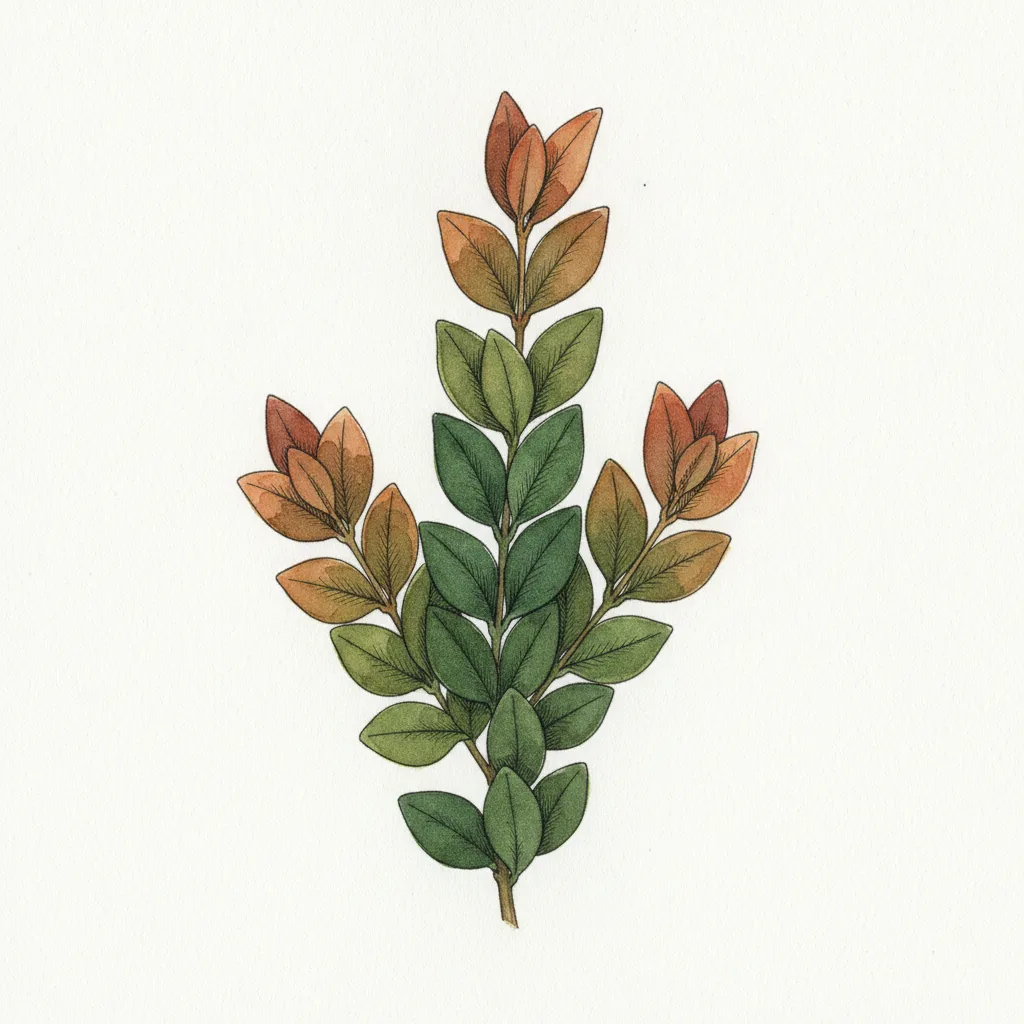
Bronze boxwood leaves are most likely caused by winter desiccation, where cold winds and bright sun draw moisture from the foliage while chilled or frozen roots cannot replenish it.
Not sure it's this? Scan your plant — free
What it is
Boxwood winter bronzing is a physiological disorder that happens when evergreen foliage continues to photosynthesize and lose water during cold weather, while frozen soil prevents the shallow root system from drawing moisture. To protect leaf tissue under strong sunlight and rapid temperature fluctuations, the plant temporarily withdraws chlorophyll and accumulates protective carotenoid pigments, shifting leaf coloration from green to reddish-orange or bronze. While usually a harmless seasonal defense mechanism, severe cases of moisture loss can lead to tissue death and tip dieback.
Also called: Boxwood winter injury, Winter burn, Winter desiccation, Foliage bronzing
Plants affected: Common boxwood (Buxus sempervirens), Littleleaf boxwood (Buxus microphylla), Korean boxwood (Buxus sinica var. insularis), Japanese boxwood (Buxus microphylla var. japonica)
Symptoms
- Outer canopy leaves shifting to a dull bronze, copper, or rust-orange color during late fall and winter
- Discoloration concentrated on the side facing prevailing winds and winter sun (usually south or west)
- Sheltered, shaded inner leaves remaining deep green
- Discolored leaves staying attached to twigs rather than shedding rapidly
- Stems retaining green inner wood when lightly scratched with a thumbnail
- Bleached, papery, or brittle straw-yellow tips in cases of severe desiccation
Causes
- Winter desiccation caused by freezing winds and bright sunlight pulling moisture from exposed leaves
- Frozen or dry soil preventing shallow root systems from absorbing water
- Rapid freeze-thaw cycles and extreme temperature shifts in late autumn or midwinter
- Planting in exposed locations without natural windbreaks or afternoon shade
- In warm seasons, feeding injury from boxwood spider mites creating a bronzed, stippled appearance
How to tell it apart
Look at the timing and distribution across the shrub. If the bronzing appears between late fall and early spring primarily on the outer, windward, or sun-exposed sides while the protected interior remains green, winter bronzing is the most probable cause. Unlike fungal blights, the discolored leaves remain firmly attached to their twigs, and the green stems will show healthy green tissue beneath the bark with no black streaks. If the foliage bronzes during warm summer weather, examine the leaf undersides with a magnifying lens for minute boxwood mites and pale feeding stipples.
- Boxwood blight (Calonectria pseudonaviculata)
- Boxwood blight causes distinct circular dark leaf spots, rapid defoliation that leaves plants bare, and prominent black, vertical streaks or cankers along green stems.
- Volutella stem blight (Volutella buxi)
- Volutella causes foliage to turn bronze or straw-yellow, but it typically hits individual branches, causes loose or peeling bark, and produces salmon-pink spore masses on the undersides of leaves or stems in damp weather.
- Boxwood spider mite (Eurytetranychus buxi)
- Boxwood mite damage occurs in spring and summer rather than winter, showing as fine, pale stippling or scratching across the leaf surfaces that gradually turns bronze.
Treatment
- Deeply hydrate the soil around the base If the ground is unfrozen this week and the weather has been dry, provide 1 to 2 inches of water (about 3 to 5 gallons per mature shrub) using a slow-dripping hose directly over the root perimeter; continue watering whenever soil thaws during dry spells above 40°F (4°C).
- Apply an insulating organic mulch layer Spread a 2- to 3-inch layer of organic mulch, such as shredded bark or pine straw, across the root zone this week to retain soil moisture and buffer roots from freeze-thaw cycles, keeping it pulled back 2 inches from the main stems.
- Set up a physical burlap windbreak For shrubs in wind-exposed or high-sun positions, drive three wooden stakes into the ground 12 inches away from the shrub perimeter and wrap burlap around the windward sides to block gusts, keeping the top open to allow sunlight and ventilation until spring thaw.
- Delay all pruning until spring growth begins Resist cutting off bronze branches this week; wait until late April or May when new growth begins, scratch the bark lightly to see if the underlying tissue is green, and prune back only shoots that remain brittle and brown inside.
Prevention
- Water boxwoods deeply throughout autumn until the ground freezes solid so roots enter winter fully hydrated.
- Avoid applying high-nitrogen fertilizers in late summer or fall, which spurs succulent growth that cannot harden off before cold weather.
- Maintain a consistent 2- to 3-inch layer of organic mulch over the root zone year-round.
- Plant new boxwoods in sites that receive partial shade and protection from prevailing northwest and winter winds.
- Choose cold-hardy boxwood cultivars that naturally resist winter bronzing, including Korean hybrids and littleleaf varieties.
- In late autumn, apply an anti-desiccant spray to evergreen leaves once hardened off, reapplying once in midwinter on a dry day above 40°F (4°C) strictly following label instructions.
When to worry
Worry if leaves begin dropping off in large numbers, stems show sunken black lesions, branches snap cleanly with dry brown interiors in late spring, or leaves develop fuzzy pink fungal clusters underneath. These signs point to serious fungal blights or root loss that will not resolve with warm spring weather.
Safety
All parts of the boxwood plant contain toxic alkaloids that can cause vomiting, diarrhea, abdominal cramps, and lethargy if ingested by pets or children; contact a veterinarian, physician, or poison control center immediately if consumed. When applying any anti-desiccant sprays, horticultural oils, or pesticides, wear gloves and eye protection, follow all label safety instructions, and keep people and pets away until foliar treatments are completely dry.
Sharing your home with pets or small children? See which plants our sources call safe for cats, dogs and kids.
FAQ
Will bronze boxwood leaves turn green again?
Yes, in most cases of seasonal winter bronzing, the foliage naturally greens up again in spring as soon as soil temperatures warm and new growth starts.
Should I prune away bronze leaves right now?
No, leave them alone until spring. Bronze leaves are frequently still alive and shield interior foliage; pruning during winter exposes tender inner buds and stimulates vulnerability to cold snaps.
Why is only one side of my boxwood hedge bronze?
Discoloration most often strikes the south- or west-facing side because it receives the harshest winter sun and strongest drying winds, while the north and sheltered sides stay protected and green.
Can hot summer weather turn boxwood leaves bronze?
Yes. Severe heat and drought can trigger bronzing in summer, as can feeding by boxwood spider mites, which causes fine yellow flecking that merges into a dull bronze sheen.