
Boston fern dropping leaves indoors: causes and fixes
A Boston fern dropping leaves indoors is most likely reacting to a drying root ball and low humidity, though overwatering or too little light can also cause shedding.
Not sure it's this? Scan your plant — free
What it is
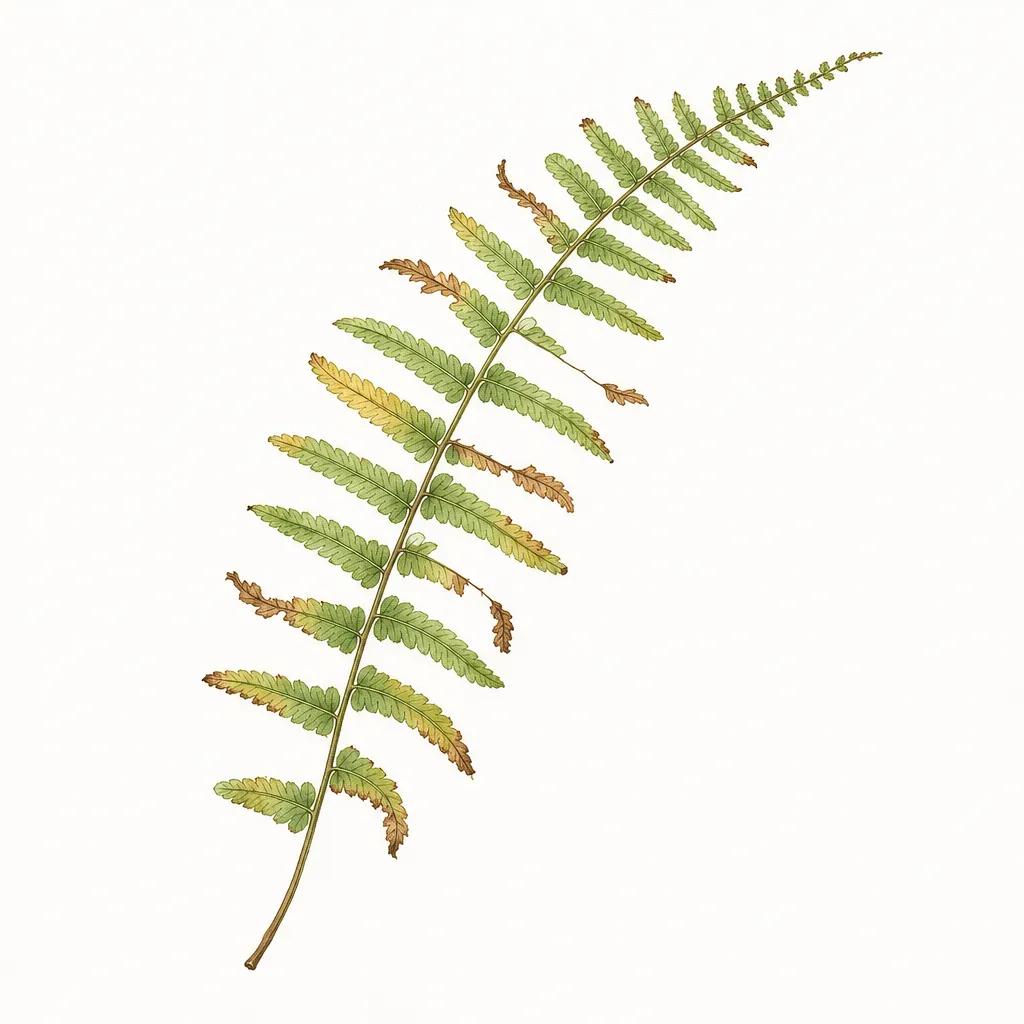
Leaf drop is the loss of the small leaflets that line a fern’s larger leaves, called fronds. It is a symptom rather than a specific disease: unsuitable watering, humidity or light can damage foliage, leaving bare sections of stalk and a sparse-looking plant.
Also called: Boston fern shedding, Boston fern leaflet drop
Plants affected: Boston fern (Nephrolepis exaltata 'Bostoniensis') and its cultivars
Symptoms
- Small leaflets yellow, dry out or fall from the fronds.
- Leaflet tips and edges turn brown and crisp.
- Bare sections appear along frond stalks, and the plant looks increasingly thin.
Causes
- The root ball dries too much between waterings, sometimes alongside low indoor humidity.
- Overwatering or poor drainage keeps the roots too wet.
- The fern receives too little light indoors.
- Older fronds age and shed; some loss does not necessarily mean the whole plant is failing.
How to tell it apart
Check the soil before adding water. Dry soil with crisp leaflet edges supports a drying-related cause; wilting while the soil stays wet calls for a drainage and root check instead. Note whether the fern is in a dark corner, and inspect leaflet undersides and frond bases for pests. Fallen leaflets alone cannot identify the cause.
- Root rot or waterlogged roots
- Wilting despite wet soil, especially with soft, brown roots, points toward root trouble rather than simple dryness.
- Spider mites
- Tiny pale speckles and fine webbing, especially underneath leaflets, suggest mites rather than humidity stress alone.
- Scale insects or mealybugs
- Shell-like bumps or white cottony material, sometimes with sticky residue, suggest sap-feeding pests.
- Excess light or fertilizer injury
- Too much light can bleach foliage yellow-green, while excessive fertilizer can cause browning and drying from frond ends. Check the plant’s location and feeding history; leaf drop alone does not distinguish these problems.
Treatment
- 1. Check moisture and correct watering Feel the soil surface daily this week. When it becomes slightly dry, water with room-temperature water until water drains from the bottom, then empty the saucer or outer pot. If the soil is still wet, wait and check again the next day. Keep the root ball evenly moist rather than letting it dry completely or following a fixed weekly schedule.
- 2. Check drainage if the soil stays wet Today, make sure the pot has drainage holes and is not sitting in collected water. If the fern wilts despite wet soil, gently slide out the root ball and look for soft, brown roots. Seek help identifying root trouble before adding more water or applying a treatment.
- 3. Provide bright, indirect light This week, move a fern in a dark corner nearer a bright window, such as an east-facing one. Filter strong south- or west-window sunlight with a sheer curtain. Choose a position away from heating vents and drafts.
- 4. Raise humidity if the air is dry Use a humidity meter if available and aim for about 40–50% relative humidity around the fern. Run a room humidifier as needed to maintain that range. Sources differ on misting, so do not rely on an occasional spray to correct persistently dry air.
- 5. Inspect for pests before treating Inspect leaflet undersides and frond bases now, then weekly while troubleshooting. If you find pests, separate the fern from other plants. Rinse small soft-bodied pests off with plain water, allowing foliage to dry afterward; remove heavily scale-infested fronds. Identify the pest before choosing any further treatment.
- 6. Trim fully brown fronds This week, use clean scissors to cut fully brown fronds near soil level without cutting into the crown. Leave healthy green foliage in place. Trimming removes dead material but does not correct the underlying watering, light or humidity problem.
Prevention
- Check soil moisture regularly and water before the entire root ball dries out.
- Use a pot with drainage holes and empty collected drainage water after watering.
- Maintain bright, indirect light and keep the fern away from heating vents and drafts.
- Keep humidity steady rather than relying on occasional misting.
- Reduce fertilizer substantially in winter and avoid extra feeding as a response to shedding; excess fertilizer can brown frond tips.
When to worry
Act promptly if the fern wilts while its soil remains wet, roots are soft and rotten, or pests are spreading. Separate plants with suspected pests or disease and ask an extension service or plant clinic to help identify the cause before applying a treatment. Widespread shedding deserves investigation, even though some aging-frond loss is normal.
Safety
ASPCA lists true Boston fern as non-toxic to cats and dogs. Still, discourage chewing; contact a veterinarian or animal poison line if a pet becomes unwell after eating it. If you use fertilizer, follow its label, avoid contact with eyes and skin, and store it in its original labeled container away from pets and children. Keep pruning scissors out of their reach.
Sharing your home with pets or small children? See which plants our sources call safe for cats, dogs and kids.
FAQ
How often should I water a shedding Boston fern?
Check the soil surface daily while troubleshooting. Water when it becomes slightly dry, soak thoroughly and let it drain. Do not wait for the whole root ball to dry.
Should I mist my Boston fern every day?
Sources disagree: New York Botanical Garden recommends misting, while Purdue says it is ineffective for raising humidity. A room humidifier is a more dependable choice for persistently dry air.
Does shedding mean my fern is dying?
Not necessarily. Older fronds naturally decline, but widespread shedding calls for checking soil moisture, humidity, light and pests.
Should I repot it immediately?
Not just because it is shedding. If roots fill the pot, routine repotting is best done in spring into a pot only one size larger. Wet soil with wilting needs a root and drainage check rather than an automatic move to a bigger pot.