
Black spots on hellebore leaves: causes and fixes
Black spots on hellebore leaves are most likely fungal leaf spot; remove affected leaves promptly, but check for blackened veins and distorted new growth that could suggest the more serious disease called black death. ([ask.extension.org](https://ask.extension.org/kb/faq.php?id=321137&utm_source=openai))
Not sure it's this? Scan your plant — free
What it is
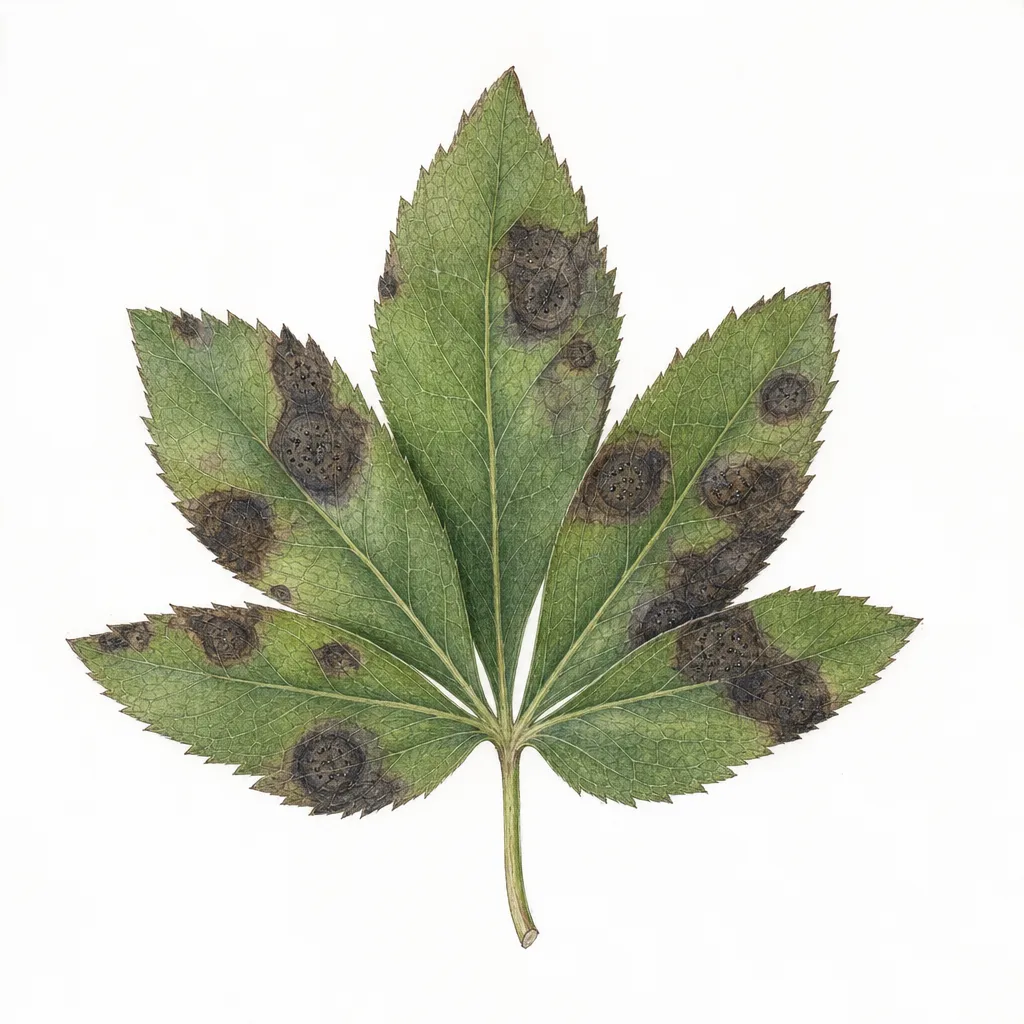
Hellebore leaf spot is a fungal disease caused by Microsphaeropsis hellebori, also called Coniothyrium hellebori. It kills patches of leaf tissue and can also damage stems and flowers; severe stem infections can cause collapse. ([rhs.org.uk](https://www.rhs.org.uk/disease/hellebore-leaf-spot))
Also called: Hellebore black spot
Plants affected: Hellebores (Helleborus species and hybrids), Christmas rose, Lenten rose
Symptoms
- Brown to black dead patches on either side of a leaf, sometimes merging into larger blotches or showing rings. ([pnwhandbooks.org](https://pnwhandbooks.org/plantdisease/host-disease/helleborus-niger-christmas-rose-black-spot))
- Tiny black dots within damaged tissue; older dead patches may fall out, leaving ragged holes. ([rhs.org.uk](https://www.rhs.org.uk/disease/hellebore-leaf-spot))
- Yellowing or dying leaves, spotted flowers, or shriveling and collapsing stems in heavier infections. ([pnwhandbooks.org](https://pnwhandbooks.org/plantdisease/host-disease/helleborus-niger-christmas-rose-black-spot))
Causes
- Wet weather favors infection, and spores travel in splashing water and wind-driven rain. ([rhs.org.uk](https://www.rhs.org.uk/disease/hellebore-leaf-spot))
- Overhead watering keeps foliage wet; crowded planting limits air circulation. ([pnwhandbooks.org](https://pnwhandbooks.org/plantdisease/host-disease/helleborus-niger-christmas-rose-black-spot))
- Infected leaves and debris left around the plant provide a source of further infection. ([rhs.org.uk](https://www.rhs.org.uk/disease/hellebore-leaf-spot))
How to tell it apart
Look at both leaf surfaces and the newest growth. Separate dead spots, sometimes with rings and tiny black dots, fit fungal leaf spot; black lines following veins together with stunted, misshapen new leaves are more concerning for black death. Appearance is a clue, not a certain diagnosis. ([pnwhandbooks.org](https://pnwhandbooks.org/plantdisease/host-disease/helleborus-niger-christmas-rose-black-spot))
- Hellebore black death
- Look for black streaks or netlike markings following leaf veins, plus increasingly distorted or stunted new growth—not just isolated dead spots. There is no chemical cure. ([rhs.org.uk](https://www.rhs.org.uk/disease/hellebore-black-death))
- Winter scorch
- Harsh winter weather can leave foliage scorched and tattered. Weather damage is a possibility after severe cold, but heavy fungal leaf spot can also blacken leaves and stems, so timing alone cannot distinguish them. ([plants.ces.ncsu.edu](https://plants.ces.ncsu.edu/plants/helleborus/))
Treatment
- Remove spotted leaves and infected debris This week, remove affected leaves promptly and collect fallen infected material beneath the clump. Dispose of it rather than leaving it beside the plant. Remove individual diseased leaves—not every healthy stem. ([rhs.org.uk](https://www.rhs.org.uk/disease/hellebore-leaf-spot))
- Keep irrigation off the leaves At the next watering, direct water onto the soil instead of spraying the foliage. Adjust any sprinkler that repeatedly wets the clump; prolonged leaf wetness favors disease. ([pnwhandbooks.org](https://pnwhandbooks.org/plantdisease/host-disease/helleborus-niger-christmas-rose-black-spot))
- Give the foliage breathing room This week, pull back neighboring growth that presses against the hellebore. The aim is space for air to circulate around the leaves, rather than a tightly packed canopy. ([pnwhandbooks.org](https://pnwhandbooks.org/plantdisease/host-disease/helleborus-niger-christmas-rose-black-spot))
- Check new growth before deciding to remove the plant Inspect emerging leaves this week for blackened veins, streaks and distortion. If these appear, seek a diagnosis from your local extension service before assuming ordinary leaf spot; plants with black death should be dug up promptly and destroyed. ([ask.extension.org](https://ask.extension.org/kb/faq.php?id=321137&utm_source=openai))
Prevention
- Keep removing infected debris and avoid overhead irrigation, especially during wet spring or fall weather. ([pnwhandbooks.org](https://pnwhandbooks.org/plantdisease/host-disease/helleborus-niger-christmas-rose-black-spot))
- For hybrid Lenten roses, remove old leaves in winter or early spring before flowering. Do not apply this blanket cutback to every hellebore: types carrying leaves and flowers on the same stems need selective removal of diseased leaves. ([rhs.org.uk](https://www.rhs.org.uk/disease/hellebore-leaf-spot))
When to worry
Get help promptly if new growth becomes stunted or distorted with black vein patterns, or if stems collapse. Spots alone do not mean you must discard the plant; black death requires a different response from ordinary leaf spot. ([pnwhandbooks.org](https://pnwhandbooks.org/plantdisease/host-disease/helleborus-niger-christmas-rose-black-spot))
Safety
Hellebore leaves, stems and roots are poisonous if eaten, and hellebores can poison pets. Keep plants and removed clippings away from children and animals. If someone may have swallowed any, contact a doctor or U.S. Poison Help at 1-800-222-1222 immediately; do not wait for symptoms. For suspected pet ingestion, contact a veterinarian or animal poison line promptly. ([plants.ces.ncsu.edu](https://plants.ces.ncsu.edu/plants/helleborus/))
Sharing your home with pets or small children? See which plants our sources call safe for cats, dogs and kids.
FAQ
Does black spotting mean black death?
Not necessarily. Ordinary leaf spot is more common; black death is more concerning when blackened veins accompany distorted new growth. ([ask.extension.org](https://ask.extension.org/kb/faq.php?id=321137&utm_source=openai))
Can my hellebore recover?
Plants with ordinary leaf spot often recover after affected foliage is removed. Black death has no cure. ([ask.extension.org](https://ask.extension.org/kb/faq.php?id=321137&utm_source=openai))
Should I cut off every leaf?
Remove diseased leaves now. Complete old-leaf removal is a seasonal practice for certain types, including hybrid Lenten roses—not every hellebore. ([rhs.org.uk](https://www.rhs.org.uk/disease/hellebore-leaf-spot))
Sources
- Hellebore leaf spot — RHS
- Helleborus niger (Christmas Rose)-Black Spot — Pacific Northwest Pest Management Handbooks
- Hellebore black death — RHS
- Hellebore Black Death — Ask Extension
- Helleborus — North Carolina Extension Gardener Plant Toolbox
- Toxic and Non-toxic Plants: Hellebore — ASPCA
- Hellebore Black Death - Ask Extension