
Bent leaves on snake plant: causes and fixes
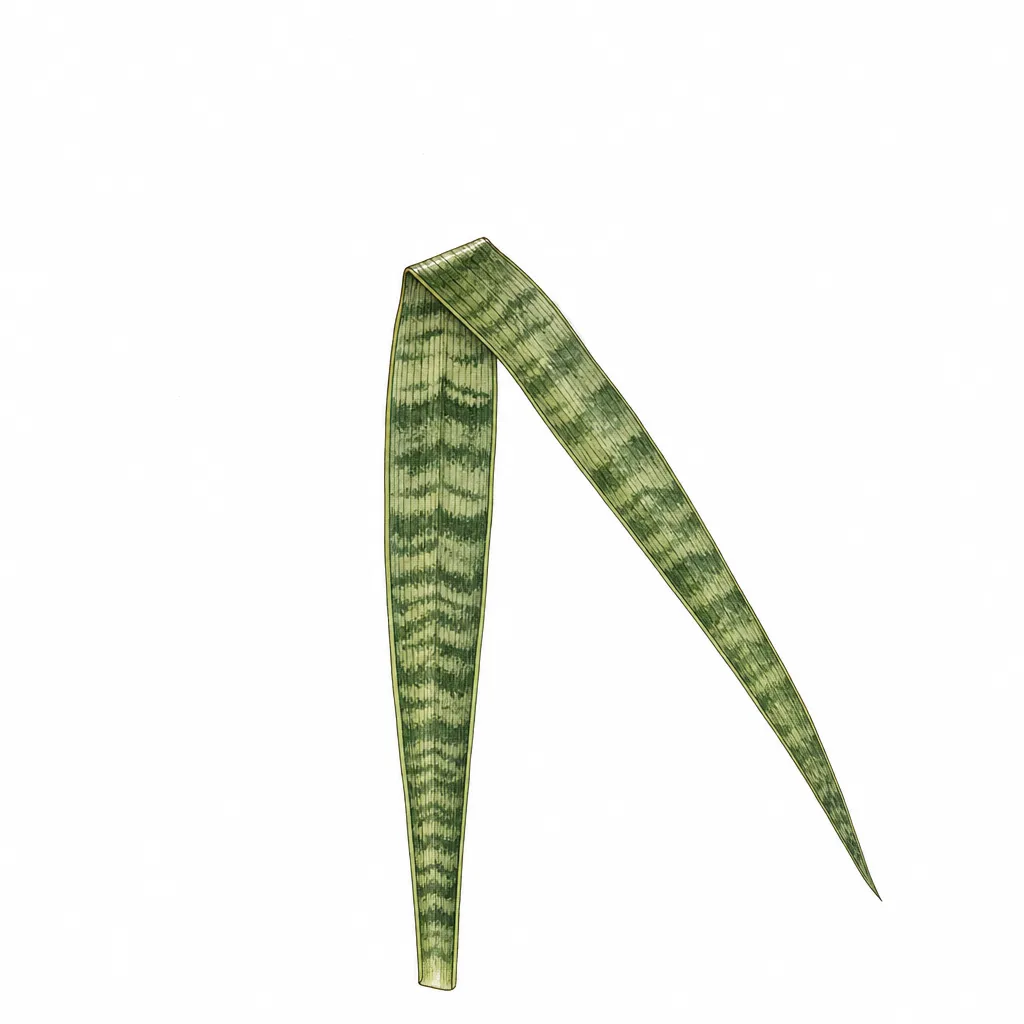
Bent leaves can result from physical damage, loss of firmness or weak growth; check whether the leaf has a localized crease, whether its base is firm, and whether the root zone is wet or dry before choosing treatment.
Not sure it's this? Scan your plant — free
What it is
Leaf bending is a symptom, not a disease: a leaf may fold at one damaged spot, or lose support and flop along much of its length. A localized injury affects the leaf itself, while loss of firmness or root rot can compromise support more broadly; very low light can also produce weak, floppy growth.
Also called: Creased snake plant leaves, Floppy snake plant leaves, Snake plant leaves falling over
Plants affected: Snake plant (Dracaena trifasciata, formerly Sansevieria trifasciata)
Symptoms
- A distinct bend or crease partway along one leaf, with the rest of the leaf still firm.
- One or more leaves leaning or flopping along much of their length rather than folding at one spot.
- Puckered leaves with dry potting mix, which can indicate prolonged dryness.
- Watery or mushy tissue, sometimes with a bad smell, which warrants checking for rot or cold injury.
- A whole clump that leans, wobbles or collapses.
Causes
- Possible physical damage: a localized crease, especially after handling or pressure on the leaf, raises the possibility of an injury rather than a whole-plant watering problem.
- Excess moisture and poor drainage can encourage root rot, weakening the plant's support; standing water and an oversized pot increase the risk. ([New York Botanical Garden](https://libanswers.nybg.org/faq/396986))
- Very low light can produce weak, floppy growth, particularly in taller varieties. ([Royal Horticultural Society](https://www.rhs.org.uk/plants/sansevieria/growing-guide))
- Prolonged dryness can cause puckering and loss of firmness, although snake plants tolerate drought well. ([New York Botanical Garden](https://libguides.nybg.org/snakeplant))
- Freezing temperatures, including beside a cold window, can leave foliage mushy. ([New York Botanical Garden](https://libanswers.nybg.org/faq/301042))
How to tell it apart
First distinguish a sharp, localized crease from a leaf that flops along most of its length. If the leaf and its base are otherwise firm, consider possible physical injury, especially after handling; that bend alone does not establish a watering problem. Check the root-zone moisture as well: dry mix with puckered leaves makes thirst more plausible, while damp mix with mushy or smelly bases raises concern for rot. Firm but generally floppy growth in a very dim position may reflect insufficient light. These watering and light clues—not bending alone—guide treatment. If the base is mushy or the plant is collapsing, inspect the roots promptly. ([New York Botanical Garden care guide](https://libguides.nybg.org/snakeplant); [root-rot guidance](https://libanswers.nybg.org/faq/396986))
- Localized physical injury versus generalized flopping
- A distinct crease on an otherwise firm leaf suggests a local problem; several leaves losing firmness or leaning from their bases calls for checking moisture, roots and light. Neither pattern alone proves the cause.
- Underwatering versus root rot
- Dry mix and puckered leaves favor prolonged dryness; wet mix with mushy, smelly tissue favors rot. Do not diagnose either from drooping alone.
- Cold injury
- Mushy leaves after freezing exposure can resemble overwatering damage. Recent exposure to a very cold window or freezing conditions is an important clue.
- Naturally twisting or spreading growth
- Some varieties naturally twist or form spreading rosettes. A consistent, established growth pattern differs from a new crease or sudden collapse. ([NC State Extension](https://plants.ces.ncsu.edu/plants/dracaena-trifasciata/))
Treatment
- 1. Check the bend, base and moisture before watering Today, gently feel the leaf and its base, check moisture below the mix's surface, and empty standing water from the saucer or outer pot. If the mix is damp, withhold water; a firm leaf with only a localized crease is not a reason to add more. Withholding water is not sufficient treatment for suspected rot—follow step 2 promptly if tissue is mushy or the plant is collapsing.
- 2. Inspect promptly if the base is mushy or the plant is collapsing Slide the plant from its pot and gently remove enough mix to examine the roots and base. With a sterilized cutting tool, remove confirmed rotten roots and other rotten tissue back to healthy tissue; do not leave rot in place while waiting for the mix to dry. Assess whether a healthy plant or separate division remains. If it does, repot in fresh, fast-draining succulent mix in a clean pot with drainage holes, sized for the remaining roots. If no healthy base or rooted division remains, discard the affected plant. ([New York Botanical Garden](https://libanswers.nybg.org/faq/396986))
- 3. Water only when dryness supports that choice If the root zone is dry, the leaves are puckering, and there are no signs of rot, water the mix thoroughly and let excess water drain away. Avoid pouring water into the center of the leaf cluster, and empty collected runoff after 15 minutes. Let the mix dry before watering again rather than following a weekly schedule. ([New York Botanical Garden](https://libguides.nybg.org/snakeplant))
- 4. Improve light and avoid cold This week, move a plant in a dim position toward brighter light, away from freezing windows and cold drafts. Do not move a shade-grown plant straight into strong direct sun; introduce stronger light gradually. Better conditions support future growth but may not straighten already floppy leaves. ([Royal Horticultural Society](https://www.rhs.org.uk/plants/sansevieria/growing-guide))
- 5. Leave, support or optionally prune firm damaged leaves A firm, cosmetically bent leaf can stay. Support floppy foliage with a stake or support ring if needed. If you prefer to remove a firm damaged leaf, use a sterile cutting tool and cut just above the soil; limit optional pruning to one-quarter of the total leaf area at a time. That limit does not apply to rotten tissue: remove rot back to healthy tissue and assess whether a viable plant or healthy division remains, as in step 2. ([University of Maryland Extension](https://ask.extension.org/kb/faq.php?id=921268); [New York Botanical Garden](https://libanswers.nybg.org/faq/396986))
Prevention
- Let the potting mix dry between waterings and reduce watering in winter.
- Use a pot with drainage holes and fast-draining succulent mix; avoid an unnecessarily large pot.
- Empty water that collects in the saucer or decorative outer pot.
- Provide brighter conditions rather than relying on the plant's tolerance of dim rooms.
- When moving the plant, avoid pressing or folding its leaves.
When to worry
Inspect promptly if a leaf base becomes mushy or smelly, or if several leaves or the whole plant collapse. Confirmed rotten tissue needs removal, not just a pause in watering. If the base and most roots are rotten, recovery may be unlikely; retain only genuinely healthy plant material or separate healthy rooted divisions. A stable crease on an otherwise firm leaf is less concerning than spreading softness.
Safety
Snake plant is harmful if eaten by people, cats or dogs, and its sap can irritate skin. Keep the plant and cut pieces away from pets and children, and wear gloves when cutting. After suspected ingestion, contact a doctor, veterinarian or poison line. Handle and store packaged potting mix and any tool-cleaning product according to the label, keep them away from pets and children, and keep sharp tools out of reach. ([NC State Extension](https://plants.ces.ncsu.edu/plants/dracaena-trifasciata/))
Sharing your home with pets or small children? See which plants our sources call safe for cats, dogs and kids.
FAQ
Will a bent leaf straighten again?
Do not count on an established bend disappearing. Firm leaves can stay, and floppy leaves may need support; focus on preventing further damage and supporting healthy new growth.
Should I cut off every bent leaf?
No. Removing firm, cosmetically damaged leaves is optional; limit that pruning to one-quarter of the total leaf area at a time. Rotten tissue is different: remove it back to healthy tissue regardless of that limit, then assess whether a healthy plant or division remains.
Does one creased leaf mean I watered incorrectly?
No. An otherwise firm leaf with a localized crease does not by itself establish a watering problem. Check the base and root-zone moisture before changing watering.
Can I just let a plant with root rot dry out?
No. Withholding water alone is not sufficient: inspect promptly, remove confirmed rotten tissue, and repot only healthy remaining material in fresh, well-drained mix.
Can low light make snake plant leaves flop?
Yes, very low light can produce weak, floppy growth, especially in taller varieties. That is different from a single sharp crease on an otherwise firm leaf.
Sources
- How to grow sansevierias — Royal Horticultural Society
- Snake Plant (Dracaena) — New York Botanical Garden
- If my snake plant has root rot, can it be saved? — New York Botanical Garden
- My snake plant has mushy leaves. What can I do? — New York Botanical Garden
- Dracaena trifasciata — NC State Extension Plant Toolbox
- Snake leaves falling down — University of Maryland Extension via Ask Extension