
Avocado leaves large brown patches: causes and fixes
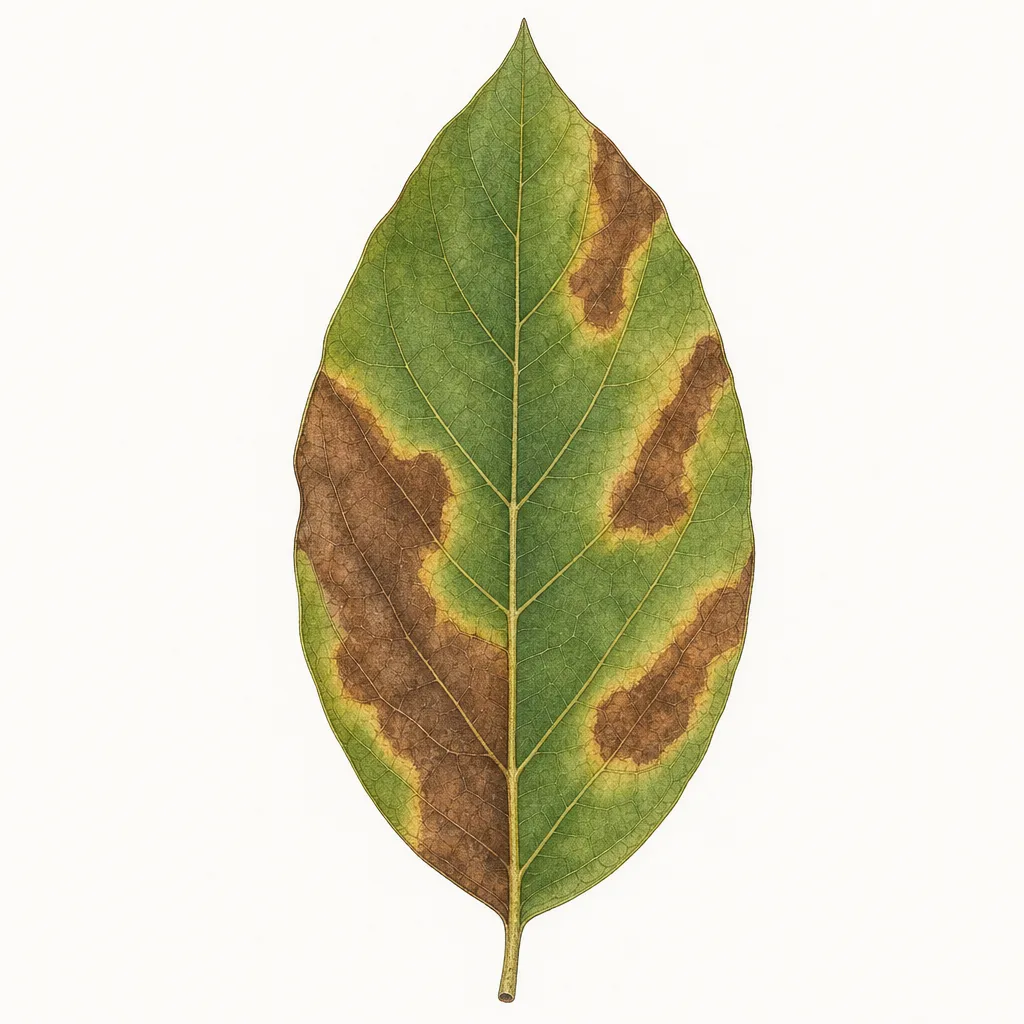
Large brown patches on indoor avocado leaves most likely suggest sunburn if they appeared after stronger sunlight, but watering stress and pests can look similar. ([ipm.ucanr.edu](https://ipm.ucanr.edu/agriculture/avocado/sunburn/?utm_source=openai))
Not sure it's this? Scan your plant — free
What it is
Sunburn is a noninfectious injury caused when direct sunlight heats and dries exposed leaf tissue. Damaged areas lose their green color and die, often forming blotches between the veins. ([ipm.ucanr.edu](https://ipm.ucanr.edu/agriculture/avocado/sunburn/?utm_source=openai))
Also called: Leaf burn, Sunburn
Plants affected: Avocado (Persea americana)
Symptoms
- Pale or yellow areas that turn brown and dry, often between leaf veins. ([ipm.ucanr.edu](https://ipm.ucanr.edu/agriculture/avocado/sunburn/?utm_source=openai))
- Damage concentrated on leaves receiving the strongest direct sunlight. ([ipm.ucanr.edu](https://ipm.ucanr.edu/agriculture/avocado/sunburn/?utm_source=openai))
Causes
- A sudden increase in direct sunlight, especially after moving the plant to a brighter position. ([ipm.ucanr.edu](https://ipm.ucanr.edu/home-and-landscape/houseplant-problems/))
- Heat and drying of exposed leaves, with greater susceptibility when roots cannot supply enough water because of poor watering or unhealthy roots. ([ipm.ucanr.edu](https://ipm.ucanr.edu/agriculture/avocado/sunburn/?utm_source=openai))
How to tell it apart
Sunburn is the leading suspect when patches developed after a brighter placement and mainly affect exposed leaves. If browning starts at tips and edges, investigate salts and watering instead; inspect both leaf surfaces with a magnifying glass for pests before settling on scorch. The patch alone cannot confirm the cause. ([ipm.ucanr.edu](https://ipm.ucanr.edu/agriculture/avocado/sunburn/?utm_source=openai))
- Salt burn
- Usually starts at the pointed tip and leaf margins rather than as isolated patches in the middle. Salty irrigation water and excess fertilizer can contribute. ([ipm.ucanr.edu](https://ipm.ucanr.edu/home-and-landscape/avocado-lace-bug/))
- Overwatering or root rot
- Look for persistently wet soil, yellowing or wilting, and dark, soft roots. Healthy roots should be firm and light-colored. ([extension.umd.edu](https://www.extension.umd.edu/resource/diagnose-indoor-plant-problems))
- Mites or avocado lace bugs
- Mites may leave fine webbing, cast skins and brown or silvery patches. Lace bugs leave shiny black droppings underneath leaves and can cause large tan or brown blotches. ([ipm.ucanr.edu](https://ipm.ucanr.edu/home-and-landscape/avocado-lace-bug/))
- Infectious leaf spots
- Fungi and bacteria can also cause blotches, although UC IPM describes these infections as uncommon in houseplants unless recently brought from outdoors or a greenhouse. Appearance alone may not distinguish them; seek identification if damage keeps developing. ([ipm.ucanr.edu](https://ipm.ucanr.edu/home-and-landscape/houseplant-problems/))
Treatment
- 1. Reduce harsh direct sunlight Today, move the plant out of hot direct window sun while keeping it in a bright position. Avoid another abrupt increase in light; any return to stronger sunlight should be gradual. ([ipm.ucanr.edu](https://ipm.ucanr.edu/home-and-landscape/houseplant-problems/))
- 2. Check moisture before adding water Check 1–2 inches below the soil surface before each watering. If dry there, water thoroughly and empty the saucer as soon as drainage collects; if still moist, wait. Do not give extra water just because leaves look burned. ([ask.extension.org](https://ask.extension.org/kb/faq.php?id=779240))
- 3. Investigate persistent wetness or wilting This week, confirm that water can drain from the pot. If the plant wilts despite wet soil, gently inspect the roots: dark, soft roots warrant root-rot care rather than more watering. ([extension.umd.edu](https://www.extension.umd.edu/resource/diagnose-indoor-plant-problems))
- 4. Check for pests before spraying Inspect both sides of affected leaves now, using a magnifying glass. If insects, mites or webbing are present, separate the plant from other houseplants and seek identification before choosing a treatment. ([ipm.ucanr.edu](https://ipm.ucanr.edu/home-and-landscape/avocado-lace-bug/))
- 5. Monitor rather than chase old marks Take a reference photo now and compare it during a weekly check. Existing brown tissue will not heal; mildly damaged leaves are not a major concern if damage is not worsening. ([ask.extension.org](https://ask.extension.org/kb/faq.php?id=779240))
Prevention
- Introduce stronger light gradually rather than moving a shaded plant straight into intense sun. ([extension.umd.edu](https://www.extension.umd.edu/resource/diagnose-indoor-plant-problems))
- Base watering on moisture below the surface, and never leave drained water sitting in the saucer. ([ask.extension.org](https://ask.extension.org/kb/faq.php?id=779240))
- Inspect newly acquired plants and check leaf undersides regularly for pests. ([ipm.ucanr.edu](https://ipm.ucanr.edu/home-and-landscape/houseplant-problems/))
When to worry
Seek help from your local extension service if browning keeps appearing after care changes, leaves drop rapidly, the plant wilts in wet soil, or roots are dark and soft. These signs deserve investigation beyond sunburn. ([ipm.ucanr.edu](https://ipm.ucanr.edu/home-and-landscape/houseplant-problems/))
Safety
Keep the plant and fallen leaves away from pets, especially birds and rabbits: avocado can cause serious poisoning in susceptible animals. If a pet eats plant material, contact a veterinarian or ASPCA Poison Control at 888-426-4435 promptly. No treatment product is needed for the initial steps above. ([aspca.org](https://www.aspca.org/pet-care/aspca-poison-control/people-foods-avoid-feeding-your-pets))
Sharing your home with pets or small children? See which plants our sources call safe for cats, dogs and kids.
FAQ
Will the brown patches turn green again?
No. Damaged leaf tissue does not heal; judge recovery by whether damage stops worsening and later growth looks healthy. ([ask.extension.org](https://ask.extension.org/kb/faq.php?id=779240))
Should I remove every damaged leaf?
Not automatically. Mildly damaged leaves are not a major concern when the damage is stable. ([ask.extension.org](https://ask.extension.org/kb/faq.php?id=779240))
Does my avocado need more water?
Only if the soil is dry 1–2 inches down. Wet roots can also leave foliage unable to stay hydrated. ([ask.extension.org](https://ask.extension.org/kb/faq.php?id=779240))
Do large brown patches mean a fungal infection?
Not necessarily. Sunburn, overwatering, chilling and chemical injury can also cause blotches; identify the cause before treating. ([ipm.ucanr.edu](https://ipm.ucanr.edu/home-and-landscape/houseplant-problems/))
Sources
- Sunburn — UC IPM Avocado Pest Management Guidelines
- Houseplant Problems — UC IPM
- Avocado plant — Ask Extension, University of Maryland Extension
- Diagnose Indoor Plant Problems — University of Maryland Extension
- Avocado Lace Bug — UC IPM
- People Foods to Avoid Feeding Your Pets — ASPCA
- Sunburn / Avocado / Agriculture: Pest Management Guidelines / UC Statewide IPM Program (UC IPM)