
Arborvitae turning brown on inside: causes and fixes
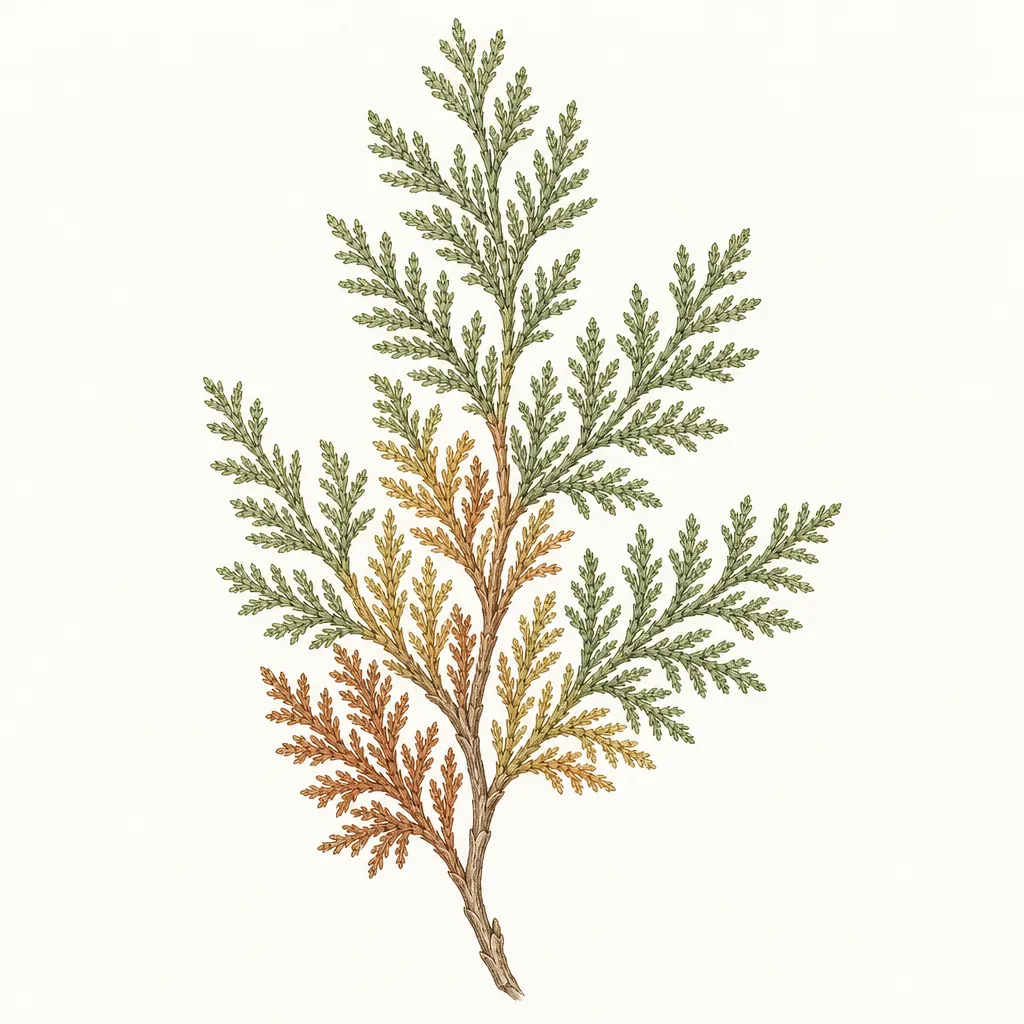
Arborvitae turning brown on the inside is most likely normal fall needle drop, especially if the outer foliage stays green. ([yardandgarden.extension.iastate.edu](https://yardandgarden.extension.iastate.edu/faq/why-inner-growth-my-arborvitae-turning-brown?utm_source=openai))
Not sure it's this? Scan your plant — free
What it is
Seasonal needle drop is the natural aging and shedding of an evergreen's oldest foliage, which sits toward the inside of its branches. Those leaves turn yellow or brown before falling; this normal process is not an infection and does not require treatment. ([yardandgarden.extension.iastate.edu](https://yardandgarden.extension.iastate.edu/how-to/browning-and-dieback-conifers))
Also called: Fall needle drop, Internal browning
Plants affected: Arborvitae (Thuja species and cultivars)
Symptoms
- Older foliage near the trunk turns yellow, then brown, while the outer growth remains green. ([yardandgarden.extension.iastate.edu](https://yardandgarden.extension.iastate.edu/faq/why-inner-growth-my-arborvitae-turning-brown?utm_source=openai))
- Browning appears at several heights inside the tree, followed by shedding of the affected foliage. ([brunswick.ces.ncsu.edu](https://brunswick.ces.ncsu.edu/2024/12/recurring-issues-with-thujas-arborvitaes/))
Causes
- Normal autumn shedding of older, inner foliage. ([yardandgarden.extension.iastate.edu](https://yardandgarden.extension.iastate.edu/faq/why-inner-growth-my-arborvitae-turning-brown?utm_source=openai))
- Shade within the canopy contributes to internal browning. ([brunswick.ces.ncsu.edu](https://brunswick.ces.ncsu.edu/2024/12/recurring-issues-with-thujas-arborvitaes/))
- Drought or other environmental stress can make seasonal shedding heavier than usual. ([yardandgarden.extension.iastate.edu](https://yardandgarden.extension.iastate.edu/faq/why-inner-growth-my-arborvitae-turning-brown?utm_source=openai))
How to tell it apart
Gently part the branches and compare the inside with the tips. Older brown foliage behind a healthy green outer layer, especially in fall, supports normal shedding; brown outer tips or dying whole branches need a closer look. ([yardandgarden.extension.iastate.edu](https://yardandgarden.extension.iastate.edu/faq/why-inner-growth-my-arborvitae-turning-brown?utm_source=openai))
- Drought stress
- Dry soil plus browning branch tips suggests water stress rather than shedding confined to older inner foliage. Newly planted trees are especially vulnerable. ([yardandgarden.extension.iastate.edu](https://yardandgarden.extension.iastate.edu/how-to/browning-and-dieback-conifers))
- Waterlogged roots or root rot
- Persistently wet soil is a warning sign. Excess water can cause browning similar to drought, so appearance alone cannot confirm the cause. ([yardandgarden.extension.iastate.edu](https://yardandgarden.extension.iastate.edu/how-to/browning-and-dieback-conifers))
- Winter burn
- Browning becomes noticeable after winter, often affecting exposed foliage and branch tips rather than just older inner growth in autumn. ([yardandgarden.extension.iastate.edu](https://yardandgarden.extension.iastate.edu/how-to/browning-and-dieback-conifers))
- Bagworms
- Look for spindle-shaped silk bags covered with plant fragments hanging from twigs, along with irregular browning and missing foliage. ([brunswick.ces.ncsu.edu](https://brunswick.ces.ncsu.edu/2024/12/recurring-issues-with-thujas-arborvitaes/))
Treatment
- Check the pattern before doing anything This week, part branches at the top, middle, and bottom. If browning is limited to older interior foliage and the outside stays green, leave it alone: normal seasonal shedding needs no treatment. ([brunswick.ces.ncsu.edu](https://brunswick.ces.ncsu.edu/2024/12/recurring-issues-with-thujas-arborvitaes/))
- Check soil before adding water Check moisture beneath the surface this week. For a newly planted tree, check both its original root ball and the surrounding soil; water when either is dry, not simply because foliage is brown. Do not add water to already wet soil. ([yardandgarden.extension.iastate.edu](https://yardandgarden.extension.iastate.edu/how-to/browning-and-dieback-conifers))
- Water deeply only if needed For an established tree with dry soil, water across the root zone until the upper 6–9 inches are moist. Check with a trowel afterward rather than relying on a fixed number of minutes; soil and water flow vary. Avoid frequent light sprinklings. ([extension.umn.edu](https://extension.umn.edu/planting-and-growing-guides/watering-established-trees-and-shrubs))
- Get help if the outer growth is affected If you find brown outer tips, dying branches, or suspicious bags, send clear whole-tree and close-up photos to your local extension service this week. Some arborvitae problems require samples or specialist examination before treatment can be chosen. ([brunswick.ces.ncsu.edu](https://brunswick.ces.ncsu.edu/2024/12/recurring-issues-with-thujas-arborvitaes/))
Prevention
- You cannot prevent normal seasonal shedding; some interior browning is expected each year. ([brunswick.ces.ncsu.edu](https://brunswick.ces.ncsu.edu/2024/12/recurring-issues-with-thujas-arborvitaes/))
- During dry weather, check soil moisture and water deeply when needed rather than giving frequent shallow waterings. ([extension.umn.edu](https://extension.umn.edu/planting-and-growing-guides/watering-established-trees-and-shrubs))
- Continue checking newly planted trees and watering as needed until the ground freezes. ([yardandgarden.extension.iastate.edu](https://yardandgarden.extension.iastate.edu/how-to/browning-and-dieback-conifers))
- Avoid full shade, which can cause arborvitae foliage to thin dramatically. ([plants.ces.ncsu.edu](https://plants.ces.ncsu.edu/plants/thuja-occidentalis/))
When to worry
Seek a diagnosis if browning reaches the outer growth, entire branches die, bags appear, or the soil stays waterlogged. Those findings are less consistent with ordinary fall shedding and may indicate root trouble, environmental injury, or pests. ([yardandgarden.extension.iastate.edu](https://yardandgarden.extension.iastate.edu/how-to/browning-and-dieback-conifers))
Safety
Arborvitae can be toxic if eaten; keep children and pets from chewing foliage or fallen clippings. If ingestion is suspected, contact a doctor, veterinarian, or poison line promptly. No treatment product is needed for normal seasonal needle drop. ([ucanr.edu](https://ucanr.edu/site/plant-safely-drought-tolerant-landscapes/thuja-spp))
Sharing your home with pets or small children? See which plants our sources call safe for cats, dogs and kids.
FAQ
Is my arborvitae dying?
Not necessarily. Brown inner foliage with green outer growth in fall is most likely normal seasonal shedding. ([yardandgarden.extension.iastate.edu](https://yardandgarden.extension.iastate.edu/faq/why-inner-growth-my-arborvitae-turning-brown?utm_source=openai))
Should I cut out the brown inside foliage?
Not for ordinary seasonal shedding. No management is necessary; the old foliage falls naturally. ([yardandgarden.extension.iastate.edu](https://yardandgarden.extension.iastate.edu/how-to/browning-and-dieback-conifers))
Can too much water cause browning?
Yes. Excessively wet soil can damage roots and cause symptoms resembling drought, so check moisture before watering. ([yardandgarden.extension.iastate.edu](https://yardandgarden.extension.iastate.edu/how-to/browning-and-dieback-conifers))
Why is it browner than last fall?
Shedding varies between years, and drought or other environmental stress can increase the loss of older foliage. ([yardandgarden.extension.iastate.edu](https://yardandgarden.extension.iastate.edu/faq/why-inner-growth-my-arborvitae-turning-brown?utm_source=openai))
Sources
- Why is the inner growth of my arborvitae turning brown? — Iowa State University Extension
- Browning and Dieback on Conifers — Iowa State University Extension
- Recurring Issues With Thujas (Arborvitaes) — N.C. Cooperative Extension
- Watering established trees and shrubs — University of Minnesota Extension
- Thuja occidentalis — North Carolina Extension Gardener Plant Toolbox
- Thuja spp — University of California Agriculture and Natural Resources
- Why is the inner growth of my arborvitae turning brown? | Yard and Garden