
Aphids on indoor plants: signs and treatment
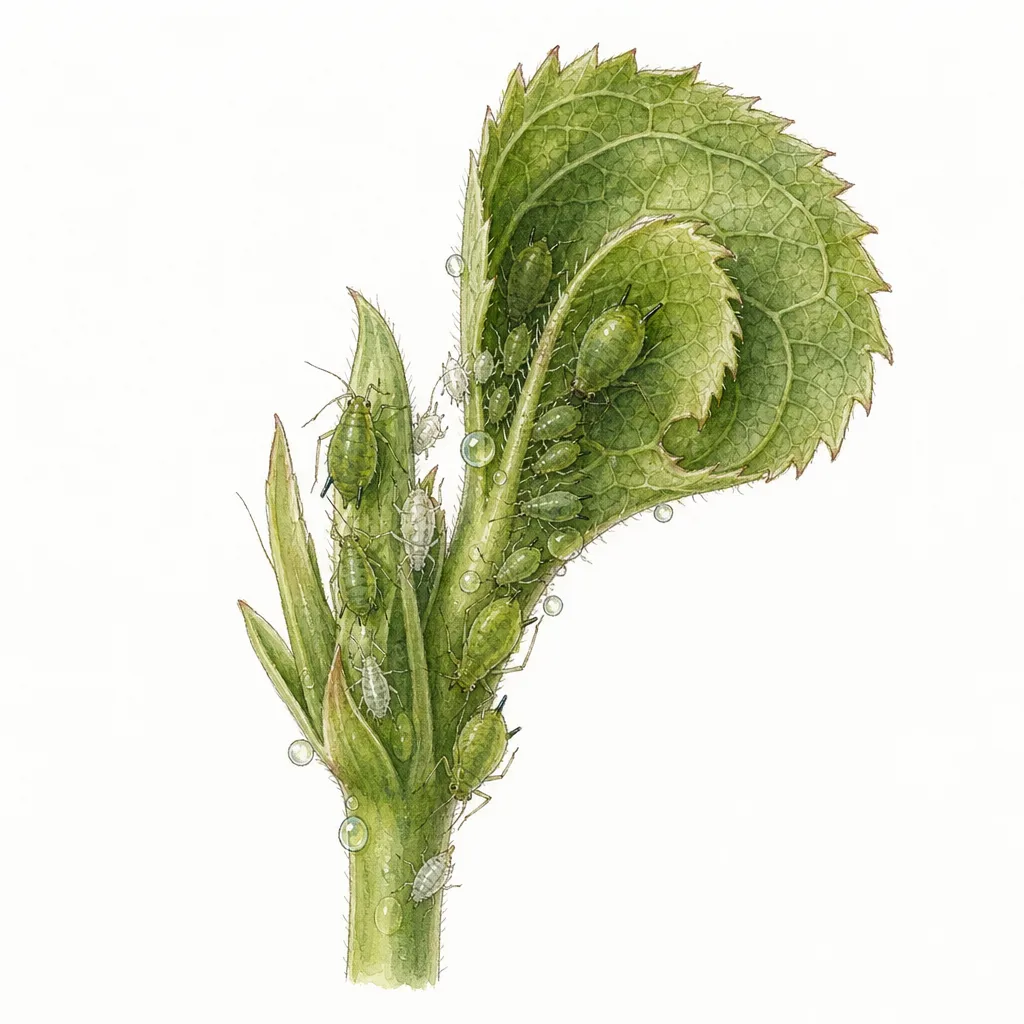
Clusters of soft, pear-shaped bugs on new growth, especially with sticky leaves, are most likely aphids; start by separating the plant and washing the bugs off with water.
Not sure it's this? Scan your plant — free
What it is
Aphids are small, soft-bodied insects that pierce tender plant parts and suck out sap. Heavy feeding can distort new growth, while their sugary waste, called honeydew, leaves sticky surfaces where black sooty mold can grow.
Also called: Plant lice
Plants affected: Hibiscus, Chrysanthemums, Ornamental peppers, Many indoor herbs and other houseplants
Symptoms
- Clusters of small bugs around shoot tips, buds or leaf undersides.
- Curled, yellowing or distorted young leaves and slowed growth.
- Sticky leaves or surfaces beneath the plant, sometimes with black sooty mold.
- White, empty insect skins among the living bugs.
Causes
- Aphids may arrive on an infested new plant.
- Winged aphids can spread to other plants.
- Aphids reproduce quickly, and excess nitrogen fertilizer can favor their buildup.
How to tell it apart
Use a magnifier to inspect new shoots and leaf undersides. Aphids have pear-shaped bodies, visible legs and antennae, and usually two tiny tubes projecting from their rear; they may be green, yellow, brown, red or black. Sticky residue alone does not confirm aphids because other sap-feeding pests produce it too.
- Mealybugs
- Usually look cottony or powdery white, especially in leaf joints, rather than like exposed pear-shaped bugs. Some aphids are woolly, so inspect body shape too.
- Soft scale
- Usually appear as mostly stationary brown or gray bumps rather than clusters of insects with obvious legs. They also produce honeydew.
- Whiteflies
- Tiny white adults flutter up when the plant is disturbed; their immature stages are flat and attached beneath leaves.
- Spider mites
- Look for fine pale speckling and silk webbing rather than clusters of pear-shaped insects.
Treatment
- Separate the plant and check its neighbors Move it away from your collection today and inspect nearby plants, especially buds and leaf undersides. Keep infested plants separate while treating them.
- Wash off the aphids Use a sink or shower and a firm stream of plain water that dislodges bugs without damaging leaves. Reach beneath leaves and around shoot tips. Wipe remaining bugs and honeydew with a damp cloth or paper towel. Check twice this week and rinse again wherever live aphids remain.
- Remove heavily infested tips If colonies are concentrated on a few shoots or tightly curled leaves, prune those parts now. Bag and discard the cuttings; curled leaves can shelter aphids from contact sprays.
- Use insecticidal soap if washing is not enough Choose a product labeled for aphids on your type of indoor plant. Test a small area and wait 24–48 hours to check for damage before wider treatment. Follow the label for dilution, thoroughly wet the bugs—including beneath leaves—and repeat only at the label's interval if live aphids remain. Dried soap provides no continuing control. Keep the product away from pets and children, and keep them away from treated plants for the time specified on the label.
Prevention
- Inspect plants before buying or bringing them indoors. Quarantine new arrivals: Minnesota Extension recommends one to two weeks, while Colorado State recommends at least three; three weeks is the more cautious choice.
- Check shoot tips and leaf undersides whenever you water. During an outbreak, make a point of checking twice a week so you can spot remaining colonies.
- Avoid excess nitrogen fertilizer, which can encourage aphid reproduction.
When to worry
Act promptly if colonies are spreading, new growth is badly distorted or the plant is wilting. A heavily infested, badly damaged plant may be better discarded to protect the rest of your collection.
Safety
Insecticidal soap is a pesticide: follow the label for mixing, protective equipment, application and re-entry precautions. Keep it away from pets and children, and keep them away from treated plants until the label allows access. Store it tightly closed in its original labeled container, inaccessible to children and pets and away from food, feed and water bowls. Avoid homemade dish-soap sprays, which can injure plants. For suspected product poisoning, follow the label's first-aid instructions and contact a doctor, poison line or veterinarian as appropriate, keeping the label handy.
Sharing your home with pets or small children? See which plants our sources call safe for cats, dogs and kids.
FAQ
Can I remove aphids without pesticides?
Often, especially with a small infestation: wash them off and prune localized colonies, then keep checking.
Why do aphids keep coming back?
They reproduce rapidly, and bugs sheltered inside curled leaves may escape washing or contact sprays.
Are the white flakes aphid eggs?
They may be shed skins rather than eggs; look nearby for living aphids.
Will sticky traps solve the problem?
No. They can catch winged aphids, but most of the infestation remains on the plant.
Sources
- Managing insects on indoor plants — University of Minnesota Extension
- Houseplant Problems — UC Statewide IPM Program
- Managing Houseplant Pests — Colorado State University Extension
- Insect Control: Insecticidal Soap — Colorado State University Extension
- Aphids — UC Statewide IPM Program
- Read the Label First: Protect Your Pets — US EPA