
Aloe vera growing tall and leggy: causes and fixes
Aloe vera growing tall and leggy most likely needs more light; increase brightness gradually and check for soggy soil before adding water. ([extension.sdstate.edu](https://extension.sdstate.edu/aloe-vera-houseplant-how))
Not sure it's this? Scan your plant — free
What it is
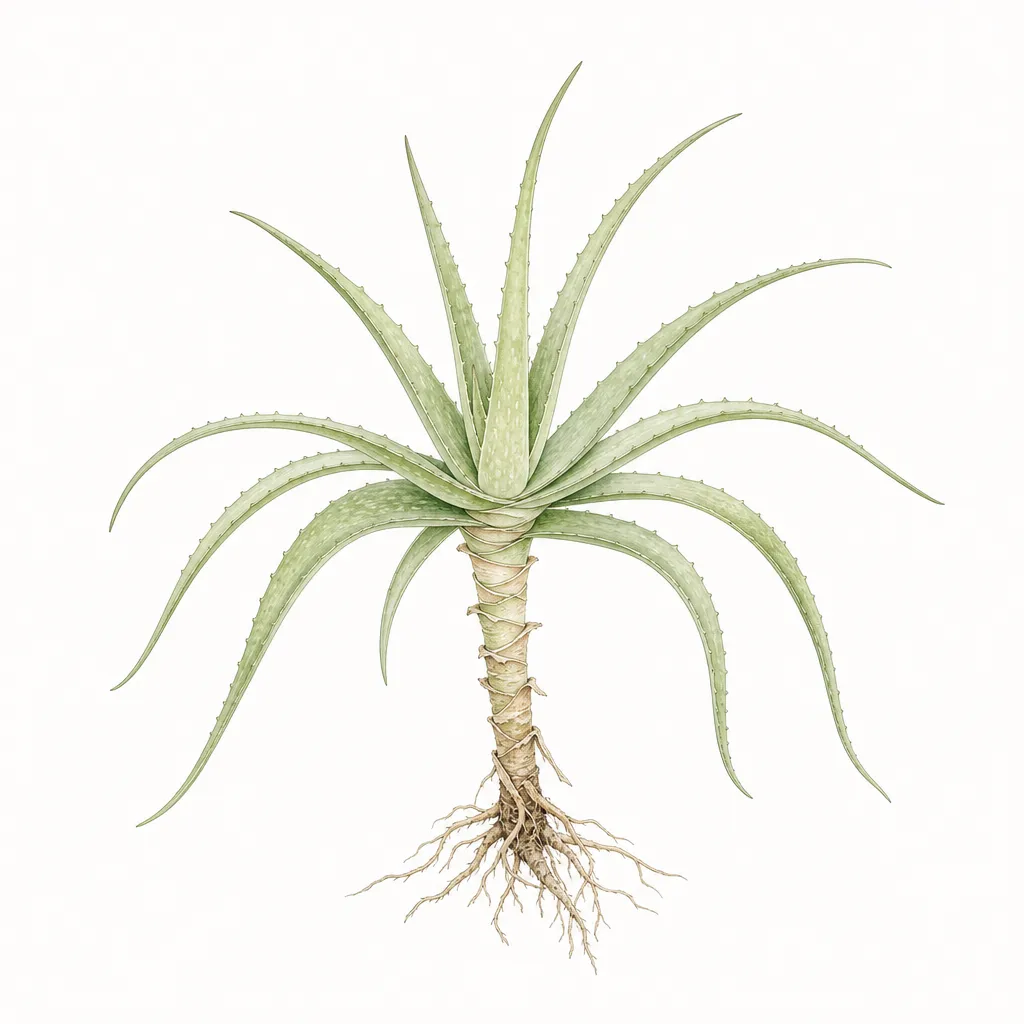
Etiolation is stretched, weak growth produced when a plant develops in too little light. In aloe, the leaves become elongated and flattened, and the weakened stem may struggle to hold the plant upright. ([libguides.nybg.org](https://libguides.nybg.org/aloe))
Also called: Etiolation, Leggy aloe
Plants affected: Aloe vera
Symptoms
- Leaves look unusually long, flattened and floppy instead of forming a compact rosette. ([libguides.nybg.org](https://libguides.nybg.org/aloe))
- New growth looks pale, thin or spindly. ([yardandgarden.extension.iastate.edu](https://yardandgarden.extension.iastate.edu/how-to/common-problems-and-issues-succulents))
- The stem becomes weak enough that the plant leans or topples. ([libguides.nybg.org](https://libguides.nybg.org/aloe))
Causes
- Insufficient light is the main cause of stretched growth. ([extension.sdstate.edu](https://extension.sdstate.edu/aloe-vera-houseplant-how))
- Soggy soil can cause similar weakness and drooping, so it is worth checking separately rather than assuming every floppy aloe needs more sun. ([libguides.nybg.org](https://libguides.nybg.org/aloe))
How to tell it apart
Look at the newest growth and check the soil together: elongated, flattened leaves in a dim location point toward low-light stretching. Yellow, mushy leaves with damp soil suggest a watering problem instead; older outer leaves spreading away from an otherwise healthy center can be normal. ([libguides.nybg.org](https://libguides.nybg.org/aloe))
- Overwatering or root rot
- Leaves may yellow, soften and drop while the soil stays damp. Root damage can also cause shriveling, so do not automatically treat a wilted plant with more water. ([yardandgarden.extension.iastate.edu](https://yardandgarden.extension.iastate.edu/how-to/common-problems-and-issues-succulents))
- Underwatering
- Leaves become puckered, shriveled or yellow in dry soil, rather than simply growing long and flattened. ([extension.sdstate.edu](https://extension.sdstate.edu/aloe-vera-houseplant-how))
- Normal mature growth
- Older outer leaves naturally droop and spread on mature Aloe vera; that alone does not mean the plant is stretching. ([libguides.nybg.org](https://libguides.nybg.org/aloe))
- A flower stalk
- A single tall stalk carrying tubular yellow-to-orange flowers is flowering, not leggy leaf growth. ([plants.ces.ncsu.edu](https://plants.ces.ncsu.edu/plants/aloe-vera/common-name/aloe-vera/))
Treatment
- Start improving the light This week, move the aloe toward a brighter window gradually rather than straight from shade into strong sun. Sources differ: SDSU recommends bright indirect light, while NYBG recommends at least six hours of direct sunlight daily. Begin with brighter indirect light and introduce stronger sun cautiously; check daily for new brown or tan scorch patches. ([extension.sdstate.edu](https://extension.sdstate.edu/aloe-vera-houseplant-how))
- Add a grow light if the window is too dim If you cannot provide a sufficiently bright window, use a full-spectrum LED or fluorescent grow light on a timer for 12–16 hours daily. Follow the fixture instructions for its distance from the leaves. ([yardandgarden.extension.iastate.edu](https://yardandgarden.extension.iastate.edu/how-to/common-problems-and-issues-succulents))
- Check dryness before watering Check the soil now and again before each watering; do not water just because leaves droop. For indoor aloe, SDSU recommends letting the soil dry completely, then watering thoroughly. Use that soil check rather than a weekly watering schedule, and reduce watering during winter. Never leave the pot standing in runoff. ([extension.sdstate.edu](https://extension.sdstate.edu/aloe-vera-houseplant-how))
- Fix poor drainage if needed This week, check that the drainage hole is open and empty any water trapped in the outer pot. If there is no drainage hole or the mix stays soggy, repot into a draining container with cactus-and-succulent potting mix. Keep the plant at its previous planting depth; burying the exposed stem can cause rot. ([libguides.nybg.org](https://libguides.nybg.org/aloe))
- Skip fertilizer as a rescue treatment Do not add fertilizer this week to try to make the plant stronger. Aloe generally needs no fertilizer to stay healthy, and stretched growth needs better light rather than extra feeding. ([extension.sdstate.edu](https://extension.sdstate.edu/aloe-vera-houseplant-how))
Prevention
- Keep the aloe in a consistently bright location, and reassess whether supplemental lighting is needed during darker months. ([libguides.nybg.org](https://libguides.nybg.org/aloe))
- Introduce stronger light gradually whenever you change its location. ([gardeningsolutions.ifas.ufl.edu](https://gardeningsolutions.ifas.ufl.edu/plants/ornamentals/aloe-vera/))
- Use a draining pot and let the soil dry between thorough waterings. ([extension.sdstate.edu](https://extension.sdstate.edu/aloe-vera-houseplant-how))
When to worry
Act promptly if the base becomes soft or mushy, leaves drop while the soil remains wet, or the plant collapses: these suggest more than simple stretching. Stop watering wet soil and ask a local extension service for help assessing possible rot. Advanced root rot may not be recoverable. ([yardandgarden.extension.iastate.edu](https://yardandgarden.extension.iastate.edu/how-to/common-problems-and-issues-succulents))
Safety
Keep aloe out of reach of children and pets. Eating the leaves can cause digestive illness, and the leaf latex can irritate skin. Contact a doctor or poison line after human ingestion or a concerning reaction, or a veterinarian if a pet eats it. ([plants.ces.ncsu.edu](https://plants.ces.ncsu.edu/plants/aloe-vera/common-name/aloe-vera/)) Handle and store potting mix according to its label, avoid breathing dust, wash hands afterward, and keep it away from children and pets. Follow the grow light's safety instructions, secure it against falling, and keep electrical connections dry.
Sharing your home with pets or small children? See which plants our sources call safe for cats, dogs and kids.
FAQ
Will the stretched leaves become short again?
Do not expect existing stretched growth to shrink back. Better light helps prevent further stretching; it does not undo the old growth pattern. ([fairchildgarden.org](https://fairchildgarden.org/wp-content/uploads/2020/10/TTG-Volume-72_Number3-_-Summer-LowRes.pdf))
Should I bury the long stem?
No. Keep the original planting depth when repotting; burying the stem can lead to rot. ([libguides.nybg.org](https://libguides.nybg.org/aloe))
Does aloe need direct sunlight?
Sources differ: NYBG recommends direct sunlight, while SDSU recommends bright indirect light. Both link inadequate light to weak growth; increase exposure gradually to avoid burning. ([libguides.nybg.org](https://libguides.nybg.org/aloe))
Can a grow light help?
Yes. If window light is insufficient, supplemental lighting can help; a timer set for 12–16 hours daily is recommended for indoor succulents. ([yardandgarden.extension.iastate.edu](https://yardandgarden.extension.iastate.edu/how-to/common-problems-and-issues-succulents))
Sources
- Aloe Vera: Houseplant How-To — SDSU Extension
- Aloe Houseplants — New York Botanical Garden
- Common Problems and Issues of Succulents — Iowa State University Extension and Outreach
- Aloe Vera — University of Florida IFAS Gardening Solutions
- Aloe Vera — North Carolina Extension Gardener Plant Toolbox
- The Tropical Garden, Summer 2017: Succulent care — Fairchild Tropical Botanic Garden