
Alocasia losing all its leaves: causes and fixes
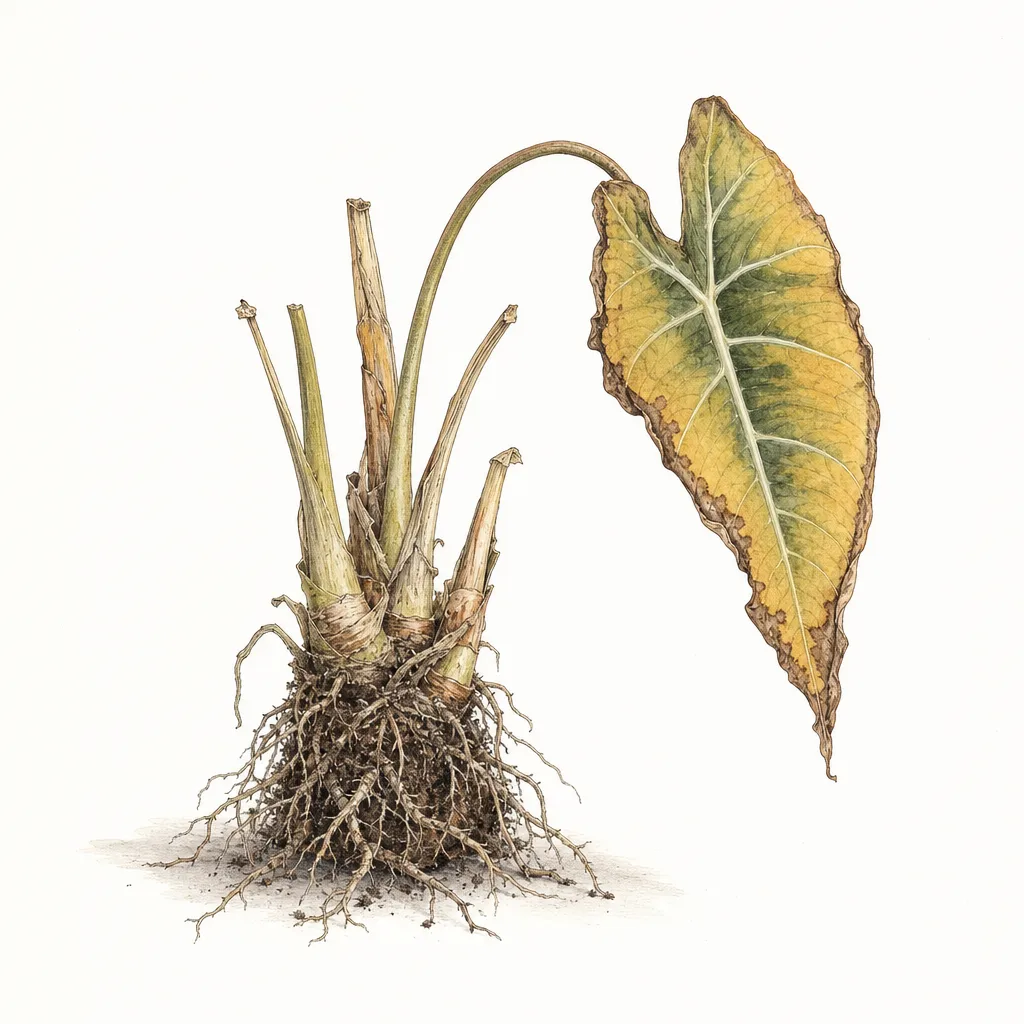
Your alocasia is most likely losing its leaves because of watering or growing-condition stress; winter dormancy is another possibility, but wet soil and soft roots suggest rot rather than rest. ([yardandgarden.extension.iastate.edu](https://yardandgarden.extension.iastate.edu/faq/what-causes-leaves-my-houseplant-turn-yellow-or-brown-and-drop))
Not sure it's this? Scan your plant — free
What it is
Leaf drop is the shedding of foliage, not a single disease. Environmental stress can trigger it, while winter dormancy is a period of slowed or stopped growth; losing foliage reduces the plant's leaf area for capturing light. ([yardandgarden.extension.iastate.edu](https://yardandgarden.extension.iastate.edu/faq/what-causes-leaves-my-houseplant-turn-yellow-or-brown-and-drop))
Also called: Leaf loss, Defoliation
Plants affected: Alocasia species and hybrids
Symptoms
- Leaves turn yellow or brown, wilt and eventually fall. ([yardandgarden.extension.iastate.edu](https://yardandgarden.extension.iastate.edu/faq/what-causes-leaves-my-houseplant-turn-yellow-or-brown-and-drop))
- Growth slows or stops during winter rest. ([rhs.org.uk](https://www.rhs.org.uk/plants/alocasia/growing-guide))
- Wilting despite wet soil, with soft brown roots, points toward root rot. ([hort.extension.wisc.edu](https://hort.extension.wisc.edu/articles/root-rots-houseplants/))
Causes
- Too much water or poor drainage, which can damage roots and encourage rot. ([hort.extension.wisc.edu](https://hort.extension.wisc.edu/articles/root-rots-houseplants/))
- Too little water, inadequate light, sudden light changes, dry air or temperature extremes. ([yardandgarden.extension.iastate.edu](https://yardandgarden.extension.iastate.edu/faq/what-causes-leaves-my-houseplant-turn-yellow-or-brown-and-drop))
- Seasonal dormancy in cooler, drier winter conditions. ([rhs.org.uk](https://www.rhs.org.uk/plants/alocasia/growing-guide))
- Severe spider mite feeding, especially when leaves previously developed pale speckles and fine webbing. ([ipm.ucanr.edu](https://ipm.ucanr.edu/home-and-landscape/houseplant-problems/))
How to tell it apart
Check moisture below the surface before watering. If the mix is wet and the plant is collapsing, gently slide out the root ball: soft brown roots, sometimes with a bad smell, support a diagnosis of rot. Leaf loss alongside winter slowdown may indicate dormancy, but leaf loss alone cannot distinguish the two. ([extension.msstate.edu](https://extension.msstate.edu/publications/care-selection-indoor-plants))
- Winter dormancy
- Growth slows in winter and foliage may die back; soft, decaying roots instead suggest rot. Do not assume complete leaf loss is harmless dormancy without checking moisture and root condition. ([rhs.org.uk](https://www.rhs.org.uk/plants/alocasia/growing-guide))
- Drought stress
- The potting mix is dry below the surface and the pot feels light; root rot can cause similar wilting while the mix remains wet. ([extension.msstate.edu](https://extension.msstate.edu/publications/care-selection-indoor-plants))
- Spider mites
- Look under remaining leaves with a magnifier for tiny mites, pale feeding speckles and fine silk webbing. Heavy infestations can make leaves dry and fall. ([ipm.ucanr.edu](https://ipm.ucanr.edu/home-and-landscape/houseplant-problems/))
- Cold or relocation stress
- Leaf loss follows cold transport, drafts, a heater blast or a sudden change in light; those events are useful clues, though several stresses can overlap. ([yardandgarden.extension.iastate.edu](https://yardandgarden.extension.iastate.edu/faq/what-causes-leaves-my-houseplant-turn-yellow-or-brown-and-drop))
Treatment
- 1. Check moisture before adding water Today, feel below the surface or insert an unpainted wooden dowel into the lower mix. If damp soil sticks to it, hold off watering. Empty standing water from the saucer or decorative outer pot. ([extension.msstate.edu](https://extension.msstate.edu/publications/care-selection-indoor-plants))
- 2. Check and rescue rotting roots if indicated If the mix is wet and the plant is wilting, inspect the roots now. With clean scissors, remove soft, decayed roots. If the mix is waterlogged, replace it with fresh commercial potting mix in a clean pot with drainage holes. Keep separate from healthy plants; badly rotted plants may need discarding. ([extension.msstate.edu](https://extension.msstate.edu/publications/care-selection-indoor-plants))
- 3. Adjust watering to growth, not the calendar For a growing plant with sound roots, water when the top 2 inches of mix are dry, checking deeper moisture first. Use room-temperature water, wet the mix throughout and let it drain. For a dormant, leafless plant, reduce watering to a minimum rather than continuing its summer routine. ([rhs.org.uk](https://www.rhs.org.uk/plants/alocasia/growing-guide))
- 4. Stabilize light and temperature This week, provide bright indirect light away from cold drafts and heating vents. For active growth, keep temperatures around 68–77°F; never expose it to temperatures below 50°F. Avoid abrupt changes in light. ([rhs.org.uk](https://www.rhs.org.uk/plants/alocasia/growing-guide))
- 5. Inspect remaining leaves for pests Check leaf undersides and stalk joints now. If mites are present, isolate the plant and wash remaining leaves and stems with plain water, including undersides; repeat inspections and washing during the week. Do not spray a pesticide without identifying a pest. ([ipm.ucanr.edu](https://ipm.ucanr.edu/home-and-landscape/houseplant-problems/))
- 6. Remove dead foliage and pause feeding Cut dead leaves off at the base with clean scissors, wearing gloves. Skip fertilizer this week if growth has stopped; feeding needs fall sharply during winter or low-light conditions. ([rhs.org.uk](https://www.rhs.org.uk/plants/alocasia/growing-guide))
Prevention
- Check moisture rather than watering on a fixed weekly schedule. ([extension.msstate.edu](https://extension.msstate.edu/publications/care-selection-indoor-plants))
- Use drainage holes, fresh potting mix and no gravel layer inside the bottom of the pot. Never leave the pot standing in drainage water. ([hort.extension.wisc.edu](https://hort.extension.wisc.edu/articles/root-rots-houseplants/))
- Keep conditions steady and inspect leaf undersides regularly for pests. ([yardandgarden.extension.iastate.edu](https://yardandgarden.extension.iastate.edu/faq/what-causes-leaves-my-houseplant-turn-yellow-or-brown-and-drop))
When to worry
Act promptly if the plant wilts in wet mix or roots become soft, brown or foul-smelling. Extensive rot can be fatal; a local extension plant clinic can help when the cause is unclear. ([hort.extension.wisc.edu](https://hort.extension.wisc.edu/articles/root-rots-houseplants/))
Safety
Alocasia contains calcium oxalate crystals and can harm people, cats and dogs if chewed; sap can irritate skin and eyes. Keep the plant and cuttings away from pets and children, wear gloves when cutting, and contact a doctor, veterinarian or poison line after ingestion or a concerning exposure. Handle fresh potting mix according to its label, avoid breathing dust, wash hands afterward, and store it closed away from pets and children. ([plants.ces.ncsu.edu](https://plants.ces.ncsu.edu/plants/alocasia/))
Sharing your home with pets or small children? See which plants our sources call safe for cats, dogs and kids.
FAQ
Is my leafless alocasia dead?
Not necessarily: alocasias can survive a winter rest through their underground storage organs. Soft, decaying roots are a more concerning sign than missing leaves alone. ([plants.ces.ncsu.edu](https://plants.ces.ncsu.edu/plants/alocasia/))
Should I water it more to grow new leaves?
Not unless the mix needs water. Extra watering during dormancy can cause root rot. ([rhs.org.uk](https://www.rhs.org.uk/plants/alocasia/growing-guide))
When will leaves grow back?
A dormant alocasia may resume growth in spring. Recovery from root damage is less predictable, and extensive rot may prevent recovery. ([rhs.org.uk](https://www.rhs.org.uk/plants/alocasia/growing-guide))
Should I use a fungicide?
Not as a routine rescue treatment. University of Wisconsin Extension does not recommend chemical fungicides for houseplant root rot; correcting moisture and drainage comes first. ([hort.extension.wisc.edu](https://hort.extension.wisc.edu/articles/root-rots-houseplants/))
Sources
- How to grow alocasias — RHS
- Root Rots on Houseplants — University of Wisconsin Extension
- Alocasia — North Carolina Extension Gardener Plant Toolbox
- What causes leaves on my houseplant to turn yellow or brown and drop off? — Iowa State University Extension
- Care & Selection of Indoor Plants — Mississippi State University Extension
- Houseplant Problems — University of California IPM